In a nutshell
- 🧄 Garlic spray repels pests through olfactory masking from volatile sulfur compounds, protecting leaves without killing insects and sparing beneficials.
- 🧪 DIY method: blitz 2 bulbs with 1 litre of water, steep 24 hours, strain, then use a dilution ~1:10 with water; add a teaspoon of eco washing-up liquid as a surfactant, refrigerate concentrate for up to a week, and patch test.
- ⏰ Best practice: spray at dawn or dusk, coat both leaf surfaces, reapply after rain, maintain a light weekly routine—consistency beats concentration.
- 🐞 Target range: strong on aphids and whiteflies, moderate on flea beetles, limited on slugs/snails; wildlife deterrence is short-lived—combine with traps, barriers, and hand-removal.
- 🛠️ Part of Integrated Pest Management (IPM): pair with netting, sticky traps, clean cultivation, and mulching to cut chemical use while keeping ecosystems balanced.
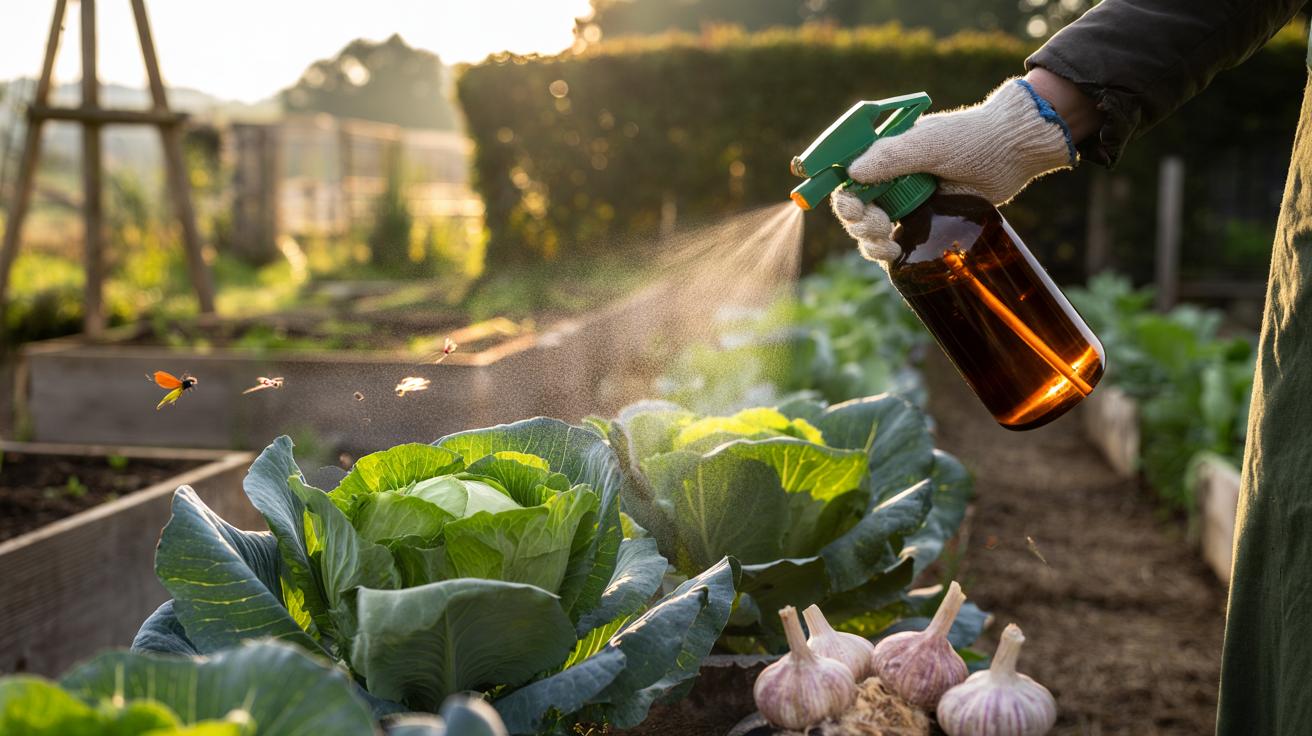
For gardeners chasing greener results, garlic spray offers a remarkably simple way to keep leaves unchewed and crops unspoiled. The principle is elegant: pungent volatile sulfur compounds create a scent screen that confuses hungry pests, guiding them away without a single synthetic pesticide. In an era of thinning pollinator numbers and tighter regulations, a home-mixed brew can slot neatly into routine care. It’s a defensive strategy that protects plants while leaving soil life and beneficial insects largely undisturbed. From roses in suburban plots to brassicas on allotments, the aroma does the heavy lifting—cheaply, quickly, and with fewer trade-offs than many bottled solutions.
How Garlic’s Aroma Confuses Pests
Pests use smell more than we think. Aphids, whiteflies, and leaf miners home in on host plants by following a signature blend of plant volatiles. Crush garlic and you release allicin and related sulfur molecules that swamp those signals. The result is olfactory masking: to a pest’s antennae, your lettuce no longer smells like lunch. Garlic spray repels and disrupts rather than kills, trimming damage without knocking out the wider food web. That’s a win in mixed gardens where ladybirds, lacewings, and hoverflies are the unpaid workforce.
Effect varies with species and conditions. Delicate sap suckers often peel away first, while slugs and flea beetles may prove stubborn. Scent strength, leaf surface, and weather determine how long protection lasts. In calm, dry spells, the aromatic veil can hold for days; heavy rain wipes the slate clean. Think of garlic as a moving fence: you maintain it and pests respect it.
Making an Effective DIY Garlic Spray
Start simple. Blitz two garlic bulbs with 1 litre of water, then steep for 24 hours. Strain through muslin or a coffee filter, and make a working solution at a dilution of roughly 1:10 with clean water. A teaspoon of eco-friendly washing-up liquid acts as a surfactant, helping droplets cling to waxy leaves. Do not spray open blooms visited by bees, and avoid hot midday sun that can scorch foliage. For sensitive ornamentals, a patch test on a single leaf is wise.
Freshness matters. Store the concentrate in the fridge for up to a week; potency fades as compounds oxidise. If odour strength drops, retire the batch. You can add a chilli or a pinch of crushed soap for extra grip, but resist heavy perfumes or oils that clog pores. Keep the nozzle set to a fine mist, and shake the bottle often so the mix stays even from first spray to last.
When and Where to Spray for Best Results
Timing is half the battle. Mist plants at dawn or dusk when air is cool and still, aiming for thorough coverage on both sides of each leaf. After rain or overhead irrigation, reapply—water dilutes the scent fast. Weekly maintenance suits most beds in peak season; seedlings and freshly planted veg might need a midweek top-up. Consistency is more important than concentration; a light, regular film beats an occasional drenching.
Target the hotspots. Aphids cluster on tender growth and the undersides of leaves; whiteflies lift in clouds when touched, so advance quietly and spray from below. Focus on brassicas, beans, cucurbits, and roses during flushes of soft new tissue that pests love. Work garlic into a broader integrated pest management (IPM) plan: net brassicas against butterflies, collar brassica stems, mulch to support soil predators, and keep weeds down so pests have fewer staging posts.
What It Works On—and What It Doesn’t
Garlic’s strength is versatility, not miracle status. It excels as a first responder when infestations are light to moderate. As numbers grow, combine with hand-squishing, water jets, sticky traps, or physical barriers. Expect best results with sap feeders that rely on smell, and temper expectations for chewing pests and molluscs. Wildlife such as rabbits can be deterred by the odour around beds, but persistence and rain quickly erode the benefit.
Use the guide below to match expectations to targets. Pairing garlic with crop covers, trap crops, and clean cultivation helps lock in gains. If a pest persists, rotate tactics to avoid behavioural “learning” and stop any single method from carrying the full load.
| Pest | Response to Garlic Spray | Notes |
|---|---|---|
| Aphids | Strong repellent | Spray undersides; reapply weekly and after rain |
| Whiteflies | Moderate to strong | Combine with yellow sticky traps for monitoring |
| Flea Beetles | Moderate | Use mesh covers on brassicas; keep soil moist |
| Slugs and Snails | Limited, short-lived | Back up with beer traps or copper barriers |
| Rabbits and Deer | Odour deterrent | Rain reduces effect quickly; rotate scents |
Garlic spray won’t replace good gardening, but it powerfully complements it. By leaning on aroma-based deterrence, you cut reliance on broad-spectrum chemicals and protect the helpful insects that keep balance. The method is scalable, frugal, and surprisingly forgiving for beginners. Small, steady applications can shift a garden from firefighting to prevention, freeing time for pruning, feeding, and harvest. With a bottle, a blender, and a few cloves, your patch can smell wrong to pests—and just right to you. Which plant will you shield first, and how will you tailor the mix to your garden’s microclimate and pest pressure?
Did you like it?4.4/5 (22)