In a nutshell
- 🥬 Water-only setup: Use a stable glass or ramekin, add drinking-quality water to just 5–10 mm, and keep the crown dry to prevent rot.
- ☀️ Sunlight strategy: Aim for 4–6 hours of direct sun on a south-facing window (UK), rotate daily, and maintain a cool 12–20°C for compact growth.
- 🫧 Daily care and hygiene: Change water every 24–48 hours, rinse the base, scrub containers, and keep water shallow; shade glass if algae steals light.
- ✂️ Harvest smart: Use cut-and-come-again—snip outer leaves at 5–10 cm from day 7–14; don’t chase full heads, just tender toppers.
- 🔧 Troubleshooting and yields: Pale, leggy leaves mean more light; mushy crowns mean water too deep; expect 15–40 g per base over two cuts, stagger starts for steady pickings.
Growing lettuce indoors with only sunlight and water is a quietly satisfying experiment that delivers quick, crisp greens without fuss. It’s not a full hydroponic rig, nor a garden in miniature. It’s a short-cycle, low-input method that turns odds and ends into edible leaves. With a bright window, clean water, and a little patience, you can coax new growth from a lettuce base or a handful of cuttings. Expect modest harvests, not supermarket heads. But the flavour is clean, the process serene, and the waste nearly nil. The secret is consistency: clean water, steady light, and gentle handling. Do that well and you’ll have fresh leaves for sandwiches, bowls, and garnishes in days.
Set Up Your Water-Only Lettuce Station
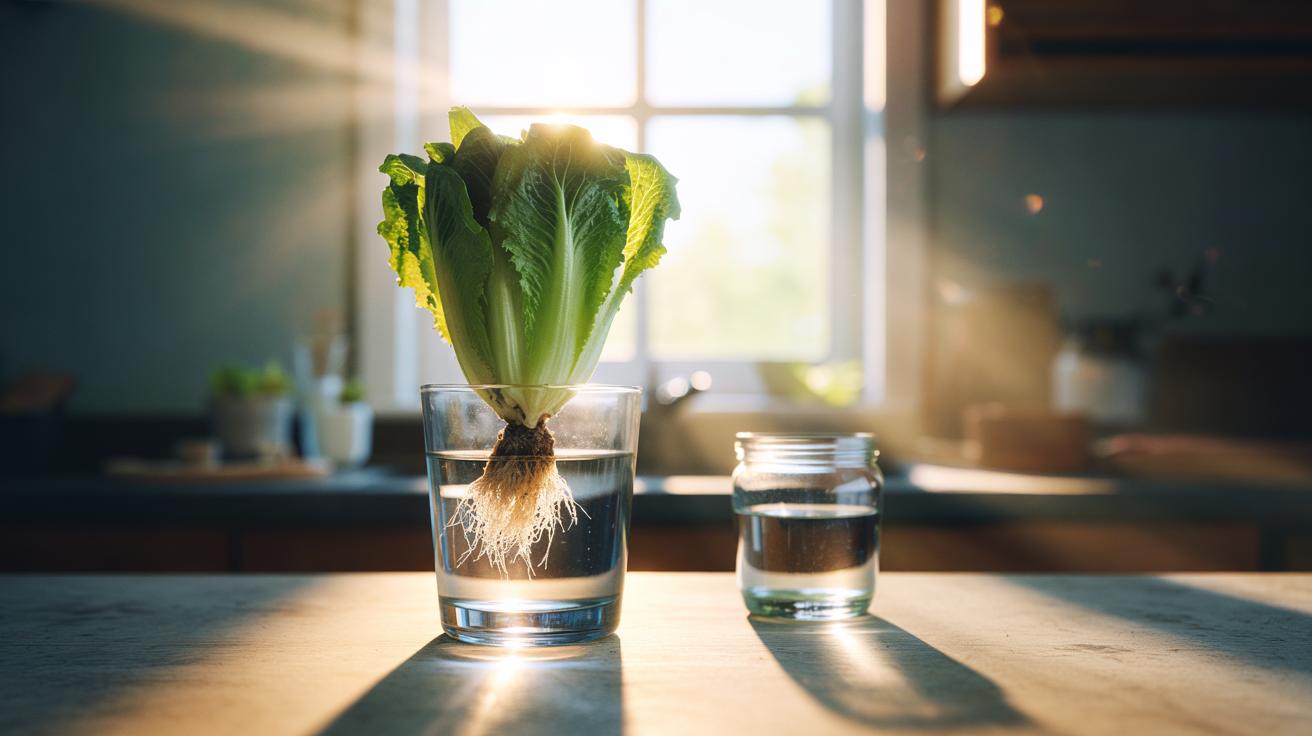
Choose a low, stable container that won’t tip. A ramekin, tumbler, or shallow jar works. Rinse it thoroughly. Use drinking-quality water, ideally cool and unflavoured. Place a romaine or butterhead base, trimmed to a flat bottom, upright so only the root end sits in water—just 5–10 mm deep. Keep the cut surface dry to deter rot. If you start from loose leaves, stand them with cut ends just touching the water. Do not submerge the crown. That single detail prevents most failures. If your tap water smells strongly of chlorine, let it stand for an hour before use, or switch to filtered water.
Position the container on a bright sill. South-facing in the UK is best, east is fine. You need 4–6 hours of direct sun or a longer stretch of bright, indirect light. Turn the base once a day to stop leaning. Keep the room temperate. Lettuce prefers 12–20°C. Warm kitchens are risky, especially near ovens. A cool office window can be perfect. Start two or three bases a week apart and you’ll stagger mini harvests without crowding your sill.
Sunlight Strategy: Windows, Timing, and Temperature
Sun is your engine. In spring and summer, a south-facing UK window delivers ample light for compact, sturdy regrowth. In winter, light thins, so move the setup right to the glass and lift the container to sill height. Aim to give the crown the brightest, least obstructed view of the sky. Remove blinds during prime hours. Wipe the window once a week; a film of dust trims valuable lumens. Rotate the container daily for balanced growth. If leaves stretch and pale, shift to a sunnier spot or switch from west to south exposure. A foil card placed behind the container can bounce light back without gadgets.
Heat management matters. Above 22–24°C, lettuce softens and may taste bitter. Below 8–10°C, it slows to a crawl. Drafts are acceptable if they’re not icy. Condensation on cold panes can drip: slide a coaster underneath to keep the base dry. Consistency beats intensity. Ten good days of steady light often outperforms two blazing afternoons followed by gloom. If the sun vanishes for a spell, simply tighten your care routine and extend timelines by a few days.
Daily Care, Hygiene, and Harvest
Cleanliness keeps the water-only method on track. Change water every 24–48 hours. Rinse the base under a gentle stream, swishing off any slime. Scrub the container with a brush and a dab of mild soap, then rinse until squeaky. Keep water shallow; raise the level only as tiny roots appear. If green algae film forms, it’s harmless but steals light—shade the lower half of the glass with paper. Fresh, odourless water is non-negotiable. If it smells, throw it out and start again. A pinch of patience here saves the crop.
Harvest with a “cut-and-come-again” approach. When new leaves reach 5–10 cm—often 7–10 days in bright conditions—snip outer leaves and leave the centre to push on. Expect two or three modest cuts from a romaine stump before vigor wanes. Don’t chase full heads. You’re growing tender toppers for wraps, eggs, noodles, and toast. If the base softens, browns, or collapses, retire it to the compost and start fresh. For a steady trickle of greens, run a simple rotation: a new base every few days keeps the salad bowl interesting.
| Task | Target | Sign to Adjust |
|---|---|---|
| Sun exposure | 4–6 hrs direct or bright window | Pale, leggy leaves = move sunnier |
| Water depth | 5–10 mm at base | Soft crown = too deep |
| Water change | Every 1–2 days | Odour or film = refresh now |
| Room temperature | 12–20°C | Bitter leaves = too warm |
| First harvest | Day 7–14 | No growth = increase light |
Troubleshooting and Realistic Yield Expectations
Yellowing or translucent leaves? That’s light starvation or old water. Move closer to the glass and reset the container. Brown mush at the cut face points to submersion—trim back to firm tissue and keep the crown dry. A sulphur smell means bacterial bloom: discard, disinfect, and replace with a fresh base. If leaves are floppy and long, you’ve got stretch; increase sunlight and rotate daily. Slight red or pink tint on edges is normal in cool rooms. Healthy regrowth is perky, compact, and lightly glossy. Anything slimy or collapsing isn’t worth saving.
Set your expectations kindly. Water-only regrowing delivers handfuls, not heads. Think garnish, not groceries. A single romaine base may yield 15–40 g across two cuts—perfect for a sandwich, a taco tray, or a bright miso bowl. It’s frugal, fast, and surprisingly educational. If you crave larger volumes, run several bases at once on the same sill. Or treat this as a gateway skill and, later, explore simple passive hydro with nutrients. For now, celebrate the minimalism: sunlight, water, and a windowsill. That’s the brief, and it works.
With a clean jar, a sunny pane, and ten quiet minutes every other day, you can turn scraps into crisp greens that never left your home. It’s gentle on time and budget, and it sharpens your sense of season and light. Start small, observe closely, and enjoy the micro-wins. From breakfast rolls to late-night noodles, these leaves earn their keep. Ready to put a glass by the window today and see what unfolds—and which window in your home deserves to become your new, tiny salad bar?
Did you like it?4.5/5 (26)