In a nutshell
- 🌱 Use quality inputs: mature compost, dechlorinated water, a mesh bag, optional air pump/stone, and a dash of unsulphured molasses; keep tools spotless—sanitation is non-negotiable.
- 🧪 Brew with care: aerate and maintain 18–24°C; typical times are 24–36 hours (aerated) or 12–24 hours (non‑aerated); an earthy smell signals success—sour means stop.
- 🔄 Know your method: Aerated Compost Tea (AACT) favours beneficial aerobic microbes for safer foliar use; non‑aerated is simpler but offers fewer active organisms and must be kept short.
- 💧 Apply wisely: dilute to 1:10 for soil drenches and 1:20 for foliar sprays, strain finely, and spray in the early morning or evening to protect microbes.
- ⚠️ Prioritise safety and freshness: use within 4–6 hours, avoid raw manures for foliar on edibles, clean all kit thoroughly, apply every 2–4 weeks, and adjust based on plant response.
Compost tea is a gardener’s quiet revolution: a living brew that delivers nutrients and teeming beneficial microbes straight to roots and leaves. Made from mature compost and clean water, it’s simple, cheap, and remarkably effective. Think of it as a concentrated tonic for tired soil and stressed plants. You won’t need fancy kit. You will need care and cleanliness. Fresh, well-brewed compost tea can lift soil life, improve nutrient availability, and help plants resist disease without resorting to synthetic fertilisers. Here’s how to make your own at home, what to expect from the process, and the best ways to apply the finished brew for tangible results.
Choosing Ingredients and Equipment
The foundation matters. Start with mature, earthy-smelling compost rich in diverse organic matter—garden waste, leaf mould, well-rotted plant material. Avoid composts that include raw manures unless they’ve fully composted. Use dechlorinated water because chlorine can suppress microbe activity; let tap water stand 24 hours, or use a charcoal filter. An aquarium pump with an air stone helps if you plan an aerated brew, but it isn’t mandatory. Quality in equals quality out, so choose clean tools and compost that smells sweetly of forest floor, not ammonia.
For clarity on kit and ratios, use this quick reference. Keep it simple. Keep it clean. The amounts below suit a standard 20-litre bucket and can be scaled up or down with the same proportions.
| Item | Purpose | Typical Amount |
|---|---|---|
| Mature compost | Source of microbes and nutrients | 1–2 kg (in a mesh bag) |
| Dechlorinated water | Medium for extraction | 20 L (bucket filled to near top) |
| Unsulphured molasses | Microbe food for aerated tea | 1–2 tbsp per 20 L |
| Air pump + stone | Oxygen for aerobic microbes | Continuous bubbling |
| Mesh bag or old tights | Contain compost, easy straining | Enough to hold compost securely |
| Clean bucket (food-grade) | Brewing vessel | 20 L capacity |
Sanitation is non-negotiable: rinse the bucket, lines, and stone with hot water before and after every brew to reduce pathogen risk.
Step-by-Step Brewing Method
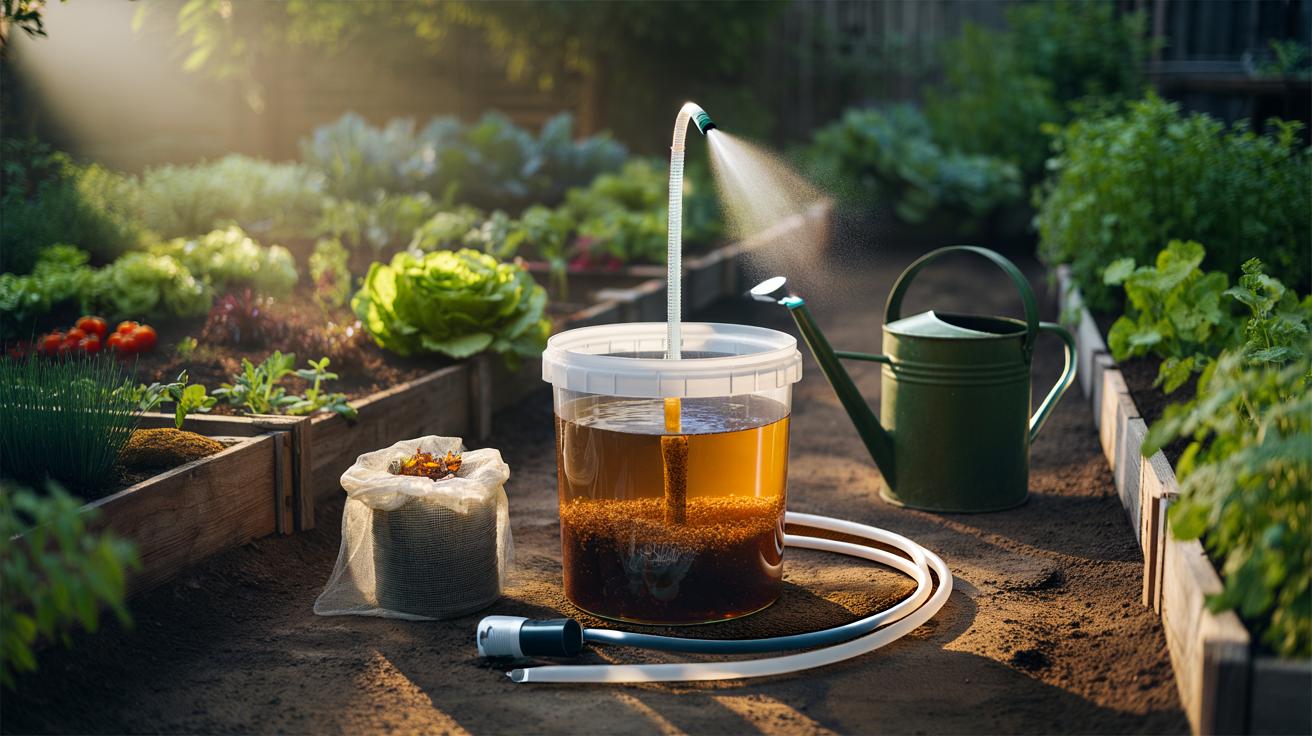
Fill your bucket with dechlorinated water. Bag the compost and suspend it so water circulates freely. If brewing aerated tea, attach the pump and air stone, ensuring a vigorous, rolling bubble pattern across the bucket. Add a small dose of unsulphured molasses to feed microbes, then start the clock. Keep the temperature between 18–24°C; this is the sweet spot for microbial growth. If the tea smells sour or rotten, stop—healthy compost tea should smell earthy and pleasant.
Brew time matters. For aerobically brewed tea, 24–36 hours is typical; push to 48 only if bubbling is strong and temperatures are cool. Non-aerated soaks should be short—about 12–24 hours—stirring occasionally to prevent stagnation. Strain the tea through a fine sieve or cloth to prevent clogging sprayers. Remove the bag and return the solids to your compost heap or use as mulch around crops. Do not add extra sugar late in the brew; it can tilt the balance toward undesirable microbes.
Finish well. Turn off the pump, decant immediately, and use the tea the same day. Freshness is critical: once the air stops and food is consumed, microbe populations crash, and benefits fall fast.
Aerated vs. Non-Aerated: What Matters
Two approaches, two profiles. Aerated compost tea (AACT) uses steady bubbling to favour aerobic bacteria, fungi, and protozoa associated with healthy soils and suppressive rhizospheres. It’s typically cleaner and more predictable when brewed carefully. Non-aerated tea is essentially a cold soak—simpler kit, less noise, but a narrower oxygen window. If you want a microbially rich foliar spray for edibles, aeration offers a safer, more consistent route when cleanliness is observed.
Time and temperature are decisive. Aerated brews finish within 24–36 hours at room temperature; leave them longer and oxygen may lag, inviting off-odours and the wrong microbes. Non-aerated soaks should be short to limit anaerobic drift. Nutrient extraction differs too: aerated teas often carry a livelier microbe load; non-aerated teas lean towards a mild nutrient solution with fewer active organisms. Either way, source compost well, keep equipment spotless, and let your nose guide you—earthy good, sour bad.
Using Compost Tea Safely and Effectively
Application is where the magic shows. For a soil drench, dilute roughly 1:10 with water and apply around the root zone. For foliar spraying, strain carefully and dilute 1:20 to avoid leaf burn and sprayer clogs. Aim for early morning or late evening to reduce UV damage to microbes and prevent leaf scorch. Always test a small area first, especially on tender seedlings or waxy-leaved ornamentals.
Keep hygiene front and centre. Use the brew within 4–6 hours of finishing, clean nozzles and buckets, and never store at room temperature for “later”. Avoid raw manures in your starter compost if you intend to spray edible leaves. Alternate with standard feeding: apply every 2–4 weeks in the growing season, adjusting frequency based on plant response. Watch for brighter foliage, improved turgor, and steadier growth. If results plateau, refresh your compost source or tweak aeration and brew time. When in doubt, brew less, brew fresher, and apply promptly.
Done well, compost tea knits biology back into your soil, nudging plants towards resilience rather than dependency. It’s not a silver bullet. It is a smart, living complement to mulches, diverse composts, and gentle fertilisers. Start small, take notes, and let your senses lead: smell, clarity, plant response. Freshness, cleanliness, and consistency turn a bucket of water and compost into a powerful garden tonic. What will you brew first—an aerated foliar spray for your lettuces, or a soil drench to wake up a flagging border after rainless weeks?
Did you like it?4.7/5 (22)