In a nutshell
- 🌞 Wiping leaves removes dust that dims light, improving photosynthesis and restoring efficient gas exchange through clear stomata.
- 🧪 Different residues—household dust, kitchen grease, mineral spots, aerosol films, and pest-produced honeydew/sooty mould—require targeted cleaning to prevent light loss and pore blockage.
- 🧼 Clean safely: support each leaf, use a damp microfibre cloth with tepid water, add a drop of mild soap for grime, rinse, dry in bright shade, and prefer distilled water in hard-water areas; avoid leaf shine products.
- 🌵 Match method to plant: brush or blow off fuzzy leaves, dry-wipe succulents and cacti, use a gentle shower for broad, glossy foliage; aim for a light clean every 2–4 weeks.
- 📈 Expect tangible gains: higher leaf-surface PPFD, steadier transpiration, fewer pests and fungal issues, sturdier growth, and richer colour in low-light UK interiors.
Few household rituals repay the effort quite like wiping the leaves of your favourite fern, rubber plant, or fiddle-leaf fig. Houseplants thrive by converting light, water, and carbon dioxide into energy; when grime builds up, you are effectively drawing a veil over that vital process. A thin film of dust and residue can block incoming light and clog microscopic pores that regulate respiration. In our often dim British interiors—particularly in winter—every photon counts. Regular cleaning restores the leaf’s ability to capture light and breathe freely, helping plants photosynthesise steadily, resist pests, and keep their colours vivid. Here is why that simple cloth matters.
How Dust Dims Light and Stifles Gas Exchange
Photosynthesis begins when pigments such as chlorophyll absorb light and drive a chain of reactions that fix carbon. Dust works like a fine shade, scattering and absorbing those rays before they reach the chloroplasts. Indoors, where available light is already low, that veil can make the difference between surplus energy and slow decline. At the same time, particles and sticky films settle around the stomata—the tiny valves that regulate carbon dioxide intake and water release. When those pores are obstructed, carbon dioxide diffusion slows and transpiration falters, reducing nutrient flow from roots to shoots. Clean leaf surfaces admit more light and exchange gases more efficiently, a double boost to net photosynthesis.
There is also an effect on the boundary layer—the thin cushion of still air hugging each leaf. Films of grime thicken this layer, hampering heat release and moisture movement. A gentle wipe with a damp, lint-free cloth disrupts that layer just enough to restore normal cooling and water transport. The result is steadier leaf temperature, improved water relations, and a more responsive stomatal rhythm. In combination, these small physical advantages translate into better growth rates, tighter internodes, and stronger new leaves, especially in species with broad, glossy foliage like Monstera and rubber plants.
Indoor Pollutants That Settle on Foliage
Not all grime is the same. Household dust is a cocktail of fabric fibres, skin cells, soot, and soil particles. In kitchens, ultrafine droplets from frying coagulate into an invisible film that adheres stubbornly to cuticles. Aerosol sprays and polishes add silicones and waxes, while hard tap water leaves mineral spots that refract light. Pests such as aphids and scale excrete sugary honeydew, inviting sooty mould that blackens leaf surfaces. Understanding what lands on leaves helps you choose the safest cleaning method, avoiding fixes that swap one problem for another.
| Residue | Common Source | Effect on Leaves |
|---|---|---|
| Household dust | Textiles, carpets, open windows | Blocks light; irritates stomata |
| Grease film | Cooking aerosols | Sticky layer traps more dust; harbours spores |
| Mineral spots | Hard water mist | Crystalline glare reduces light penetration |
| Aerosol residues | Air fresheners, polishes | Silicone sheen clogs pores |
| Honeydew/sooty mould | Sap-sucking pests | Black film suppresses photosynthesis |
| Soot and smoke | Fireplaces, candles | Fine carbon coats cuticles; heats leaves |
Because these substances differ, so should your response. A light layer of dust lifts with a moistened microfibre cloth. Greasy films may need a drop of mild soap in lukewarm water. Mineral spots respond better to distilled water to avoid further deposits. And if you spot honeydew, address pests first; cleaning alone won’t solve the underlying infestation. Remove the source, then remove the residue for lasting clarity.
How to Clean Leaves Without Harming Them
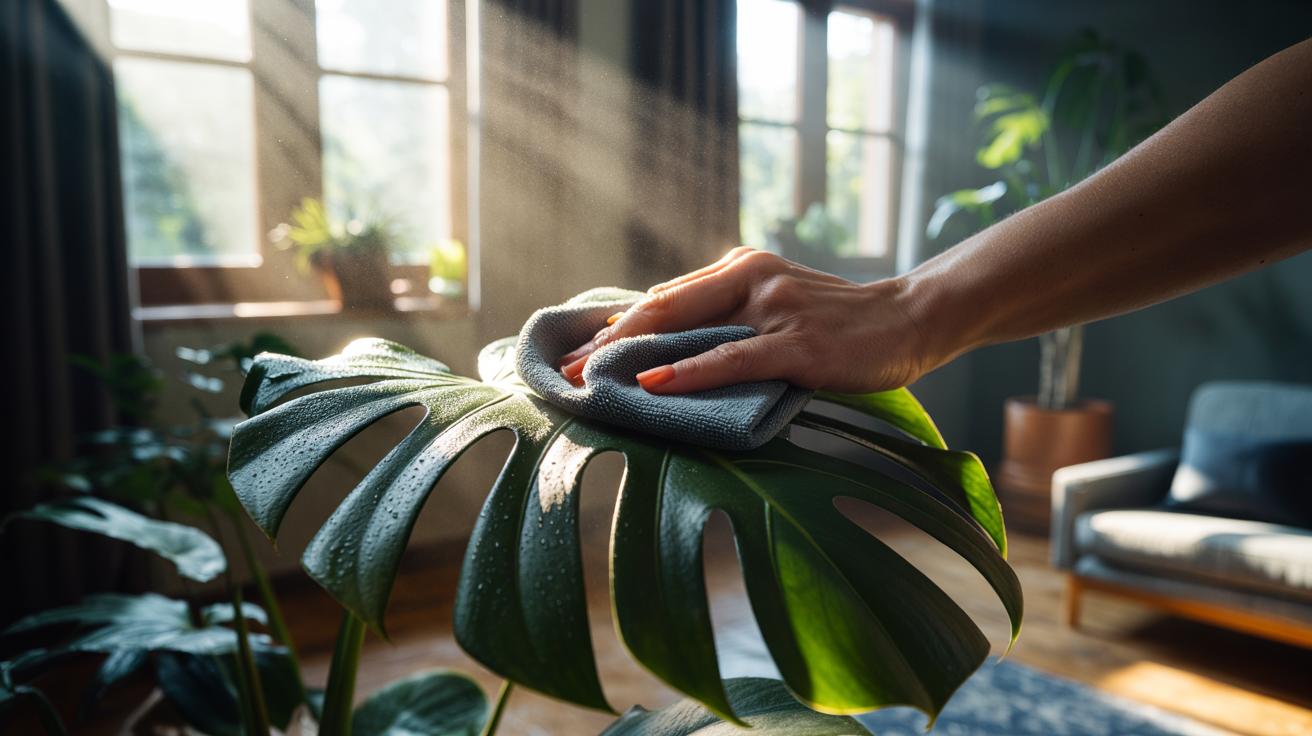
Start with gentleness. Support each leaf from beneath with one hand and wipe the upper surface with a damp, lint-free cloth, then repeat on the underside where many stomata sit. Use tepid water; cold shocks tissue and hot water can damage the cuticle. For persistent grime, add a single drop of unscented washing-up liquid per litre, rinse, and pat dry. In the shower, use a soft spray angled downwards, shielding the pot to avoid waterlogged compost. Always let foliage dry in bright shade to deter fungal spots.
Different textures need different tactics. Avoid wetting fuzzy leaves such as African violets; use a soft brush or handheld blower. Succulents and cacti prefer a dry wipe and a gentle, directed air puff. Skip leaf shine sprays and home hacks like milk or mayonnaise; oils can block pores and attract dust. Opt for distilled water if your tap is very hard to prevent chalky marks. A light clean every two to four weeks keeps the boundary layer fresh, maintains transpiration, and reduces hiding places for mites and scale. Consistency beats intensity: little and often is the safest rule.
Small Care, Big Payoff: Measurable Plant Benefits
Clean leaves intercept more usable light, raising the practical PPFD—the photosynthetic photon flux density—at the leaf surface. When stomata are clear and responsive, internal CO₂ supply improves, supporting higher rates of carbon fixation. Together, these effects elevate the leaf’s daily energy budget. You’ll often see the results in crisper variegation, sturdier stems, and leaves that orient themselves more confidently toward their light source. Even a modest boost in light at the leaf can transform growth in dim rooms, where plants live close to the minimum they require.
There are secondary gains too. A clean, functional cuticle sheds water quickly, reducing fungal risk. Efficient transpiration aids nutrient transport, so fertiliser regimes work as intended. Fewer residues mean fewer footholds for pests and a cooler leaf on sunny days, reducing scorch risk behind glass. While you may not own a lab meter, you can track progress by counting new leaves, watching internode length, and noting how quickly plants recover after watering. Photosynthesise is not just a textbook verb—it’s the daily work your plants perform, and your cloth makes it easier.
In a home where light is finite and air is shared with cooking, candles, and central heating, keeping foliage clean is a quiet, strategic intervention. It protects the machinery of photosynthesis, keeps pores open, and creates less hospitable terrain for pests and fungi. The routine takes minutes and pays off over months, turning weak, dusty specimens into vigorous, glossy displays. If you already adjust light and watering, leaf care is the missing third leg of the stool. How might you build a simple, regular leaf-cleaning habit into your plant care—perhaps alongside watering day or your weekly tidy—so your indoor jungle can truly thrive?
Did you like it?4.2/5 (23)