In a nutshell
- 🍂 Chopped leaves accelerate nutrient cycling by increasing surface area for microbes, forming stable humus that boosts moisture retention, reduces nutrient leaching, and improves soil structure.
- 🛠️ Shred efficiently with a mulching mower, leaf shredder, or a string trimmer-in-bin; work when leaves are dry, and mix roughly 1 part grass to 3 parts leaves. Bag extras to make breathable leaf mould.
- 📏 Apply thin, repeated layers: 5–8 cm on borders, 2–4 cm in veg beds, keeping mulch 5–8 cm from stems. Balance roughly C:N ≈ 30:1 with greens/compost and time applications after leaf fall, late winter, and post-establishment in spring.
- ⚠️ Avoid pitfalls: extra-shred leathery leaves, keep black walnut (juglone) away from sensitive edibles, hot-compost diseased foliage, keep mulch off crowns, deter slugs/rodents, and use a fine compost dusting to stop wind scatter.
- ✅ Payoffs include free, nutrient-rich mulch, better weed suppression, improved tilth, and climate resilience through moisture buffering—turning autumn debris into a closed-loop soil upgrade.
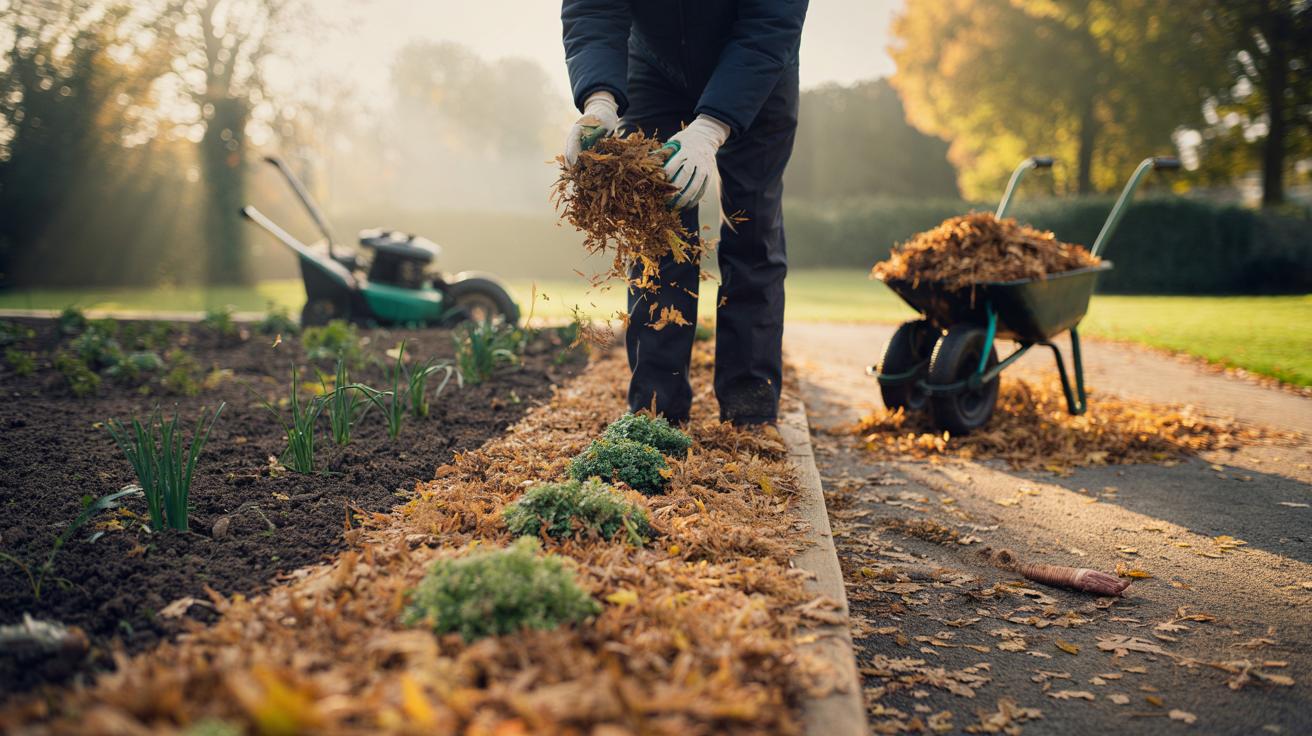
Every autumn, pavements, patios, and borders in the UK vanish beneath a quilt of leaves. Many see a mess; gardeners see a resource. When shredded and layered, fallen leaves become a free, nutrient-rich mulch that insulates soil, suppresses weeds, and boosts biodiversity. The secret is to chop leaves and apply them in thin, renewing layers, a technique that speeds decomposition and locks nutrients where roots can use them. Done well, leaf mulch becomes a seasonal cycle: trees feed soil, soil feeds roots, and gardens grow healthier with fewer bought-in inputs. Here is how to mulch efficiently and why chopped layers outshine whole leaves.
The Science Behind Leaf Mulch: Nutrient Cycling Explained
Leaves are slow-release packages of potassium, calcium, magnesium, and trace elements, but they also carry carbon-rich compounds like lignin. When left whole, their waxy cuticle and intact veins slow microbial access. Shredding multiplies surface area, letting fungi and bacteria colonise rapidly and unlocking nutrients in step with root activity. Chopped leaves act like a sponge and a sieve: they hold moisture, reduce temperature swings, and intercept soluble nutrients that rainfall might otherwise leach beyond the root zone.
As microbes digest shredded leaves, they form stable humus, which improves cation exchange capacity and crumbles heavy clay. There is an initial phase of nitrogen immobilisation, yet thin layers paired with a little green material prevent hunger gaps for plants. Earthworms drag fragments downward, mixing organic matter into the topsoil where most feeder roots live. The result is a self-feeding soil architecture that buffers drought, resists compaction, and keeps nutrients cycling locally instead of washing away.
Tools and Techniques for Fast, Clean Shredding
Speed depends on dryness and blade action. A mower with a mulching blade or closed grass box tears leaves into confetti; run two passes for a 1–3 cm average size. A standalone leaf shredder excels with tough species like oak; a string trimmer plunged into a bin of leaves is a handy budget hack. Shred leaves dry or just crisp, as damp clumps smear and compact. If you have grass clippings, mix 1 part clippings to 3 parts chopped leaves to balance carbon and nitrogen, avoiding a temporary nitrogen drawdown on hungry beds.
Safety and cleanliness matter. Wear eye protection, avoid stones, and work in sweeping arcs to gather scattered piles into mowable windrows. Shred near the destination bed to reduce lugging. Bag excess in breathable sacks to make leaf mould—it will break down into superior soil conditioner by the next growing season.
| Method | Best Conditions | Typical Size | Notes |
|---|---|---|---|
| Mulching mower | Dry, scattered leaves | 1–3 cm | Fast; mow twice for finer cut |
| Leaf shredder | Mixed species, tough leaves | 0.5–2 cm | Uniform output; louder |
| String trimmer in bin | Small batches | Variable | Budget option; wear goggles |
Layering Strategy: Depth, Mixes, and Timing
Think thin, think frequent. For beds and borders, aim for a 5–8 cm layer of chopped leaves; on vegetable plots during active growth, keep it to 2–4 cm and top up as it sags. Thin, repeated layers outperform one thick dump because they avoid matting and let rain and air pass freely. To spark decomposition, add a sprinkling of nitrogen—fresh lawn clippings, mature compost, or a dash of pelleted poultry manure—achieving a rough C:N balance near 30:1. Around perennials and shrubs, stop the mulch 5–8 cm short of stems to keep crowns dry.
Timing nudges biology. Apply the first blanket right after leaf fall to shield soil from winter washout, then refresh in late winter once the coldest rains pass. In spring, pull mulch aside to warm seedbeds, then reapply once seedlings are established. For heavy feeders like courgettes, layer chopped leaves over a thin compost base: the compost seeds microbes, the leaves extend moisture retention. Edge beds neatly to trap mulch and maintain a tidy, intentional look.
Avoiding Pitfalls: Allelopathy, Pests, and Aesthetics
Not all leaves behave the same. Waxy or leathery types—oak, holm oak, magnolia—need extra shredding to avoid slick mats. Small amounts of black walnut leaves are fine in ornamentals but avoid them around sensitive edibles due to juglone. If leaves are riddled with fungal diseases (apple scab, rust), either hot-compost them or send them away; cool leaf piles may not reach sanitising temperatures. Keep mulch off trunks and crowns to prevent rot and discourage vine weevil or slug hideouts.
Slugs appreciate damp cover. In edible beds, pair leaf mulch with grit rings or beer traps until predators catch up. Rodents dislike exposed runs, so avoid deep mulch in vole-prone areas and keep grass trimmed along bed edges. To stop wind scatter, moisten layers lightly or cap with a fine compost dusting. If nitrogen drawdown nips leafy crops, water in a dilute seaweed feed, which brings micronutrients without forcing sappy growth. The goal is a living, breathable blanket that looks deliberate, not messy.
Chopped-leaf mulching turns a seasonal nuisance into a closed-loop system that feeds soil life, traps rainfall, and recycles tree-borne minerals precisely where plants need them. By shredding, layering thinly, and timing top-ups, you convert leaves into humus-building mulch that improves structure and fertility year on year. The method costs almost nothing, reduces waste, and fortifies gardens against erratic weather. As the next fall of leaves begins, will you reach for the bin, or the mulching blade—and which beds will you prioritise for a trial run this season?
Did you like it?4.6/5 (28)