In a nutshell
- 🌿 Mint’s volatile aromatic oils—notably menthol (peppermint) and carvone (spearmint)—confuse pests like aphids, ants, flea beetles, and whiteflies, creating a constant, low-level scent barrier rather than a pesticide.
- 🪴 Optimise growing conditions: bright morning sun and moisture-retentive, free-draining soil with compost; prioritise containment using large pots or 20–30 cm deep rhizome barriers and maintain spacing for airflow to keep oil output high.
- 🌬️ Place mint upwind of vulnerable beds and along pest “highways” (greenhouse doors, bed edges); use ring planting at row ends and stagger different varieties to layer scents without smothering crops.
- ✂️ Keep the barrier active: pinch tips fortnightly, harvest every 2–3 weeks, and avoid flowering to maintain oil concentration; divide roots annually and feed lightly for vigorous, aromatic new growth.
- 🧪 Double-duty clippings: use as a light mulch and make a quick mint tea masking spray (plus a drop of mild soap) for short-term flare-ups; overwinter divisions to deploy fresh plants early in spring.
Mint smells like summer and tastes like fresh lemonade, yet its real value in the garden is tactical. Plant it astutely and you create a living, scented moat that discourages pests from crossing into your crops. The trick isn’t simply growing mint. It’s placing the right variety in the right microclimate, controlling its roots, and timing your cuts so the foliage keeps pumping out aromatic oils. Done well, the payoff is quiet and constant: fewer aphids on brassicas, fewer ants patrolling beans, fewer whiteflies in the greenhouse. Think of mint as a dynamic, renewable line of defence that works while you sleep.
Understand Mint’s Pest-Repelling Power
The mint family (Mentha spp.) brims with volatile compounds such as menthol, carvone, and limonene. These terpenes confound pest navigation, mask host-plant odours, and make leaf surfaces less appealing. Peppermint is punchy. Spearmint is gentler but prolific. Apple mint is soft, yet persistent. None is a silver bullet, yet together they create a tapestry of scent barriers that pests prefer to avoid. It’s the constant, low-level aroma that does the heavy lifting, not the occasional crush of a leaf.
In British plots, gardeners most often deploy mint to deter aphids, ants, flea beetles, and whiteflies. Anecdotally, the sharp fragrance also interrupts scouting by cabbage whites around brassicas. You’re not poisoning anything; you’re exploiting ecology. Position mint so breezes move the aroma across vulnerable beds, keep foliage lush through regular trimming, and maintain healthy soil so the plant can regenerate aromatic growth quickly after harvest.
Site, Soil, and Containment That Maximise Scent
Mint thrives in bright, indirect light: morning sun, afternoon shade suits much of the UK. Aim for moisture-retentive, free-draining soil enriched with compost; neutral to slightly alkaline pH works well. Water consistently. Stress reduces leaf oils and weakens your scent shield. In poor soils, a fortnightly liquid feed keeps plants vigorous. Strong growth equals stronger aroma. Starved mint won’t repel much.
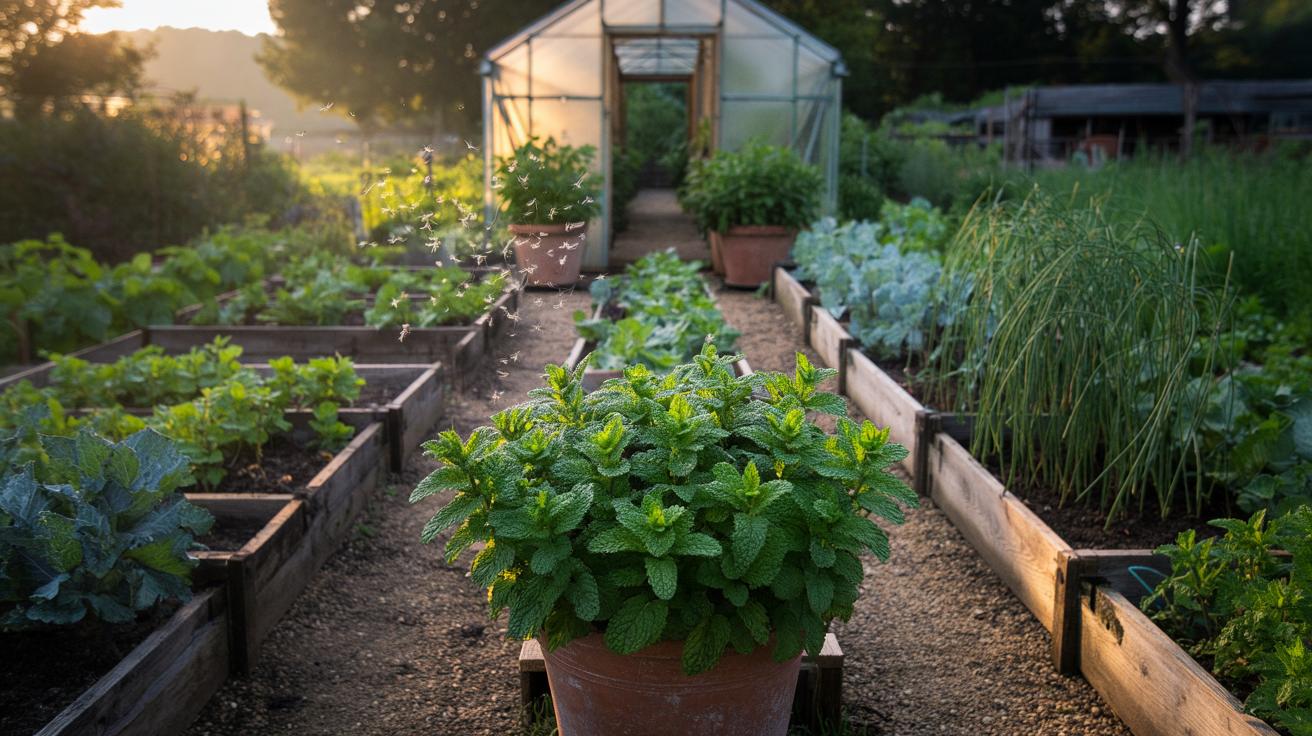
Containment is non-negotiable. Use a large container or sink a bottomless pot or rhizome barrier 20–30 cm deep to curb runners. This simple barrier prevents mint from taking over and keeps its scent where you need it. Space clumps 30–45 cm apart for airflow; crowding invites mildew, cutting oil output. For patios and small plots, cluster pots at bed corners so breezes drift scent across crops. On allotments, plant mint in discrete “scent stations” upwind of susceptible rows, not woven through every bed.
Prune roots annually. Lift, divide, and refresh compost in spring or autumn. A rejuvenated crown bursts with new shoots loaded with volatile oils—your season-long insurance policy.
Smart Companion Placement Around Vulnerable Crops
Think like a mapmaker. Identify pest highways—greenhouse doors, leeward edges where warm air pools, the sunny side of brassica beds—and anchor mint there. Use ring planting around courgettes to interrupt aphid scouts. Tuck pots by bean canes where ants farm sap-suckers. For salad tunnels, place mint upwind so scent flows through vents. In mixed borders, stagger spearmint and peppermint to layer aromas. Don’t interplant too densely with crops; mint should shield, not smother.
Use this quick guide to align problem, variety, and placement. It’s simple, scalable, and easy to adjust mid-season if pressure spikes after warm spells or heavy rain.
| Pest | Mint Compound/Scent | Plant to Protect | Placement Tip |
|---|---|---|---|
| Aphids | Menthol (peppermint) | Brassicas, beans, roses | Pots upwind; ring plant at row ends |
| Ants | Carvone (spearmint) | Beans, soft fruit | Cluster near ant trails and canes |
| Flea beetles | Sharp mixed terpenes | Rocket, radish, brassicas | Edge beds with containers 30 cm apart |
| Whiteflies | Cooling menthol blend | Tomatoes, cucumbers | At greenhouse door and inner corners |
Season-Long Maintenance and Tactical Harvesting
Consistency keeps the barrier alive. Pinch tips fortnightly in spring to force bushiness; harvest bigger handfuls every three weeks in summer. Each cut triggers a flush of aromatic new growth. Don’t let plants flower if your priority is pest deterrence—oil concentration dips once blooms set. Leave a sacrificial patch to flower for pollinators if you like, but keep your “defence line” vegetative.
Use clippings twice. First in the kitchen. Then as a light surface mulch under susceptible crops; renewing the layer after rain recharges scent at ground level. For hot spells or greenhouse flare-ups, brew a quick mint tea spray: steep a packed handful of leaves in boiling water, cool, strain, add a drop of mild soap, and mist leaf undersides in the evening. This isn’t a pesticide; it’s a short-lived masking spray that complements your living barrier.
In autumn, cut back, divide, and heel in divisions under fleece or in a cold frame. Winter pots kept ticking over indoors can be set out early, establishing a fresh April aroma before pests gear up.
Plant mint with intent and you turn a common herb into a quiet garden bodyguard. Contain the roots, feed the leaves, place it where air carries scent past vulnerable crops, and refresh growth on a tidy schedule. The result is fewer outbreaks, less firefighting, and more calm summer evenings. You’ll still scout, of course. You’ll still hand-pick the odd offender. But the balance tips your way. Which beds in your garden are begging for a mint “scent station,” and how will you arrange them to ride the wind this season?
Did you like it?4.5/5 (22)