In a nutshell
- 🌿 Used tea leaves add organic matter, light nitrogen, and moisture retention, gently conditioning soil and supporting worms and microbes.
- 🧪 Prep smart: cool, squeeze, then open bags and keep only leaves; avoid plastic or stapled meshes and perfumed blends; compost certified paper bags.
- 🫖 Apply in several ways: brew a mild tea tonic, top-dress as mulch, or add as a green input to compost, watering after to speed integration.
- 📊 Match tea to plants: black/hibiscus for acid-lovers (camellias, blueberries), green/rooibos for seedlings and houseplants; trial small amounts and observe.
- ⚠️ Avoid mistakes: keep strong caffeine away from seeds, skip dairy-dipped or flavoured teas, don’t overapply near lime-lovers (lavender, thyme); think little and often.
Britain runs on tea, and our gardens can, too. Every mug leaves behind a small, soggy resource that’s often binned without a thought. Yet used teabags offer gentle nutrients, organic matter, and moisture-retaining fibres that plants adore. Repurposing them cuts household waste and trims your spend on shop-bought soil boosters. It’s simple, thrifty, and quietly powerful. From balcony pots to allotment beds, tea leaves can be brewed again for a tonic, sprinkled as mulch, or fed through a compost heap. Handled correctly, they become a reliable, low-cost tool for healthier soil and sturdier growth. Here’s how to reuse them safely, effectively, and with a journalist’s eye for practical detail.
Why Teabags Belong in the Garden
Used tea leaves contain organic matter that breaks down into humus, improving soil structure. They hold water like tiny sponges. In light, sandy soils this can be transformative, slowing evaporation and smoothing out care routines. There’s also a trace of nitrogen from the leaf material, a boon for leafy growth when used modestly. Tannins add a mild acidity that suits camellias, azaleas, and blueberries. Worms love the soft particles. They pull them down, aerating the bed naturally. In short, tea leaves turn waste into a gentle soil conditioner with real, visible benefits.
There’s a sustainability kicker. Every reused bag means less rubbish, fewer plastic liners bursting in landfill, and a smaller footprint for your garden. As a surface mulch, the leaves knit together, suppressing small weeds while feeding the micro-life beneath. Think of them as a slow, steady feed rather than a dramatic fertiliser hit. Consistent, modest applications work best. Scatter, mix lightly, and let biology do the heavy lifting.
How to Prepare and Apply Used Teabags
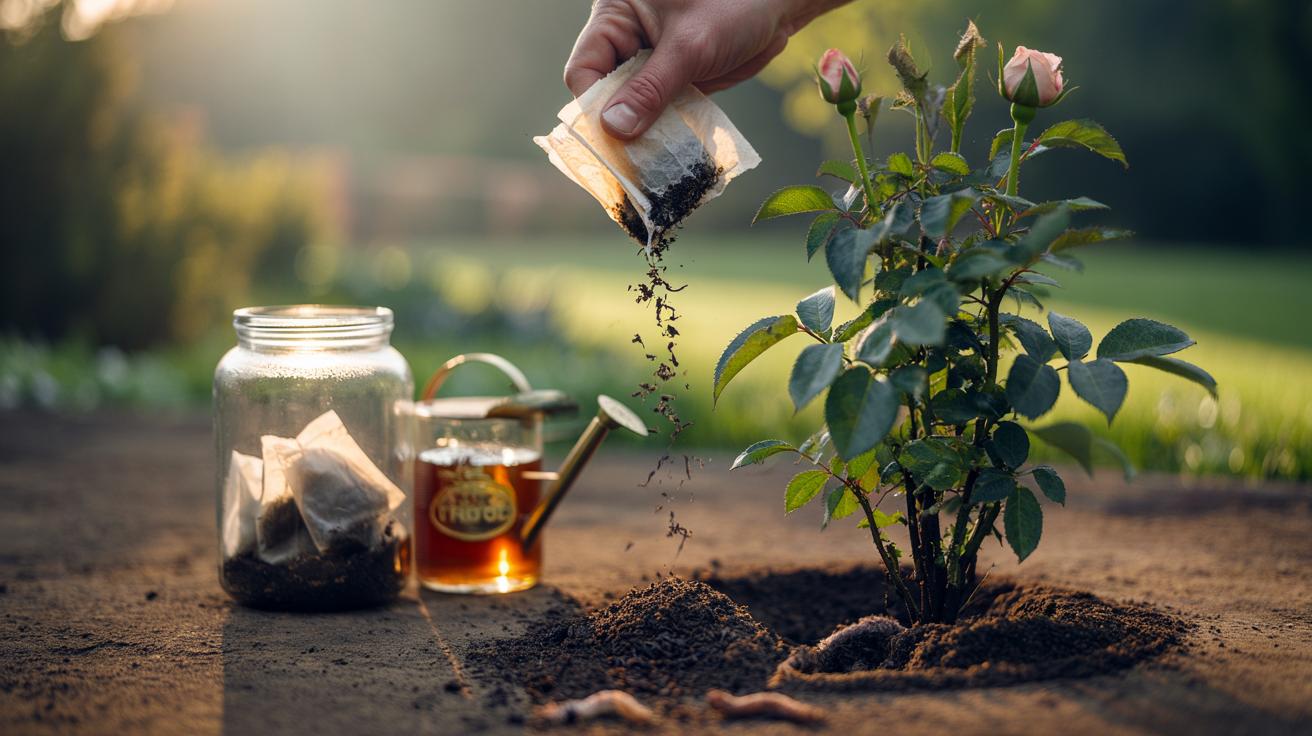
Start with safety. Let bags cool. Squeeze out excess liquid. Check the material: many UK teabags still contain polypropylene or nylon mesh. Do not bury intact plastic teabags in soil or compost. Instead, tear them open and keep only the leaves. Paper or plant-based “compostable” bags can be composted whole if certified, but double-check packaging. Remove staples and tags. Perfumed blends? Skip them; oils can upset soil microbes.
For a quick feed, make a weak “tea tonic”: steep two or three used bags in a litre of rainwater for a few hours, then water at the base. It’s subtle, not a miracle grower, but handy in mid-season. Alternatively, sprinkle strained leaves in a thin layer around plants and scratch in lightly, then water. Houseplants benefit, too, though sparingly. A light monthly top-dress is plenty for indoor pots; overdoing it can compact the surface. Compost heaps welcome tea leaves as a green input balanced with cardboard or straw.
Which Teas Suit Which Plants
Not all tea is equal. The type you drink nudges soil conditions in different directions, from gentle acidity to near-neutral additions. Use that nuance to match leaves with plant preferences. Acid-lovers enjoy black and hibiscus infusions; sensitive seedlings prefer caffeine-free, mild options. Keep it simple and watch how your beds respond across a season.
| Tea Type | Traits | pH Tendency | Good For |
|---|---|---|---|
| Black tea | Moderate tannins, light nitrogen | Slightly acidic | Roses, tomatoes, camellias |
| Green tea | Gentle, low odour | Mildly acidic | Herbs, leafy greens, ferns |
| Herbal (chamomile, rooibos) | Caffeine-free, soothing to microbes | Neutral to slightly acidic | Seedlings, houseplants |
| Fruit infusions (hibiscus) | Bold acidity | Acidic | Blueberries, azaleas |
| White tea | Very mild, clean | Near-neutral | Delicate ornamentals |
Always trial small amounts first. Garden soils vary wildly. If a plant looks stressed, pause and dilute your approach. Observation beats guesswork. Pair tea mulch with autumn leaves or shredded paper to balance carbon and keep the topsoil friable.
Common Mistakes and Safety Notes
Flavoured teas with vanilla, citrus oils, or added sugars are poor candidates. They can attract pests or skew microbial life. Dairy-dipped bags belong in the bin, not the border. Watch for mould: a light bloom is normal in compost, but thick, smelly mats on pot surfaces suggest overapplication. Stir them in or remove. If your teabags don’t break when stretched, they likely contain plastic; discard the mesh, keep only the leaves. Clarity on materials matters.
Caffeine can inhibit germination in sensitive seeds. Keep strong black tea leaves away from seed trays; choose caffeine-free herbal remnants instead. Tea is mildly acidic, so don’t heap it around lime-loving plants such as lavender or thyme. Little and often wins. Mix with other kitchen scraps—vegetable peels, coffee grounds—in the compost to avoid a tannin-heavy heap. And timing helps. Work tea leaves into soil before rain or water straight after application. Moisture speeds integration and discourages wind scatter.
Used teabags aren’t a silver bullet, yet they shine as a steady, sustainable helper. They feed soil life, cut waste, and keep costs down, all while slotting easily into a weekly gardening rhythm. Start small, track results, and tune your method to your plants and pH. The best fertiliser is the gardener’s attention. With a jar by the sink for cooled, emptied bags, you’ll build a quiet habit that pays through the season. What will you try first: a mellow tea tonic for tired pots, or a mulch ring around your roses to test the difference?
Did you like it?4.4/5 (28)