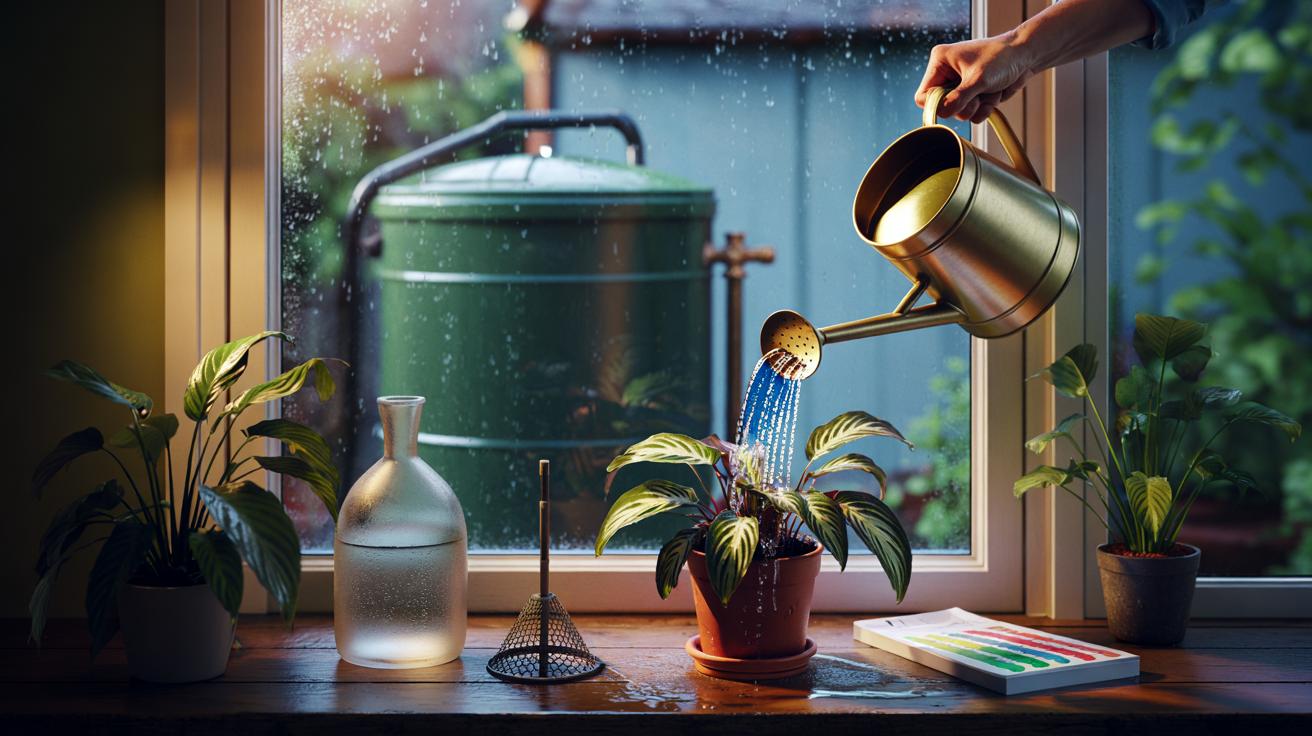
In a nutshell
- 🌧️ Use soft, low‑mineral rainwater to reduce salt build‑up, prevent leaf tip burn, and support salt‑sensitive plants like Calathea, peace lilies, and carnivorous species.
- 🛡️ Collect safely: clean gutters, fit a first‑flush diverter, avoid lead/copper roofs, and store in a food‑grade, opaque water butt with a tight lid in a cool, dark spot.
- 🔬 Test and treat: aim for pH 5.8–6.8 and TDS <200 ppm for sensitive plants; let water settle, use activated carbon, and dose hydrogen peroxide (1–2 ml/L) if needed.
- 🌿 Water wisely: bring to room temperature, irrigate at soil level until slight runoff, empty saucers, avoid misting stored rainwater, and supplement occasionally with Cal‑Mag.
- 🚫 Stay vigilant: discard water that’s cloudy or smelly, use side taps instead of dipping cans, and rotate stocks—about 1–2 weeks in summer, up to a month in winter.
Saving rainwater for your indoor jungle is thrifty, climate‑savvy, and surprisingly simple. In Britain’s stop‑start rainfall, a few smart habits turn a grey‑skies downpour into liquid gold for pots and planters. Yet safety matters. Roof run‑off can carry fine grit, bird droppings, and trace metals, while stored water may stagnate if neglected. The goal is clean, soft water that houseplants adore, without unwanted microbes or residues. With a careful setup, quick checks, and occasional treatment, you can reduce tap-water use, prevent salt build‑up, and help sensitive species shine. Treat rainwater like a living ingredient: collect neatly, store cool, and test lightly.
Why Rainwater Benefits Houseplants
UK tap water is often hard, laced with calcium, magnesium, and sometimes fluoride. Rainwater, by contrast, is naturally soft and usually low in dissolved solids. That makes it ideal for salt‑sensitive plants such as Calathea, Maranta, Fittonia, peace lilies, and carnivorous species. Leaves spot less. Soil doesn’t cake. Fertiliser routines become gentler because you’re not fighting mineral build‑up every watering. Soft water helps prevent crispy tips and stubborn white crusts on the pot rim. It also lets nutrient solutions work as intended, particularly for semi‑hydro or LECA setups where conductivity matters.
There’s nuance. Fresh UK rain typically sits around a slightly acidic pH of 5.6–6.0, which suits most tropical houseplants. Succulents, cacti, and Mediterranean herbs tolerate a wider range but don’t demand acidity. Rainwater also arrives free of chlorine and chloramine, so beneficial microbes in your potting mix thrive. The caveat is contamination: roof materials, urban particulates, or droppings can hitch a ride. Use clean collection points and avoid visibly dirty first run‑off to preserve the advantages without introducing new problems.
Collecting and Storing Rainwater Safely
Start at the top. Keep gutters cleared of leaves and silt, fit a mesh guard at the downpipe, and consider a first‑flush diverter to discard the initial dirty litres after a dry spell. Avoid collecting from roofing that can shed harmful residues: old lead flashing, untreated copper guttering, crumbly bitumen felt, or flaking paint. For indoor plants, favour a food‑grade, opaque water butt with a tight lid to block light and exclude debris and insects. Dark, cool storage slows algae and bacterial growth dramatically. Label the butt’s install date and keep a simple cleaning schedule.
Stagnation is the enemy. Draw from the tap on the butt’s side rather than dipping a can, which stirs settled sediment. In warm months, aim to use stored rain within 1–2 weeks; in winter, no more than a month. If water ever looks cloudy or smells swampy, don’t salvage it—empty and clean. Position the butt out of direct sun and insulate against winter freeze‑thaw stress. Indoors, decant into smaller sealed jerrycans for short‑term use. Never aerosolise stored rainwater in fine misters inside the home; water at soil level to avoid breathing any droplets.
Basic Testing and Simple Treatment at Home
You don’t need a lab. A quick routine—look, sniff, measure—keeps things safe. Clear water with a neutral, earthy smell is usually fine. Use cheap pH strips and a pocket TDS/EC meter to spot issues before they hit your plants. For most houseplants, pH 5.8–6.8 is comfortable; sensitive species prefer <200 ppm TDS, while sturdy foliage tolerates up to 300–400 ppm. If rain has washed across dusty roofs, let the water settle 12–24 hours, then decant the clear upper layer. When in doubt, filter and dilute.
Treatment can stay gentle. Pass water through a paper or coffee filter to remove fine particles, then through a small activated‑carbon cartridge if you suspect odours. A tiny dose of 3% hydrogen peroxide (about 1–2 ml per litre) can curb microbes without harming roots, but don’t overdo it. Boiling is rarely necessary for plants and concentrates minerals by evaporation. If your rainwater is very soft, supplement with a Cal‑Mag fertiliser occasionally to stabilise pH and support growth, especially in hydroponic or semi‑hydro setups.
| Check | Why It Matters | Typical Target | Quick Fix |
|---|---|---|---|
| Clarity & smell | Flags algae or decay | Clear, neutral | Settle, carbon filter, or discard |
| pH | Root uptake, nutrient balance | 5.8–6.8 | Adjust with Cal‑Mag or a few drops of acid |
| TDS/EC | Salt stress risk | <200 ppm for sensitive plants | Dilute with distilled or fresh rain |
How and When to Use Rainwater Indoors
Bring rainwater to room temperature before watering; cold water can shock roots. Pour slowly at soil level until you see a little runoff, then empty saucers promptly. This gentle flush removes accumulated salts from fertilisers and previous hard‑water use. For very soft rainwater, run a Cal‑Mag feed monthly or alternate with a lightly mineralised watering to prevent calcium deficiency in tomatoes-on-the-window or thirsty monsteras. Do not mist foliage with stored rainwater; if leaves need a refresh, wipe with a damp cloth instead.
Match water to plant temperament. Spider plants, calatheas, and carnivorous plants revel in low‑mineral rainwater. Hoyas, philodendrons, and many aroids respond with lustrous growth. Succulents are tolerant but require drying cycles—rainwater is fine, just infrequent. After repotting or during seedling stages, use the freshest water you have. If you’re unsure, trial on one pot for a fortnight and watch for tip burn or edema. Any persistent odour, film, or cloudiness means discard and reset your storage.
Used thoughtfully, rainwater becomes a quiet ally for greener rooms and steadier bills. The method is minimalist: clean collection, dark storage, quick tests, and soil‑level watering. Your reward is soft water that sidesteps salt stress and lets fertilisers do their job without fuss. Keep it simple, keep it fresh, and your plants will tell the story in glossy leaves and steadier growth. What’s your next step—will you fit a first‑flush diverter, pick up a pocket TDS meter, or start with a single sealed can by the back door?
Did you like it?4.5/5 (22)