In a nutshell
- 🌿 Use rotation to share light around the pot, preventing lean and promoting even growth, denser canopies, and sturdier, upright stems.
- 🧪 Understand the science: phototropism and auxin create one-sided elongation; regular turns reset these gradients, improving structure and photosynthetic efficiency.
- ⏰ Follow practical routines: a quarter-turn weekly for most plants, half-turn every 3–4 days for succulents, and fortnightly turns for ferns; mark pots and keep placement consistent.
- ⚠️ Avoid common mistakes: don’t spin too often, and pair rotation with proper watering and feeding; soften harsh contrasts with sheers, reflectors, or a small grow lamp.
- 🏠 Ideal for UK homes: seasonal light swings make small, predictable turns smarter than relocations, yielding uniform leaves, balanced roots, and a tidy 360° silhouette.
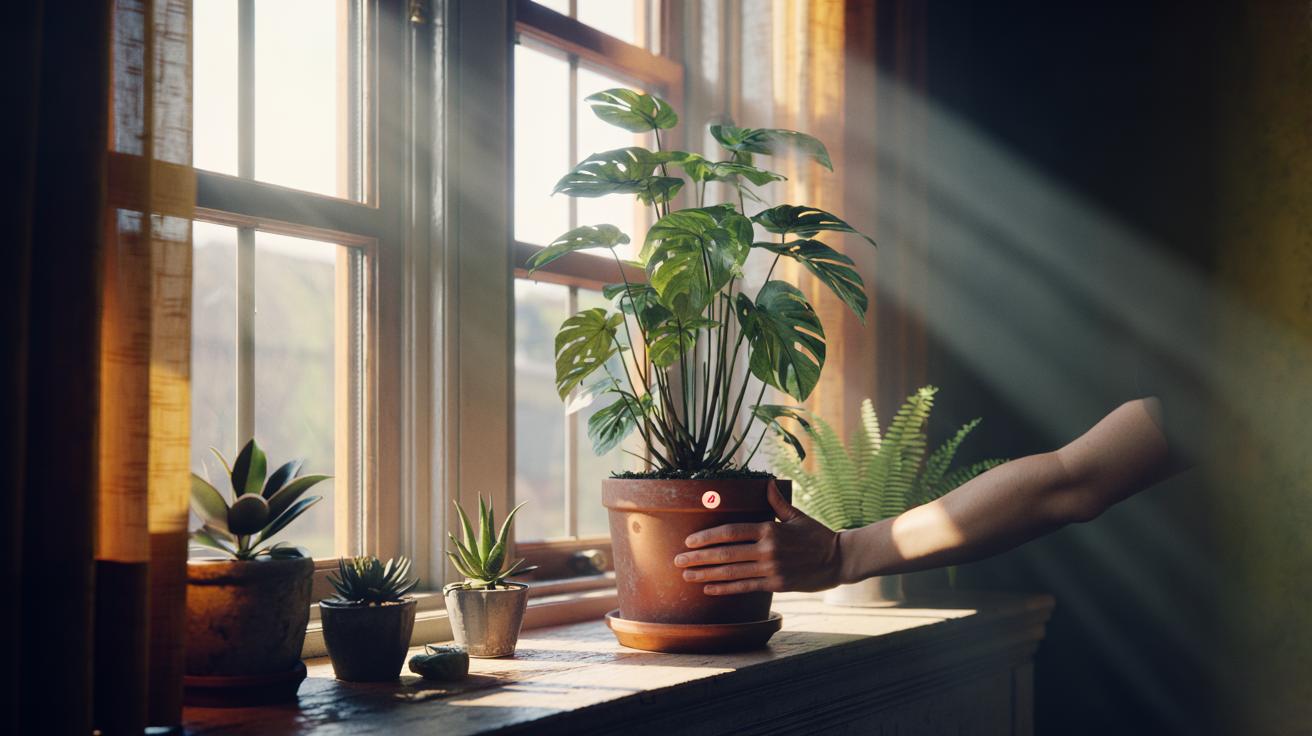
Left to their own devices, houseplants will lean, twist, and thin out in the direction of their brightest window. It’s nature’s logic at work, not a keeper’s failure. The simple habit of rotating your pots interrupts that one-sided growth and nudges stems to fill space all the way around. Over a season, this small ritual delivers a fuller canopy, sturdier stems, and deeper colour. Think of rotation as a gentle steering wheel for light-hungry foliage. For UK homes where winter light slants low and summer glare can be fierce, a considered spin on the sill can be the difference between stringy stems and even growth that actually looks intentional.
How Light Drives Plant Shape
Plants grow towards light because light is survival. Windows create a directional beacon, so a potted fern or rubber plant will repeatedly orient leaves and stems to capture it. Over weeks, one side fattens while the shaded side lags, producing the familiar lean. Rotation counters that bias by sharing the brightest seat at the table among all sides of the plant. The result is a balanced silhouette, with foliage distributed across 360 degrees rather than clustered on one arc of the pot.
There’s a second win: light distribution influences leaf size, thickness, and colour. When every quadrant takes turns in prime light, you reduce patchy foliage and encourage uniform energy production. Short internodes and compact habit follow. In living rooms with a single south-facing bay, a quarter-turn each week can transform spindly growth into a tight, lush crown that looks like it came from a boutique nursery.
Rotation also minimises lopsided root anchoring. A plant that perpetually leans develops uneven mechanical stress. Share the light, share the load, and the plant stands straighter.
The Mechanics of Phototropism and Auxin Flow
The science is elegant. Plants sense light via photoreceptors and respond through phototropism, a growth behaviour that bends stems toward brightness. The hormone auxin moves away from the lighted side to the shaded side of a stem, triggering differential cell elongation. One flank grows faster, so the shoot curves. Leave a pot static, and this asymmetry compounds daily. Rotate it, and you reset the gradient, distributing that elongation around the stem in turns.
Regular rotation interrupts hormonal pile-ups that create weak, stretched tissue on one face. Instead, each side gets a period of modest stretch followed by consolidation, which encourages thicker stems and a sturdier framework. Even leaf orientation improves. Many species shift leaf angles to optimise photosynthesis; rotation trains these micro-adjustments across the whole crown. The upshot is efficiency. The plant harvests light more evenly, wastes less energy correcting a lean, and directs resources into density rather than desperate reach.
Practical Rotation Schedules for Busy Homes
Your routine can be simple. Mark the pot rim with a discreet dot and give a quarter-turn on the same day each week. For vigorous species in summer, step up to twice weekly. Low-light corners call for patience: rotate less frequently and combine with a reflector or sheer curtain to soften contrast. Use watering day as a cue, and keep orientation notes for fussy specimens like fiddle-leaf figs that dislike big changes.
| Plant Type | Light Preference | Rotation Frequency | Notes |
|---|---|---|---|
| Monstera | Bright, indirect | Quarter-turn weekly | Stake for even fenestration |
| Rubber plant | Medium–bright | Quarter-turn weekly | Prune tips to balance height |
| Succulents | Bright, direct | Half-turn every 3–4 days | Prevents one-sided etiolated rosettes |
| Ferns | Low–medium | Quarter-turn fortnightly | Keep humidity steady |
Pair rotation with consistent pot placement. Moving a plant across rooms resets its light map and can shock growth. Small, predictable turns beat dramatic relocations. For trailing plants, rotate the whole hanger and gently reposition vines to encourage a balanced cascade.
Common Mistakes and How to Fix Them
Spinning too often is a trap. Plants need time to reorient; daily turns can cause perpetual adjustment without consolidation. Instead, choose a steady cadence and stick to it. Another misstep is rotating while ignoring watering and nutrition. Rotation won’t correct chronic thirst or nutrient gaps that also cause uneven growth. Balance light, moisture, and feed, and rotation becomes the multiplier rather than the miracle.
Mind the backdrop. A plant that faces a blinding window and a dark room experiences harsh contrast; rotating only shares the problem. Soften extremes with sheer curtains, bounce light off pale walls, or add a modest grow lamp. Watch for signposts: leaves crowding one side, elongated internodes, or a pot that tips. These cues say it’s time for a measured turn. If a specimen has already developed a hard lean, stake gently, prune to redistribute energy, then adopt a regular rotation rhythm to maintain symmetry.
In the end, rotation is journalism’s favourite kind of fix: small, consistent, evidence-backed. It respects a plant’s instincts while coaxing a shape that suits our living spaces. No gadgets required. Just a hand on the pot and an eye on the light. Share the sun and you share the strength. What rhythm will suit your own windowsill best, and which plant will you test first to see the difference in density, colour, and poise?
Did you like it?4.4/5 (22)