In a nutshell
- 🌿 Diagnose first: distinguish underwatering (feather-light pot, soil pulled from sides) from overwatering (yellowing leaves, musty smell), check for pests, and ensure drainage holes are clear—skip soaking if you suspect root rot.
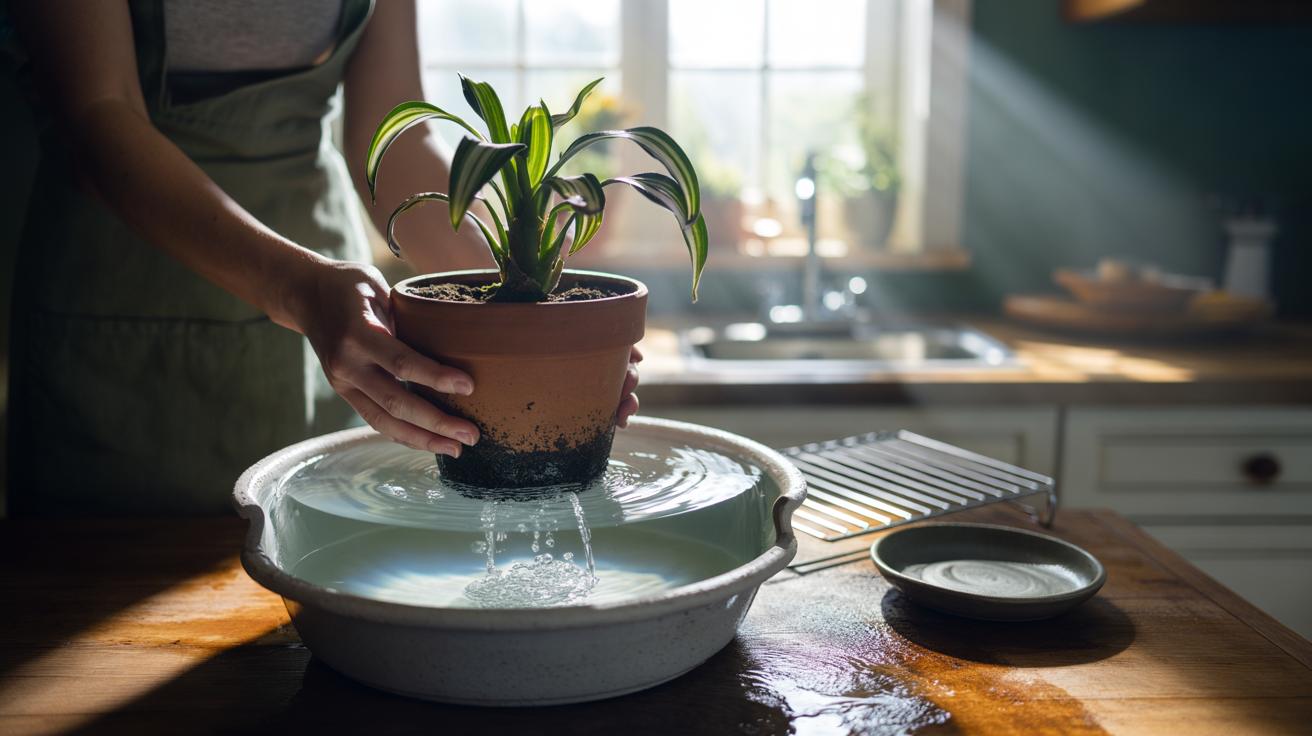
- 💧 Soak-and-drain steps: set the pot in tepid water up to halfway up the container, wait 10–45 minutes until bubbles stop, and aid capillary action with a few holes in compact soil; avoid submerging foliage and be cautious with succulents.
- 🚰 Drain thoroughly: lift onto a rack for 10–20 minutes, empty the saucer, and never leave the pot in standing water; return to bright, indirect light and delay fertiliser until roots stabilise.
- 🌞 Aftercare: expect perk-up within 48 hours, trim only crispy tips, water again when the top 2–3 cm are dry, feed after 1–2 weeks at half strength, and inspect roots if wilting persists; repot into an airy mix with perlite or bark if needed.
- 🔄 Prevent repeats: water by weight, use breathable, right-sized pots and an open mix, rotate in rain/filtered water in hard-water areas, dust and rotate leaves, and refresh the top layer seasonally for consistent moisture flow.
A drooping houseplant can look like a lost cause, yet the remedy is often surprisingly simple: the soak-and-drain method. When soil becomes hydrophobic or a rootball shrinks from drought, regular watering runs down the sides and never reaches the roots. By deliberately saturating the medium, then letting it shed surplus moisture, you reset hydration and restore turgor. Think of it as a controlled deep drink followed by a thorough emptying. This technique suits many foliage plants grown in peat- or coco-based mixes and is especially useful in dry, centrally heated UK homes. Below, you’ll find clear steps, safety checks, and practical aftercare to revive your plant without inviting rot.
Why Your Plant Droops and How to Prepare
Not all limp leaves mean thirst. Underwatered plants feel papery, the pot is feather-light, and soil pulls away from the rim; overwatered plants show yellowing and a musty smell. Preparation begins with a quick triage: inspect for pests, squeeze the pot to gauge compactness, and confirm that drainage holes are clear. If you detect sour, swampy odours or mushy stems, do not soak—address potential root rot first. Where dehydration is the culprit, assemble a basin or sink large enough to accommodate the pot, room‑temperature water, and a trivet or rack to aid draining. Remove decorative cachepots and empty the saucer so the plant cannot reabsorb stale water.
Choose water wisely. In hard‑water regions, limescale can accumulate; filtered or rainwater is gentler for sensitive species. Terracotta pots wick moisture faster than plastic, so they may need shorter but more frequent interventions. Light levels also matter: a thirsty plant in bright, indirect light bounces back quicker once roots rehydrate. Finally, dust off leaves to improve transpiration and check the rootball through the drainage holes; if roots are tightly spiralled, plan to repot in fresh, airy mix after recovery. Soaking treats dehydration; it cannot cure compaction or chronic overpotting.
| Indicator | Likely Cause | Action Before Soak |
|---|---|---|
| Feather-light pot, soil shrunk from sides | Underwatering | Proceed with soak-and-drain |
| Yellow leaves, musty smell | Waterlogging/rot | Skip soak; inspect roots, refresh mix |
| Dry top, damp core | Poor capillarity | Loosen surface, then controlled soak |
| No drainage holes | Trapped water | Re-pot or drill; don’t soak until fixed |
Step-by-Step: The Soak-and-Drain Revival
Set the pot in a basin and add tepid water until it reaches roughly halfway up the container’s height—avoid submerging foliage. Bubbles will rise as trapped air escapes; wait 10–45 minutes depending on pot size and medium density. Check progress by touching the soil: it should feel evenly moist, not sodden. For compact peat, gently poke a few holes with a chopstick to help capillary action. Stop the soak when bubbling ceases and the top looks uniformly darkened. Succulents and cacti are exceptions; use a briefer soak or skip entirely if they’re already borderline soft.
Lift the pot onto a rack or draining board and let excess water stream out for at least 10–20 minutes. Empty the saucer promptly and, if needed, use a towel as a wick beneath the pot to draw away lingering drips. Never leave a plant standing in water after saturation. Return it to bright, indirect light with good airflow. If leaves are extremely limp, stake temporarily to reduce stress on petioles. Resist the urge to fertilise immediately; freshly rehydrated roots are sensitive, and salt can scorch them. The goal is even moisture, not a soggy substrate.
Aftercare, Risks, and How to Prevent Repeat Slumps
Over the next 48 hours, expect leaves to perk up as cells regain turgor. Trim only fully crispy tips; keep viable tissue to fuel recovery. Maintain warmth and steady light, avoiding cold draughts that slow root activity. Resume normal watering only when the top 2–3 cm of soil is dry for tropical foliage, or deeper for drought-tolerant species. Feeding can wait one to two weeks, diluted to half strength. If wilting persists, slide the plant from its pot and inspect roots: healthy ones are firm and pale; brown, mushy roots require pruning and repotting into a fresh, airy mix with perlite or bark.
To prevent repeats, recalibrate watering by weight: lift the pot when it’s freshly watered and again when it’s ready to drink, memorising the contrast. Consider a breathable pot, right-sized for the root mass, and an open mix that doesn’t repel water when dry. In hard-water areas, rotate in rainwater to reduce mineral crust that causes hydrophobia. Consistency beats quantity—small, regular checks avert dramatic slumps. Dust leaves monthly, rotate the pot for even growth, and refresh the top layer of soil seasonally to sustain wicking and oxygen flow through the root zone.
The soak-and-drain method rescues dehydrated houseplants by restoring even moisture without drowning the roots, a balance that resets vitality and avoids guesswork. With a brief inspection, a measured soak, and disciplined draining, most droops are reversible within days. The longer-term win is a routine: right pot, airy mix, and watering guided by weight and light, not by calendar. When you trust the process, you water less often but more effectively. Which plant in your collection is most prone to dramatic slumps, and how will you adapt your setup to make soak-and-drain an occasional backup rather than a frequent necessity?
Did you like it?4.5/5 (20)