In a nutshell
- 🌅 Morning watering aligns with plant physiology: it fuels photosynthesis, lowers evaporation, and cuts overnight disease risk by letting foliage dry after dawn while supporting steady transpiration.
- 💧 Technique matters: water between 4:30–8:30am, deliver slow, deep watering to 15–20 cm, target the root zone, and use pulse cycles or drip irrigation for precise, waste-free soaking.
- 🪴 Tailor volume and frequency to conditions: 10–20 L/m² for beds, daily on sandy soils, slower but deeper on clay, and for containers water to first runoff, pause, then repeat to overcome hydrophobic pockets.
- 🛡️ Reinforce dawn watering with mulch (5–8 cm), light shade cloth in peak heat, and smart extras like water butts, cautious greywater use, wetting agents, and pot shading to stabilise moisture.
- ✅ The payoff: stronger roots, fewer wilts, reduced water waste, and calmer maintenance; build consistency at dawn to keep gardens resilient through any heatwave.
Heatwaves are hard on gardens. Soil bakes, leaves droop, and water vanishes as quickly as it’s poured. Yet one simple, low-cost tactic can tilt the odds in your favour: water in the cool of the morning. This timing synchronises with plants’ natural rhythms and the day’s first light. It sets them up before the mercury spikes, and it reduces waste. By getting moisture into the root zone at dawn, you build a reservoir that sustains growth through the fiercest afternoon glare. Here’s how the morning watering trick works, why it’s so effective, and how to refine it for different soils, containers, and crops.
Why Morning Watering Works During Heatwaves
Plants are not passive. As temperatures rise, they open and close stomata, pump water, and manage heat through transpiration. Watering at dawn means they start the day hydrated, with moisture available exactly when photosynthesis ramps up. In heatwaves, the gradient between moist roots and hot, dry air is intense. Morning watering shortens that gap, reducing stress before it spirals into wilting and sun-scorch. You also avoid the high midday evaporation that robs the surface before it percolates down.
There’s a hygiene angle too. Evening soakings leave foliage and soil surfaces damp overnight, creating a cosy microclimate for fungal pathogens like powdery mildew and botrytis. Morning water drains and dries through the day, keeping leaves cleaner and roots wetter. The soil absorbs more, because it’s cooler; watering doesn’t suddenly cool hot roots, which can shock some tender species. Evapotranspiration losses are lower, so each litre does more work.
Then there’s consistency. Heatwaves are marathons, not sprints. Regular dawn sessions build a steady moisture profile 15–20 cm deep. That’s the sweet spot for most fibrous roots. Healthy roots anchor plants against hot winds and pull nutrients more efficiently, translating into firmer stems, steadier flowering, and fewer blossom-end problems in fruiting vegetables. Think of morning watering as priming the pump for the entire day.
How to Water: Timing, Quantity, and Technique
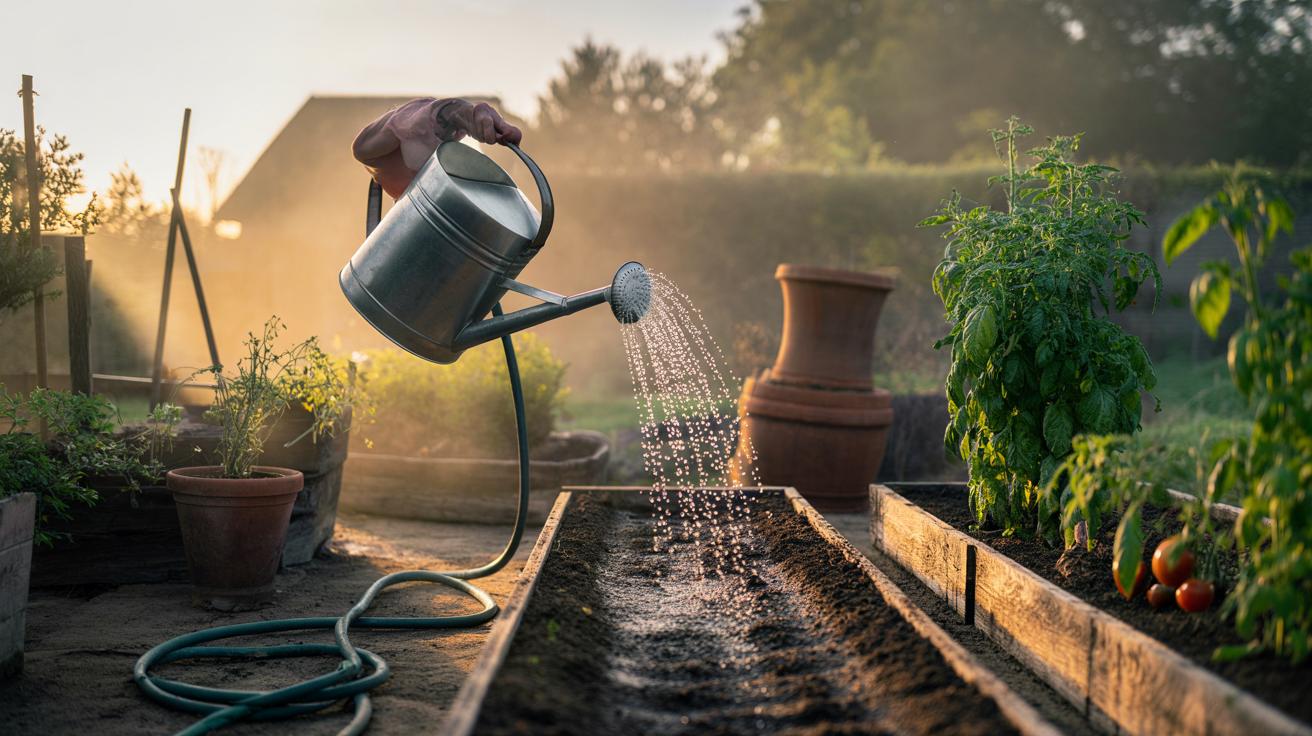
Set your window early: 4:30–8:30am in the UK is ideal; pre-dawn if a red alert heatwave is forecast. The principle is slow, deep watering. Point water directly at the root zone, not the leaves. Use a watering can with the rose removed or a soaker hose that trickles along the soil, giving time for infiltration. Aim for a steady soak that penetrates 15–20 cm; shallow sprinkling only teases the topsoil and encourages surface roots.
How much is enough? For beds, a guide is 10–20 litres per square metre, applied until the top few centimetres darken and the wetting front moves down. Containers are thirstier: water until you see the first drips from drainage holes, pause, then water again to overcome hydrophobic pockets. Check with your fingers; at 5–7 cm depth the soil should feel cool and just damp, not sodden. Repeat every 24–48 hours in severe heat, adjusting for soil type.
Technique matters. Water in pulses, giving the soil time to drink. Sweep the stream around the plant’s dripline to feed the finer feeder roots, not just the stem. Shield dark pots from direct sun so they don’t heat the compost like a stove. Where possible, automate with a timer on a drip irrigation line set at dawn; it’s consistent, frugal, and precise. Every drop you slow-deliver at sunrise saves several lost to midday evaporation.
Adapting for Soil, Container, and Plant Types
Not all soils are equal. Sandy beds drain fast and warm quickly, so they demand more frequent dawn drinks. Heavy clays hold water but can repel it when fully dry, requiring slow, patient rewetting. Loams sit comfortably in the middle. Containers change the rules again: limited volume, more heat, faster wind-driven losses. Young trees and fruiting vegetables need particular attention while establishing fruit and canopy.
| Situation | Best Morning Window | Depth/Volume Guide | Frequency in Heatwave | Notes |
|---|---|---|---|---|
| Sandy beds | 05:00–07:30 | 15–20 L/m² | Daily | Add organic matter; consider gel polymers sparingly. |
| Loam beds | 05:30–08:00 | 10–15 L/m² | Every 24–36 hrs | Mulch maintains the moisture plateau. |
| Clay beds | 06:00–08:30 | 8–12 L/m² | Every 36–48 hrs | Apply slowly to avoid runoff; break crusts. |
| Containers (30–40 cm) | 05:30–08:00 | Until first runoff, then repeat | Daily, sometimes twice | Double-pot or shade sides; use capillary matting. |
| Young trees/shrubs | 05:00–07:00 | 20–40 L per plant | Every 2–3 days | Water at the dripline; use a watering ring. |
| Established lawns | 05:00–07:00 | 10–15 L/m² | Twice weekly | Deep, infrequent cycles encourage deep roots. |
Match species to treatment. Lettuce and basil wilt early and appreciate daily dawn drinks; tomatoes prefer deep morning soaks and dry foliage to reduce blight risk. Mediterranean herbs like rosemary and thyme want excellent drainage and a lighter hand. Adjust timing and volume by feel, not habit—your fingers in the soil beat any calendar. Keep a log for a week of extreme heat; patterns appear quickly and save water without sacrificing growth.
Smart Add-Ons: Mulch, Shade, and Water Retention Aids
Morning watering shines brightest when paired with mulch. Lay 5–8 cm of compost, leafmould, wood chips, or straw around plants, keeping stems clear. It cools the surface, slows evaporation, and feeds soil life that builds structure. Mulch turns each dawn soak into a day-long moisture reservoir. In pots, top-dress with fine bark or coir to prevent crusting and repel harsh midday sun.
Temporary shade can tip the balance. A 30–40% shade cloth over salad beds, or a white sheet during peak heat, reduces leaf temperatures while keeping light high. Group containers to create a humid microclimate and block hot winds. Consider windbreaks on the sunward side. For irrigation, drip lines or a leaky hose on a dawn timer deliver precision with minimal waste, ideal under restrictions.
Think water-wise too. Collect roof run-off in a butt, and use cooled, clean greywater on ornamentals (avoid strong detergents; skip edibles). Wetting agents help rehydrate water-repellent composts, but test small areas first. Hydrogel crystals work in containers, used judiciously. The rule of thumb remains simple: slow dawn delivery, protected surfaces, and roots kept calmly, consistently moist. That’s the trifecta in a heatwave.
The morning watering trick isn’t fashionable wizardry—it’s practical, plant-centred timing. You’re working with physics and biology, not against them. By soaking the root zone at dawn, shielding the surface with mulch, and tailoring volumes to soil and container realities, you stabilise growth and cut waste dramatically. It’s calmer for you, kinder to the hose, and better for the planet in a parched summer. Start tomorrow at sunrise and watch the midday slump fade. What tweak will you try first—earlier starts, deeper soaking, thicker mulch, or a dawn drip line to make the habit effortless?
Did you like it?4.4/5 (23)