In a nutshell
- 🌡️ Mulch acts as an insulating, shading layer that keeps the root zone several degrees cooler, stabilising nutrient uptake and reducing heat stress during heatwaves.
- 💧 It cuts evaporation and disrupts capillary rise, lengthening watering intervals while boosting the soil microbiome and structure for better moisture retention.
- 🪵 Choosing the right mulch: wood chips/bark for perennials, leafmould or compost for hungry borders, straw for veg, and pale gravel for Mediterranean herbs—applied at suitable depths for maximum cooling.
- 🛠️ Application essentials: mulch after rain or deep watering, maintain a 3–8 cm layer, leave a stem “donut gap,” combine with drip/soaker lines, and use cardboard under coarse mulch to suppress weeds without suffocating soil.
- 🪴 Practical wins: lower watering workload, healthier roots, fewer runoff issues, and budget-friendly options like arborist chips and council compost—delivering an immediate cooling dividend.
Britain’s hotter, drier summers are challenging even well-tended plots, as beds parch between showers and containers scorch by mid-afternoon. Gardeners are turning to a simple fix with outsized impact: mulching. A single layer spread over the soil shields the root zone from heat and wind, slows evaporation, and softens the blow of hosepipe bans. Think of mulch as a breathable sunhat for your soil—one that keeps moisture where plants need it and temperatures on an even keel. Whether you grow roses, veg, or Mediterranean shrubs, the right material and method can mean the difference between wilting and thriving during heatwaves.
How Mulch Cools the Root Zone
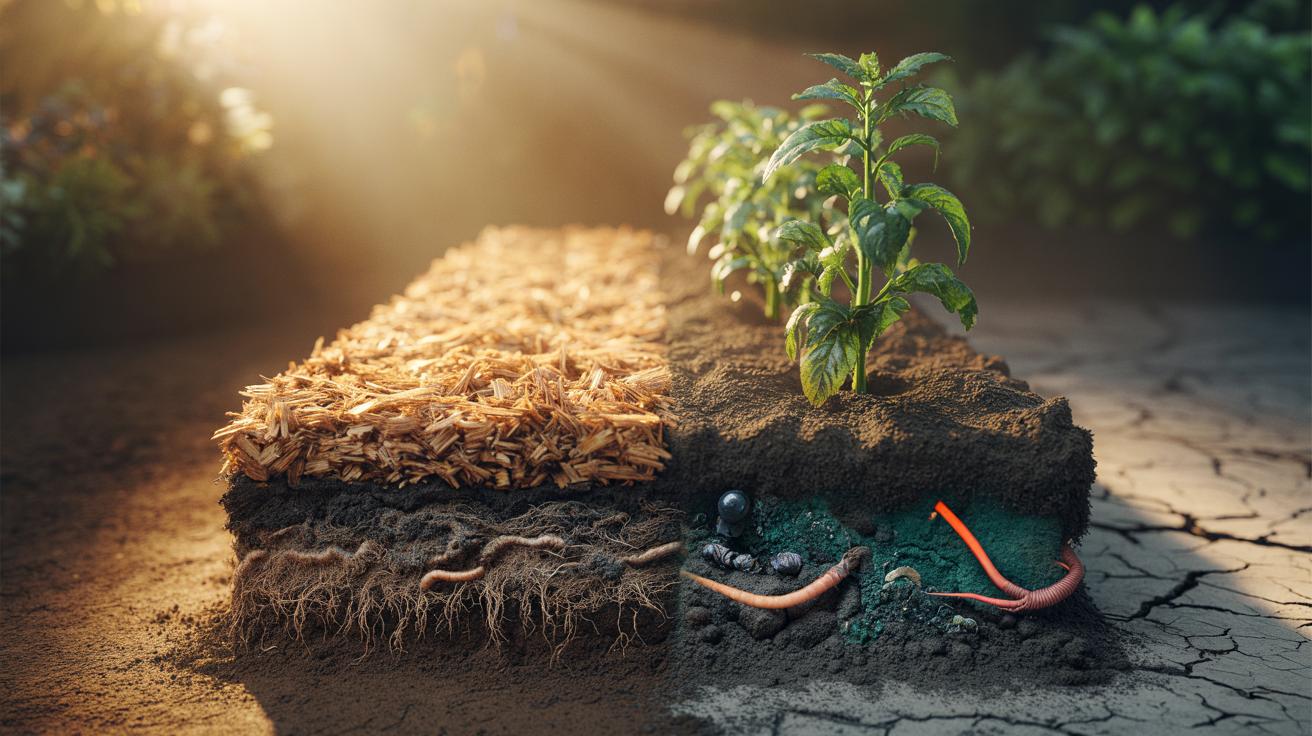
Mulch acts as a thermal buffer. By shading the surface, it cuts radiant energy reaching the soil, while the air pockets in organic mulches such as wood chips or leafmould provide insulation. That combination slows the daily temperature swing. In practical terms, a well-mulched bed can run several degrees cooler than bare ground at the height of a heatwave. Cooler soil equals less stress on feeder roots, steadier nutrient uptake, and fewer aborted blooms or fruits.
There’s a moisture story, too. Mulch reduces evapotranspiration by limiting direct contact between sun, wind, and wet soil. It also disrupts capillary rise, the wicking that pulls water towards the surface where it vanishes into warm air. Rain and watering soak in more efficiently as mulch blunts raindrop impact, preventing crusting and runoff. The result is longer intervals between waterings without compromising plant health. Beneficial life in the soil microbiome also thrives under mulch, building aggregate structure that further locks in moisture.
Choosing the Right Mulch for Heatwaves
Different gardens call for different covers. Coarse wood chips and shredded bark excel at cooling and moisture retention for shrubs, trees, and perennials. Leafmould and compost suit hungry borders and kitchen plots, adding fertility as they break down. Straw offers quick coverage for veg beds but may harbour slugs if left overly damp. For drought-loving plants such as lavender or rosemary, a pale gravel mulch reflects heat while preventing splash-back on foliage. Colour and texture matter: lighter, chunkier materials stay cooler and breathe better than fine, dark mulches.
| Mulch Type | Ideal Depth | Cooling Effect | Breakdown Speed | Best For |
|---|---|---|---|---|
| Wood chips/bark | 5–8 cm | High | Slow | Shrubs, trees, perennials |
| Leafmould | 4–6 cm | Medium–High | Medium | Borders, woodland plants |
| Compost | 3–5 cm | Medium | Fast | Veg beds, annuals |
| Straw | 5–7 cm | Medium | Medium | Soft fruit, veg rows |
| Gravel | 3–4 cm | Medium (reflective) | N/A | Mediterranean herbs, pots |
Budget-savvy options include free arborist chips from tree surgeons and council compost. If you’re steering clear of plastics, cardboard beneath a woody mulch creates a season-long weed barrier that still allows air and rain to pass. Avoid piling any mulch directly against stems or trunks to prevent rot and pest hideaways. Match the material to your plants and aspect, and the cooling dividend arrives the moment the sun does.
Application Techniques for Maximum Moisture and Cooling
Timing is critical. Mulch in spring after rain, or water deeply first; sealing in a dry layer traps dryness, not moisture. Spread evenly to the recommended depth, then feather the edges so water doesn’t sheet off. Around woody plants, leave a 5–10 cm “donut gap” clear of the stem. Think coverage, not smothering: roots need air as much as they need shade. For beds prone to weeds, lay soaked cardboard before a coarse mulch to halt germination while letting the soil breathe.
Integrate irrigation smartly. Soaker hoses or drip lines under mulch deliver water straight to roots, protected from midday scorch. In containers, a top dressing of fine bark or gravel slows evaporation dramatically and curbs soil compaction. Top up organic mulches as they settle—usually once or twice a year—maintaining that 3–8 cm sweet spot. If you’re worried about nitrogen drawdown, keep fresh wood chips on the surface rather than digging them in. Done well, mulching can halve your watering effort during peak heat without sacrificing growth.
Heatwaves will keep arriving, yet the answer isn’t endless watering cans—it’s smarter soil care. A tailored layer of mulch cools the ground, steadies moisture, nurtures the living structure beneath your feet and buys plants vital resilience when thermometers climb. The practice suits urban patios and allotments alike, with choices to match every budget and style. Lay it down before the next hot spell and you’ll feel the difference in both the soil and your schedule. Which area of your garden will you mulch first, and what material will you choose to keep your roots cool when the heat returns?
Did you like it?4.5/5 (23)