In a nutshell
- 🌿 What it is: Cold-pressed neem oil contains azadirachtin, acting as an antifeedant and growth regulator that steadily disrupts leaf pests without harsh chemicals.
- 🐛 Targets and timing: Effective on aphids, whitefly, spider mites, and thrips; start at first signs and spray every 7–10 days, focusing on leaf undersides and cooler hours.
- ⚗️ Mixing and use: Dilute 5–15 ml per litre with a mild soap emulsifier, patch-test sensitive plants, avoid full sun, and protect water features and pollinators by spraying in the evening.
- ✅ Key benefits: Fits IPM, low mammalian toxicity, short persistence, and reduced resistance risk; supports beneficial insects when application is well timed.
- ⚠️ Limits to note: Slower than synthetics, needs repeat applications, can wash off in rain, and may cause minor phytotoxicity on stressed or waxy foliage—set realistic expectations.
Across allotments and patios, gardeners are reaching for neem oil to keep leaf pests in check without reaching for harsh chemicals. Pressed from the seeds of the neem tree, this plant-derived oil delivers broad protection against sap-sucking insects while fitting neatly into organic routines. Its appeal lies in a measured effectiveness: it slows pest feeding, disrupts growth, and nudges infestations to collapse. Used correctly, neem provides a steady, low-impact line of defence that respects pollinators and edible crops. With sensible timing and a simple spray regimen, it has become a practical staple that bridges science and tradition in British gardens.
What Is Neem Oil and How It Works
Neem oil comes from the seeds of Azadirachta indica, a tree long valued in South Asian agriculture. Cold-pressed oils contain a suite of limonoids, chiefly azadirachtin, which acts as an antifeedant, growth regulator, and egg-laying deterrent. Instead of delivering instant knockdown, neem interferes with insect hormones and feeding signals, steadily undermining populations of aphids, whitefly, spider mites, and other soft-bodied pests. This multi-pronged mode of action makes resistance far less likely than with single-target synthetics. Because many formulations are simply plant oil, they also smother small larvae and mite eggs on contact, adding a physical layer of control.
Gardeners will encounter “hydrophobic neem oil” and “cold-pressed neem oil” on shelves. The latter usually contains more azadirachtin and is preferred for integrated pest management, while refined oils emphasise smothering rather than hormonal effects. Neem is not truly systemic in plants, so coverage matters. A mild soap helps emulsify it in water, and steady reapplication maintains pressure on pests through their life cycles. Think of neem as a marathoner, not a sprinter: it wins by persistence and precision.
Pests It Controls and When to Use It
Neem oil excels against soft-bodied pests that rasp, pierce, or suck: aphids curling rose leaves, whitefly clouding tomatoes, thrips silvering foliage, spider mites stippling houseplants, and scale crawlers prowling citrus. It can also interrupt leaf miner cycles when applied to new growth. Start at the first sign of honeydew, webbing, speckling, or distorted shoots, and repeat on a 7–10 day schedule as populations decline. Early, consistent action prevents explosive outbreaks and reduces the need for harsher interventions. In greenhouses, a routine preventive spray during warm, dry spells is especially effective, when mites and whitefly breed fastest.
| Pest | Typical Symptom | Neem Action | Best Timing |
|---|---|---|---|
| Aphids | Sticky honeydew, curled tips | Stops feeding, deters egg-laying | At first clusters on new growth |
| Whitefly | Clouds on disturbance, yellowing | Growth regulation, contact smothering | Evening sprays on leaf undersides |
| Spider mites | Fine webbing, leaf stippling | Ovicidal/larvicidal on contact | Dry, warm spells; repeat weekly |
| Thrips | Silvery streaks, distorted petals | Antifeedant and deterrence | Before flowering or between flushes |
Spray in the cool of early morning or evening to reduce leaf burn and protect beneficial insects. Avoid use during open bloom when pollinators are visiting; neem is least risky to bees once dry. Combine with physical controls—hand-squashing, sticky traps, pruning infested tips—for faster results on heavy infestations. Good coverage of leaf undersides is the difference between success and disappointment.
How to Mix and Apply Safely
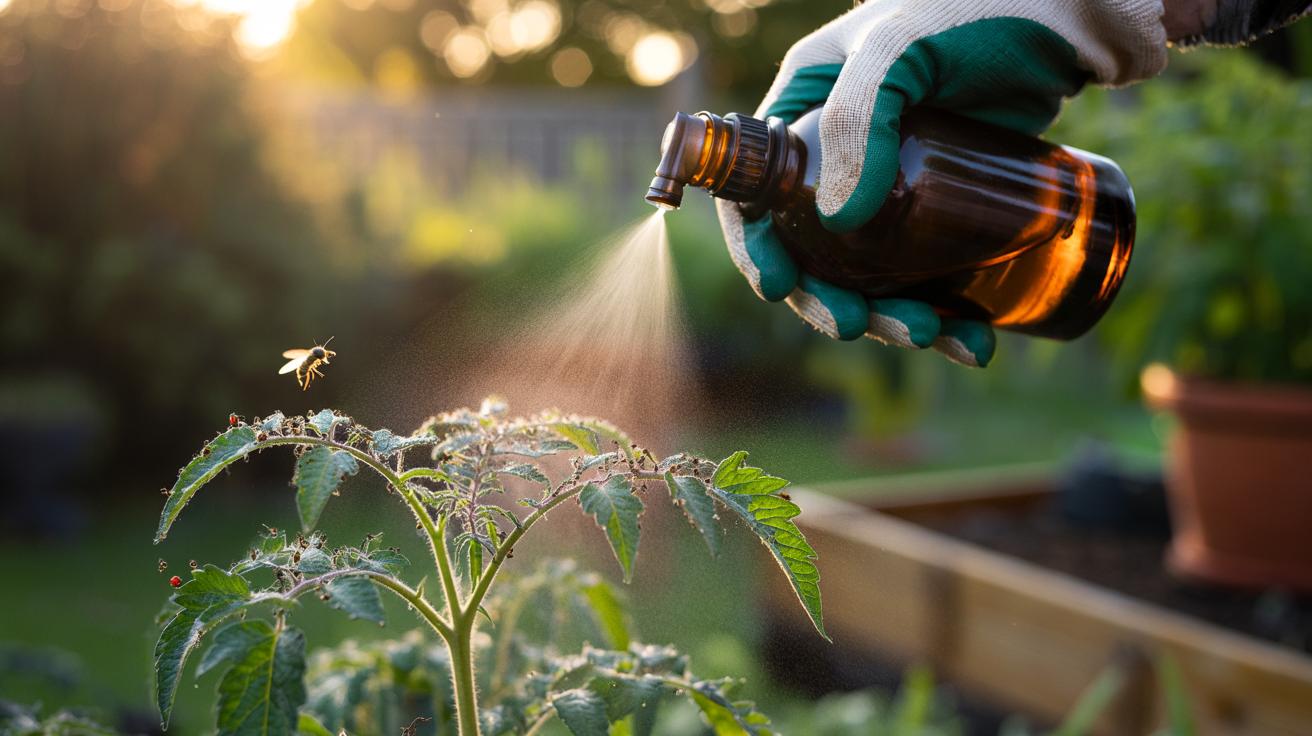
For general maintenance, dilute 5–7 ml of cold-pressed neem oil per litre of lukewarm water; for outbreaks, 10–15 ml per litre is common. Add 1–2 ml of mild liquid soap as an emulsifier, agitate, and keep the mix moving during application. Test on a small patch of foliage and wait 24 hours to check for sensitivity, especially on tender ornamentals. Spray to a light run-off, coating the undersides of leaves and stems. Do not spray in full sun or above 27°C, and leave at least 24–48 hours before overhead watering to allow the film to act.
Wear gloves, keep pets away until foliage dries, and avoid drift into ponds—neem can be harmful to fish. Store oil tightly sealed in a cool, dark place; it degrades with heat and time. Always follow the product label and observe any pre-harvest interval on edibles. In the UK, use only plant protection products authorised for garden use and labelled for the crops you intend to treat. That compliance ensures safety, consistency, and legal peace of mind.
Advantages and Limitations Compared With Chemical Sprays
Neem’s advantages align with integrated pest management (IPM): low mammalian toxicity, short environmental persistence, and action against multiple pest stages. It can spare predators and parasitoids when timed for evenings and dry-down periods, helping natural enemies rebound. Because it disrupts feeding and development, it chips away at populations rather than prompting resistance spirals. There is also reassurance for food growers: when used as directed, neem fits neatly into a low-residue approach for salads, herbs, and greenhouse tomatoes. It is a control, not a carpet bomb, and many gardeners prefer that precision.
Limitations matter. Neem is slower than pyrethroids or soaps for instant knockdown, and repeat treatments are essential. Rain and overhead irrigation wash it away, and some plants—particularly waxy or drought-stressed foliage—may show mild phytotoxicity, so patch-testing is wise. It won’t cure viral diseases or undo severe leaf damage already done. While it can suppress powdery mildew, results are inconsistent compared with targeted fungicides. Set realistic expectations: use neem to tip the balance, then let cultural care and beneficial insects finish the job.
As a steady hand in the pest-control toolkit, neem oil earns its place by reducing damage without bulldozing the garden’s ecology. When paired with sharp observation, timely sprays, and good plant hygiene, it offers a reliable, low-impact route to clean leaves and productive crops. The secret is rhythm—early detection, careful mixing, and consistent coverage. If you’re weighing options for aphids on roses or mites on cucumbers, neem may be the calm, considered answer you need. What leaf pest is troubling your plot right now, and how might you fold neem into a broader, season-long plan?
Did you like it?4.6/5 (30)