In a nutshell
- 🌿 Pebble trays raise local relative humidity via evaporation, creating a gentle leaf-level microclimate that helps tropical houseplants thrive without soaking roots.
- 🧰 Setup essentials: shallow waterproof tray, washed pebbles, water just below the top layer; keep the pot base elevated; top up regularly and clean monthly (use deionised water in hard-water areas).
- 📍 Placement and scaling: match tray surface to the plant’s canopy, position near warm bright windows or shelves; grouping plants with trays compounds the effect for roughly 3–10% RH gains at leaf height.
- 📊 Evidence and limits: hygrometers confirm localised increases; great for ferns, calatheas, and alocasias, but not a whole-room fix—aim for a humidifier when targeting 50–60% RH or supporting large specimens.
- 🔄 Alternatives compared: pebble trays are silent, cheap, and energy-free; misting is brief; plant grouping adds a few percent; humidifiers provide room-wide boosts but need cleaning, power, and limescale control.
Central heating, draughty sash windows, and bright but dry conservatories: UK homes can be unfriendly to tropical houseplants that crave moisture. A simple pebble tray offers a low-tech fix, nudging humidity upwards right where leaves need it. By holding water beneath the pot on a bed of stones, the tray releases vapour that hugs the foliage without soaking the roots. It’s cheap, tidy, and scales easily from a single fern to a mini jungle on a shelf. Used properly, a pebble tray creates a gentler microclimate that helps rainforest natives unfurl new growth, resist spider mites, and hold onto glossy leaves—without fogging the whole room or ruining paintwork.
How a Pebble Tray Creates a Humid Microclimate
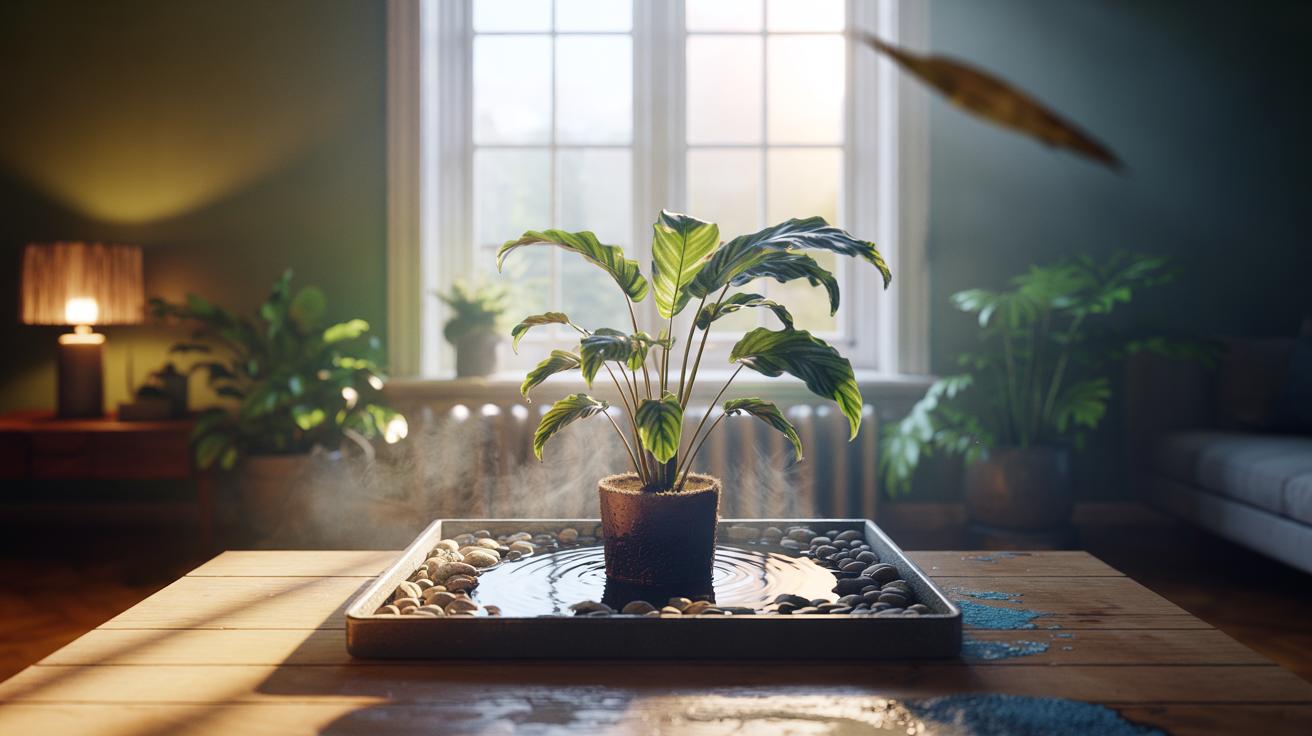
A pebble tray works through evaporation. Water pooled among stones slowly turns to vapour, raising relative humidity in the thin boundary layer around foliage. This is a local effect: the air a few centimetres above the tray can be 3–10% more humid than the rest of the room, especially in still corners or on crowded shelves. The stones keep the pot elevated, so roots breathe while leaves bask in gentle moisture. Keep the pot base above the waterline to avoid root rot and sour compost. In bright windows, evaporation quickens; on cold, shady ledges it slows, so results vary through the day.
The physics is simple but powerful for tropical plants with thin cuticles and high transpiration rates. As leaves lose water, nearby vapour from the tray trims that loss, easing leaf stress and reducing crispy margins. Expect the biggest gains for small and medium plants within 10–30 cm of the tray. Grouping several pots around one tray multiplies the effect by pooling transpiration and evaporation into a shared, leaf-level microclimate.
Building the Perfect Tray: Materials, Setup, and Placement
You need a waterproof saucer or shallow tray, washed pebbles or aquarium stones, and tap water (deionised water avoids limescale in hard-water areas). Fill the tray with stones, pour water until it sits just below the top layer, and rest the pot so its drainage holes are clear. Do not allow water to touch the pot’s base; a millimetre of clearance makes the difference between helpful humidity and soggy roots. Top up as the water evaporates. Every two to four weeks, empty, scrub, and refill to deter algae and fungus gnat larvae; a splash of white vinegar dissolves limescale without harsh residues.
Match the tray’s footprint to the plant’s canopy. A wider tray increases the evaporative surface area and yields more humidity than a deep, narrow dish. Place trays where you want the benefit: near a warm south- or east-facing window, above a radiator shelf (not directly on radiators), or on a plant rack. In winter, when indoor air often dips below 40% RH, tray output expands; in a muggy summer, it’s a gentle buffer rather than a game-changer.
Does It Really Work? Evidence, Limits, and When to Upgrade
In a typical heated UK living room at 35–45% RH, a single pebble tray under a 15–20 cm pot can lift leaf-adjacent humidity by around 3–6%. Clustered plants around a larger tray can add another few percentage points, often enough to stop leaf edges browning on calatheas, ferns, and alocasias. You’ll feel the effect if you place a hygrometer sensor at leaf height; move it a metre away and the reading drops, confirming the localised nature of the boost. Think of pebble trays as a microclimate tool, not a whole-room solution.
There are limits. Large specimen plants, arid central heating, or targets above 60% RH may outrun a tray’s capacity. A pebble tray will not replace a room humidifier for whole-home humidity. Upgrade when leaves display persistent crisping, spider mites recur, or hygrometer readings refuse to budge. Pair trays with practical tweaks: reduce direct radiator exposure, add a soil layer of LECA to discourage gnats, and increase plant density to amplify leaf-level humidity without inviting mould on walls or windows.
Pebble Trays vs Other Humidity Boosters: Quick Comparison
Choosing the right method depends on plant numbers, room size, and your tolerance for upkeep. Pebble trays are quiet, discrete, and energy-free; misting feels satisfying but barely shifts relative humidity; humidifiers deliver big gains but need cleaning and electricity. The simple table below profiles common options for UK homes, with ballpark costs and practical trade-offs. Pick the strategy that raises humidity where plants live, not merely where gadgets sit.
| Method | Typical RH Gain at Plant | Cost (UK) | Maintenance | Pros | Cons |
|---|---|---|---|---|---|
| Pebble tray | 3–10% local | £5–£20 | Top-up; monthly clean | Silent, safe for roots, scalable | Local effect only |
| Misting | Short-lived (<5%) | £0–£5 | Daily/near-daily | Quick refresh, dust removal | Wet spots, encourages fungi if overdone |
| Grouping plants | 2–6% local | Free | Low | Compounds other methods | Can reduce airflow |
| Cool-mist humidifier | 10–25% room-wide | £35–£120 | Filter cleaning; refills | Strong, adjustable output | Noise, energy, limescale risk |
| Bathroom placement | Variable (often high) | Free | Low | Naturally humid | Light limitations |
If you grow a small selection on a windowsill, a tray plus plant grouping is often enough. For bigger collections, run a humidifier at 50–60% RH and park pebble trays beneath thirstier species to keep the leaf zone especially comfortable. Use a £10 hygrometer to verify gains; your eyes and a simple meter are a powerful pairing.
The humble pebble tray proves that elegant fixes don’t need plugs or apps. By turning evaporation into a steady, leaf-level cushion of moisture, it helps tropical plants transition from surviving to thriving—glossier leaves, steadier growth, and fewer pest flare-ups. Keep water just below the stones, clean regularly, and scale the tray’s surface area to the plant’s canopy. If targets are ambitious, pair trays with grouping and, when necessary, a quiet humidifier for room-wide support. Which plants in your home would benefit most from a gentle, tray-made microclimate—and how will you arrange them to make the most of it?
Did you like it?4.7/5 (26)