In a nutshell
- 🌱 Early pruning aligns with plant physiology—rich carbohydrate reserves, active cambium, and rising auxins—delivering faster recovery, cleaner cuts, and reduced disease pressure.
- 🗓️ Seasonal windows matter: late winter–early spring is prime for most deciduous plants; prune stone fruits in midsummer to limit silver leaf; adjust timing for “bleeder” species like birch and maple.
- ✂️ Technique drives outcomes: cut just outside the branch collar, use the three-cut method on larger limbs, and favour sharp bypass secateurs for precise, tear-free results.
- 🧴 Prioritise tool hygiene: disinfect between plants, avoid routine wound paints, and limit removal to about one-third of live growth to minimise shock and speed callusing.
- 🌿 Strategic timing yields smaller cuts, stronger structure, and energy channelled into well-lit new shoots—setting up vigorous growth and cleaner, faster-healing wounds.
Prune at the right moment and plants bounce back with vigour. Gardeners across the UK know that early pruning—usually in late winter or very early spring—helps wounds close fast, keeps cuts clean, and directs energy into new shoots. At this stage, trees and shrubs hold rich carbohydrate reserves, pathogens are less active, and the sap is just beginning to rise. Acting before buds fully break often sets the season’s growth on the right trajectory. Done correctly, early work reduces the size of future cuts, limits disease ingress, and improves shape. The trick is understanding how timing dovetails with plant physiology, weather patterns, and good technique.
Why Timing Matters in Pruning
Timing is the difference between a tidy wound and a lingering injury. Early in the year, plants are poised to mobilise cambium activity as temperatures climb. When cuts are made just ahead of growth, the tree can seal quickly, laying down callus that protects tissues and restores vascular continuity. Disease pressure is lower in cold, dry air, so spores that typically exploit fresh wounds find fewer favourable conditions. Make strategic cuts when the plant can respond, not when it is exhausted. That means avoiding heavy work after prolonged drought or at the tail end of the season, when energy is already allocated to ripening and leaf fall.
Early timing also prevents problems from compounding. Remove weak, crossing, or storm-damaged wood before spring winds and weighty foliage turn a flaw into a failure. Cuts are smaller because you intercept issues while they’re young, which shortens healing times. There are exceptions—bleeder species like birch and maple may “weep” if cut too early—but even there, planning to prune soon after first flush or in midsummer can balance sap pressure with swift recovery.
The Science of Cleaner Cuts and Faster Callusing
Cleaner cuts are not just a matter of sharp blades; they’re an outcome of physiological timing. Before bud-break, roots have recharged carbohydrate stores, and hormonal signals—especially auxins—prepare tissues for expansion. When a cut is made then, cambial cells beneath the bark multiply rapidly as warmth returns, building a protective roll of callus that edges over the wound. Swift callusing reduces the window for cankers, dieback, and decay fungi to establish. In practical terms, early work maximises the plant’s own repair systems, turning pruning from a stress into a stimulus for structured, healthy growth.
Timing also influences the mechanics of the cut. In early growth phases, wood is less prone to tearing because you are removing smaller, less leveraged limbs before they load with foliage. That means the classic three-cut method produces neater results with less bark ripping. Avoid “flush cuts” that slice into the branch collar; this natural swelling contains cells that orchestrate wound closure. Respecting that boundary, especially when the healing machinery is primed by seasonal cues, ensures faster sealing and cleaner, pathogen-resistant margins.
Seasonal Windows: When to Clip for Recovery
Different seasons alter sap pressure, pathogen activity, and callus speed. In general, late winter to very early spring is the sweet spot for many deciduous trees and shrubs. Stone fruits in the UK benefit from summer pruning to reduce the risk of silver leaf, while bleeder species can be scheduled for post-flush periods. The goal is aligning cuts with high repair capacity and low infection risk. Prune when plants can heal fastest, not just when your diary is free. Use the table below as a quick guide, then adjust for species and local microclimate.
| Season | Callus Speed | Disease Pressure | Notes |
|---|---|---|---|
| Late Winter–Early Spring | Fast after warmth returns | Low | Prime time for most deciduous; avoid freeze–thaw days |
| Late Spring–Early Summer | Fast | Moderate | Good for shaping; watch sap bleed on birch, maple |
| Midsummer | Moderate | Moderate | Best for stone fruits; reduces silver leaf risk |
| Autumn | Slow | Higher | Avoid heavy cuts; energy is shifting to dormancy |
| Deep Winter | Very slow until spring | Low | Okay for light work in mild spells; beware brittle wood |
Tools, Technique, and Hygiene for Precise Pruning
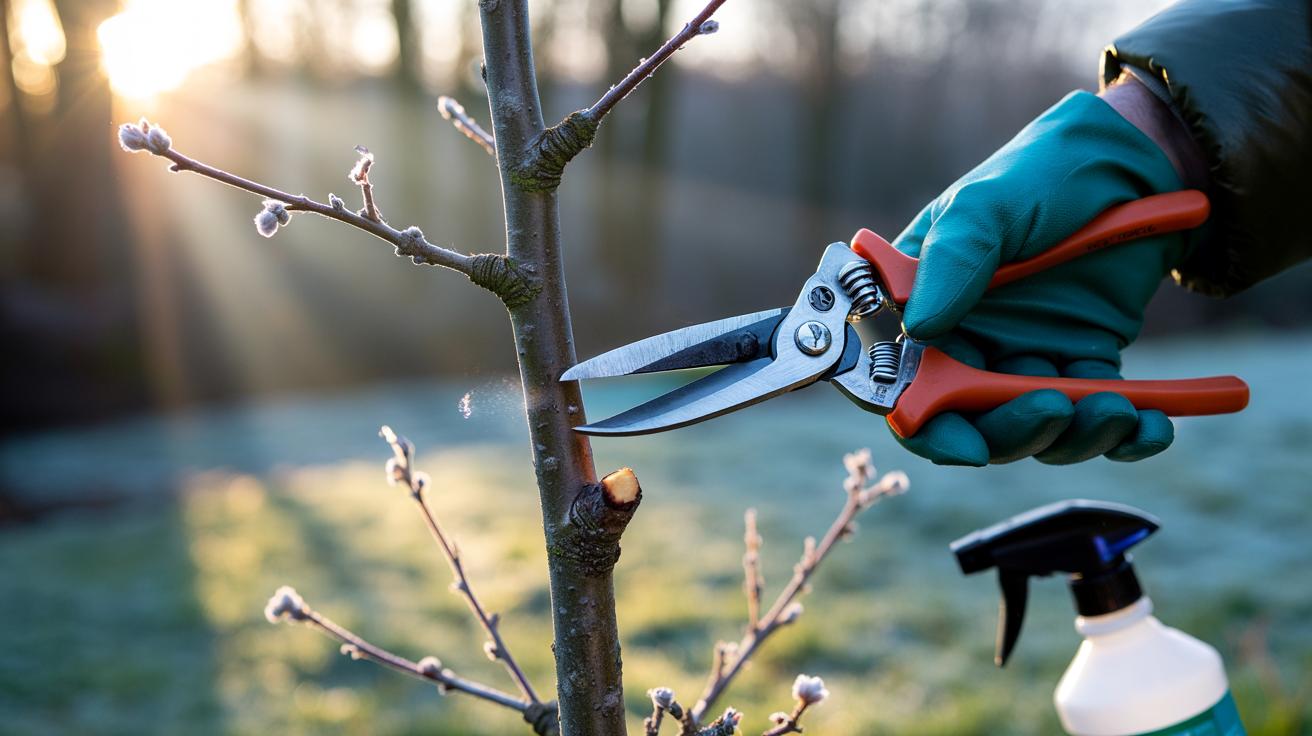
Timing succeeds when technique is sound. Use sharp, clean bypass secateurs for stems, loppers for thicker branches, and a fine-tooth pruning saw for larger limbs. Cut just outside the branch collar, never flush, and employ the three-cut method to prevent tearing: an undercut, a top cut to remove weight, and a final tidy cut at the collar. Angle slightly to shed water without gouging live tissue. Precision at the collar is the single most important factor in clean healing. For hedges and shrubs, thin rather than shear when possible, preserving natural form and light penetration.
Hygiene underpins recovery. Disinfect blades between plants—70% isopropyl alcohol, a 1:10 bleach solution, or a horticultural disinfectant—and wipe sap residues that harbour pathogens. Avoid wound paints unless dealing with specific diseases or biosecurity protocols; most sealants trap moisture and slow callusing. Plan cuts to remove no more than a third of live growth in one session to prevent shock. If storms are forecast, secure any partially cut limbs and finish once conditions are safe; tidy weather windows are part of good timing and cleaner results.
Pruning early is not about beating the calendar; it is about aligning your cuts with a plant’s strongest healing moment. When tools are sharp, hygiene is strict, and the season favours rapid callusing, wounds close neatly and growth surges into well-lit, well-spaced shoots. A few weeks’ foresight can save years of correction. Think about your garden’s priorities this year: which trees need structural edits, which shrubs demand renewal, and where a timely snip could prevent disease? With your plan forming, what will you schedule in your next late-winter window to unlock cleaner cuts and faster growth?
Did you like it?4.7/5 (25)