In a nutshell
- 🌿 Aloe gel supports rooting by creating a hydrated, antimicrobial micro-environment, reducing desiccation and rot, but it is not a true rooting hormone.
- 🧪 Rooting is driven by auxin (IAA or synthetic IBA/NAA), which triggers root primordia; balance with cytokinins and ethylene influences outcomes, so the “instant” effect is hormonal signalling, not visible roots.
- 🛠️ Method matters: take clean 8–12 cm cuttings, dip in fresh aloe gel, plant in a free-draining mix (perlite + coco coir), keep at 20–24°C and 80–95% humidity, vent daily, and avoid waterlogging.
- 📊 Evidence shows aloe works well for easy softwood species; tougher semi-hardwood/woody plants often need measured IBA. Track variables to refine strike rates rather than relying on anecdotes.
- ⚖️ Best practice: use aloe alone for quick-rooting herbs; pair aloe + IBA for roses, lavender, and fruitwood; keep coats thin to prevent anaerobic rot and prioritise hygiene and consistency.
Across UK potting benches, a simple promise is spreading: dip cuttings in fresh aloe gel and watch roots form as if by magic. The appeal is obvious—natural, cheap, and satisfyingly hands-on. Yet behind the viral tip is a serious plant-physiology story about hormones, wound response, and environmental control. This article unpacks what aloe can and cannot do, how auxins actually trigger roots, and why technique tends to beat hype. The surge toward “100% success” often reflects smart preparation, not sorcery. Understanding that difference will help you rescue tricky softwood cuttings, coax semi-hardwood stems, and decide when a commercial rooting powder still earns its place in the propagator.
Why Aloe Gel Is Touted as a Natural Rooting Aid
Gardeners prize aloe vera gel because it is moist, slightly antimicrobial, and rich in polysaccharides that cling to a wound surface, forming a breathable film. That film reduces desiccation while allowing oxygen, a balance crucial for root initiation. Aloe also contains trace gibberellins and salicylic acid, compounds linked to signalling and defence, plus minerals and amino acids that support early tissue repair. The gel’s value is less about acting as a pure “rooting hormone” and more about creating a protective, hydrated micro-environment. In practical terms, a sap-rich coating helps some herbaceous stems avoid rot, and its mild antimicrobial action can lower pathogen pressure in the first critical days.
There is another, subtler advantage: consistency. Freshly filleted gel spreads evenly, so a cutting receives a uniform coat where cambium cells are exposed. Combined with a clean blade and a well-aerated medium, this can elevate strike rates—especially in softwood species already primed to root. Still, aloe is not a miracle auxin source. When plants are genetically reluctant or tissue is too lignified, you may need stronger exogenous auxin than aloe supplies. Understanding this sets realistic expectations while preserving aloe’s genuine benefits.
How Plant Hormones Trigger Rooting in Cuttings
Rooting begins with a wound response: cells near the cut dedifferentiate and divide, forming a callus from which root primordia emerge. The chief signal is auxin—notably IAA in plants and the synthetic stand-ins IBA or NAA in horticulture. Auxin accumulates at the basal end by polar transport, activating genes that turn ordinary cells into root initials. The signalling switch can flip within hours, even though visible roots take days. Meanwhile, cytokinins counterbalance auxin; too much cytokinin skews growth toward shoots, not roots. Ethylene rises at the wound site, often synergising with auxin to nudge roots into being.
Success hinges on energy, oxygen, and moisture. Carbohydrate reserves feed the intense metabolic push, while well-drained media preserve aeration for respiring cells. Calcium supports membranes; trace elements enable enzyme function. Aloe’s role fits here: it provides hydration and a cleaner interface, while commercial IBA supplies the potent auxin spike some species require. Think of aloe as the supportive cast and auxin as the lead actor. When both align with stable temperature, bright shade, and high humidity, roots usually arrive “suddenly”—though the groundwork began invisibly days before.
Step-by-Step: The Aloe Gel Dip Technique
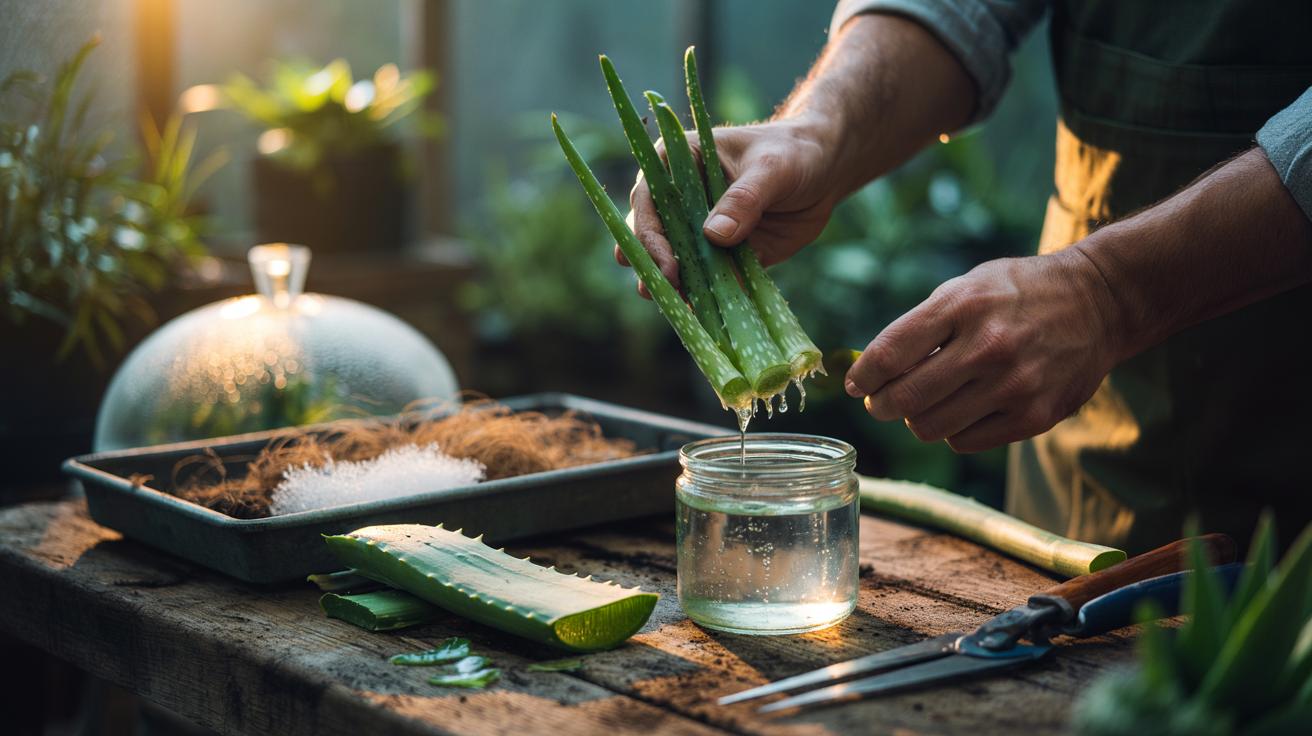
Start with sharp, sterile secateurs and choose vigorous shoots free of disease. Take 8–12 cm cuttings, remove lower leaves, and make a clean basal cut just below a node. Filet a fresh aloe leaf and collect the clear gel. Dip the basal 2–3 cm of each cutting, ensuring full contact with wounded tissue. Work quickly and cleanly; contamination is the enemy of high strike rates. Set the cutting into a pre-moistened, airy mix—equal parts perlite and coco coir or peat-free compost works well—then firm gently.
Place trays in bright, indirect light at 20–24°C, with 80–95% humidity under a dome or in a propagator. Vent daily to prevent fungal bloom. Keep the medium barely moist; saturated mixes starve tissues of oxygen. Softwood herbs may show roots in 7–14 days; semi-hardwood stems often take 3–6 weeks. If species are notoriously stubborn, dust the base lightly with low-dose IBA before the aloe dip, or switch to a gel-based commercial auxin while retaining aloe’s protective coat. Patience and consistency routinely beat “miracle” shortcuts.
| Variable | Best Practice | Typical Range |
|---|---|---|
| Cutting Type | Softwood or semi-hardwood with healthy nodes | 8–12 cm length |
| Temperature | Stable warmth to drive cell division | 20–24°C |
| Humidity | High to limit transpiration | 80–95% |
| Light | Bright shade, no midday scorch | 100–200 µmol m⁻² s⁻¹ |
| Medium | Free-draining and oxygen-rich | Perlite + coco coir |
| Hormone Source | Aloe gel support; IBA for difficult species | 0.1–0.8% IBA when needed |
Evidence, Limits, and When to Reach for Synthetic Auxins
Small trials and grower reports suggest aloe gel can match low-dose IBA in easy herbs such as basil, coleus, and mint, while improving survival by reducing rot. Results drop with tough semi-hardwoods and woody ornamentals, where a defined auxin dose—often gel or powder at 0.3–0.8% IBA—delivers clearer gains. The oft-quoted “100% success” is a best-case anecdote, not a guarantee. Species genetics, mother-plant nutrition, and hygiene introduce variables no gel can fully tame.
Use aloe alone when propagating fast-rooting, soft-tissued plants in warm, clean conditions. Combine aloe with a measured IBA dip for roses, lavender, or fruitwood. Avoid smearing thick layers of gel that can trap water and invite anaerobic rot. Track batches with notes: cutting position, temperature, medium, and time to callus. Data, not faith, will refine your technique. The take-home: aloe is an excellent supportive medium, and hormones are the trigger—choose the dose to fit the woodiness and willpower of the plant.
Natural hacks endure because they partly work—and because they make propagation feel accessible. Aloe gel offers genuine advantages in moisture management and cleanliness, while auxin signalling remains the real engine of new roots. The “instant” bit is the hormone message, not the appearance of roots. If you approach the aloe dip as a disciplined method—clean cuts, correct environment, and the right hormone strategy—you’ll edge close to the headline-grabbing success stories. Which plants on your bench are begging for a side-by-side test of aloe alone versus aloe plus IBA, and what variables will you measure to crown a winner?
Did you like it?4.6/5 (29)