In a nutshell
- 🌱 Aloe vera gel acts as a gentle pathogen shield and moisture manager, cutting fungal rot and supporting callus formation for higher strike rates.
- 🧪 Follow clean prep: use a mature leaf, sterilise tools, liquefy and strain, then dilute gel 1:2–3; dip bases for 5–10 minutes and plant in a free-draining mix.
- 🛡️ Prioritise hygiene and moisture control: disinfect blades, keep media damp-not-wet, vent domes, and water from the base to deter Pythium and Botrytis.
- 🔗 Combine wisely: a dusting of cinnamon or light willow water can help; avoid thick honey on softwood; optional low-dose IBA followed by an aloe glaze for reluctant woody cuttings.
- 📈 Track outcomes: note strike rate, time to callus, and any mould; tweak aloe concentration, airflow, and substrate for species like rosemary, pothos, coleus, and succulents.
Rooting cuttings at home can feel like a gamble, but one kitchen-cupboard ally consistently tips the odds: aloe vera gel. Its cool, translucent pulp isn’t just soothing for sunburn; it forms a protective sheath around tender stems, delivering gentle antimicrobial action while locking in just enough moisture. Gardeners from Cornwall to the Cairngorms report cleaner callus formation and faster root nubs when cuttings get an aloe dip before potting. The principle is simple: suppress opportunistic fungi, steady hydration, and let the plant’s own hormones do the rest. Used correctly, aloe becomes a low-cost, biodegradable substitute for synthetic rooting compounds—especially useful for herbs, softwood ornamentals, and indoor foliage plants prone to fungal rot during the vulnerable first fortnight.
Why Aloe Vera Helps Cuttings Take Root
Aloe is a biochemical toolkit in a leaf. The gel contains polysaccharides that form a light film, reducing water loss from the wound site; saponins and phenolics that inhibit microbes; and trace salicylic acid linked to plant defence signalling. This trio helps cuttings transition from shock to callus formation, a precursor to new roots. By dampening fungal pressure and buffering moisture, aloe creates the conditions in which latent meristem cells can organise and push out root initials. While aloe isn’t a high-dose auxin source like synthetic IBA, trials and grower experience suggest a measurable lift in strike rates for rosemary, pothos, coleus, and many succulents. It shines where rot, not hormone shortage, is the limiting factor—cool windowsills, variable watering, and shared propagators where spores abound.
| Component | Primary Action | Benefit for Cuttings |
|---|---|---|
| Polysaccharides (e.g., acemannan) | Moisture film, wound sealing | Reduces desiccation; steadies hydration |
| Saponins | Antifungal/antibacterial surfactants | Lowers rot risk on fresh cuts |
| Salicylic acid (trace) | Defence signalling | Primes local resistance to pathogens |
Think of aloe not as a miracle hormone but as a pathogen shield and moisture manager. That shift in mindset explains why it pairs beautifully with airy substrates and careful hygiene.
Preparing a Clean, Potent Aloe Dip at Home
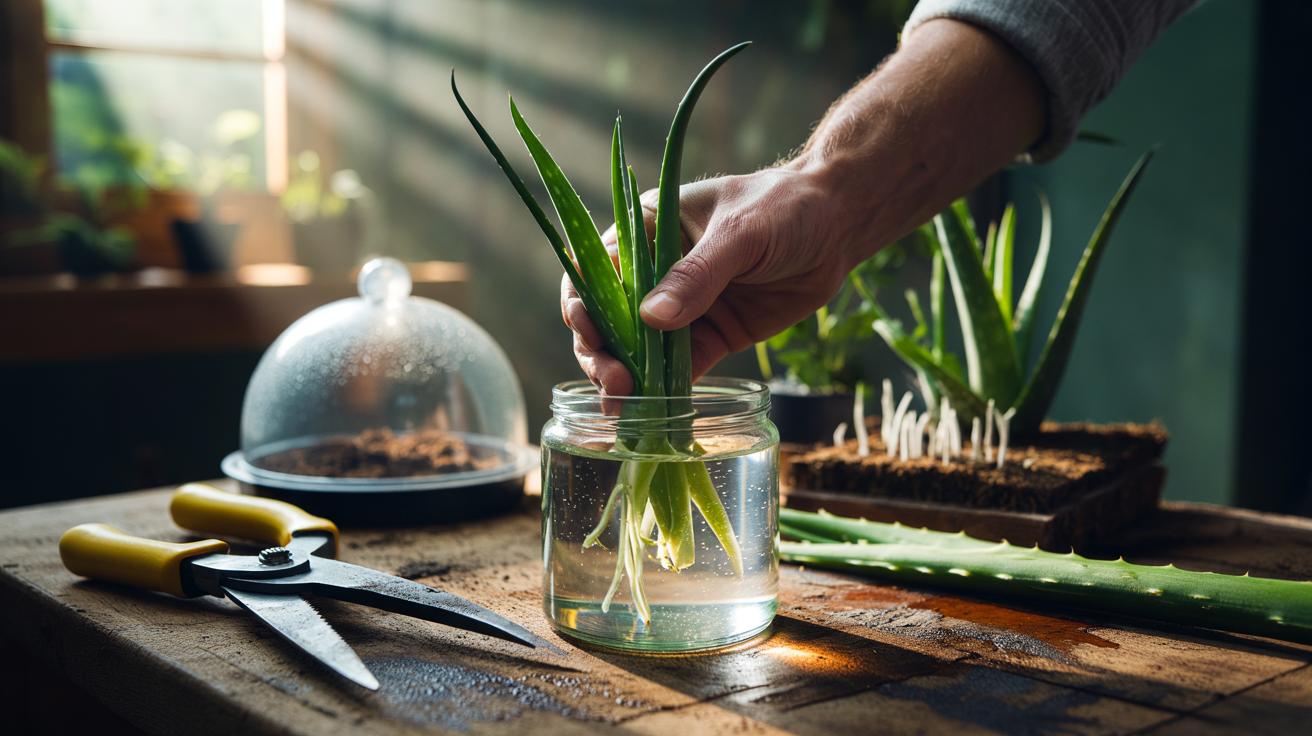
Choose a mature, thick aloe vera leaf. Wash it, then trim off the spines. With a clean knife, fillet the leaf and scoop the clear gel into a sterilised jar. Blitz briefly to liquefy, then strain through a fine sieve or muslin to remove fibres. For dipping, dilute 1 part gel with 2–3 parts cooled, boiled water; this keeps it spreadable without smothering tissues. Always sterilise blades and containers, and make only what you’ll use within 48 hours. Refrigerate the remainder in a sealed jar.
To apply: make a fresh 45-degree cut on the stem, remove lower leaves, and dip the basal 2–3 cm in the gel for 5–10 minutes. Tap off excess and insert into a free-draining mix such as 50% perlite, 30% coco coir, 20% fine bark. Label and place in bright, indirect light at 18–24°C. For succulents, allow the cut end to callus for 24 hours first, then brush on gel lightly rather than soaking. Gentle coverage beats gloopy saturation.
Avoiding Fungal Rot: Hygiene, Timing, and Moisture Control
Successful propagation is less about magic elixirs and more about reducing variables pathogens love. Start with scrupulously clean tools: swab secateurs with isopropyl alcohol between plants, and use fresh pots or wash them in hot, soapy water with a dash of bleach. Prepare the medium damp, not wet—when squeezed, it should clump lightly and release only a drop. Overwatering is the most common trigger for Pythium and Botrytis in new cuttings. Vent humidity domes daily, or use a clear bag with two pencil holes to allow airflow without desiccation.
Aloe helps by lowering spore success on the wound site, but environment decides the outcome. Maintain steady warmth under the pot, not overhead heat that drives condensation. Water from the base once the top centimetre dries. Discard any cutting that smells sour or shows grey fuzz, and refresh the aloe dip for the next batch. With herbs like basil and sage, work quickly—soft tissue collapses if left exposed. For roses and hydrangeas, slightly thicker gel can cushion the cambium against wounding during insertion.
When to Combine Aloe With Other Natural Aids
Aloe plays well with a few adjuncts. A light dusting of cinnamon on the cut surface after the dip can deter surface fungi in damp flats. Willow water contributes salicylates; if used, brew a clear, cooled tea and mix at low ratios to avoid sliminess. Do not combine thick honey with aloe on softwood cuttings; while honey is antimicrobial, its sugars can feed mould if ventilation falters. For woody species that root reluctantly, you can dip in a minimal IBA powder, tap off the excess, then glaze with aloe to hold humidity—an elegant hybrid of synthetic certainty and natural protection.
Always test on a small batch first. Keep notes on strike rate, time to callus, and any rot. If mould appears, reduce aloe concentration, improve air movement, and switch to a coarser substrate. In many kitchens and sheds, the winning formula is simply aloe dip, bright shade, and patient, even moisture—no cocktail needed.
Aloe vera’s quiet power lies in balance: soft antimicrobial action, steady hydration, and a clean stage for the plant’s own rooting script. With a sensible dip, a breathable medium, and tidy technique, cuttings that once collapsed into mush stand a real chance. It’s a low-cost, sustainable habit that fits windowsill propagators as well as allotment benches. Ready to refine your routine—will you trial aloe on a few favourites this month, record the results, and share which species saw the biggest lift in rooting success?
Did you like it?4.4/5 (22)