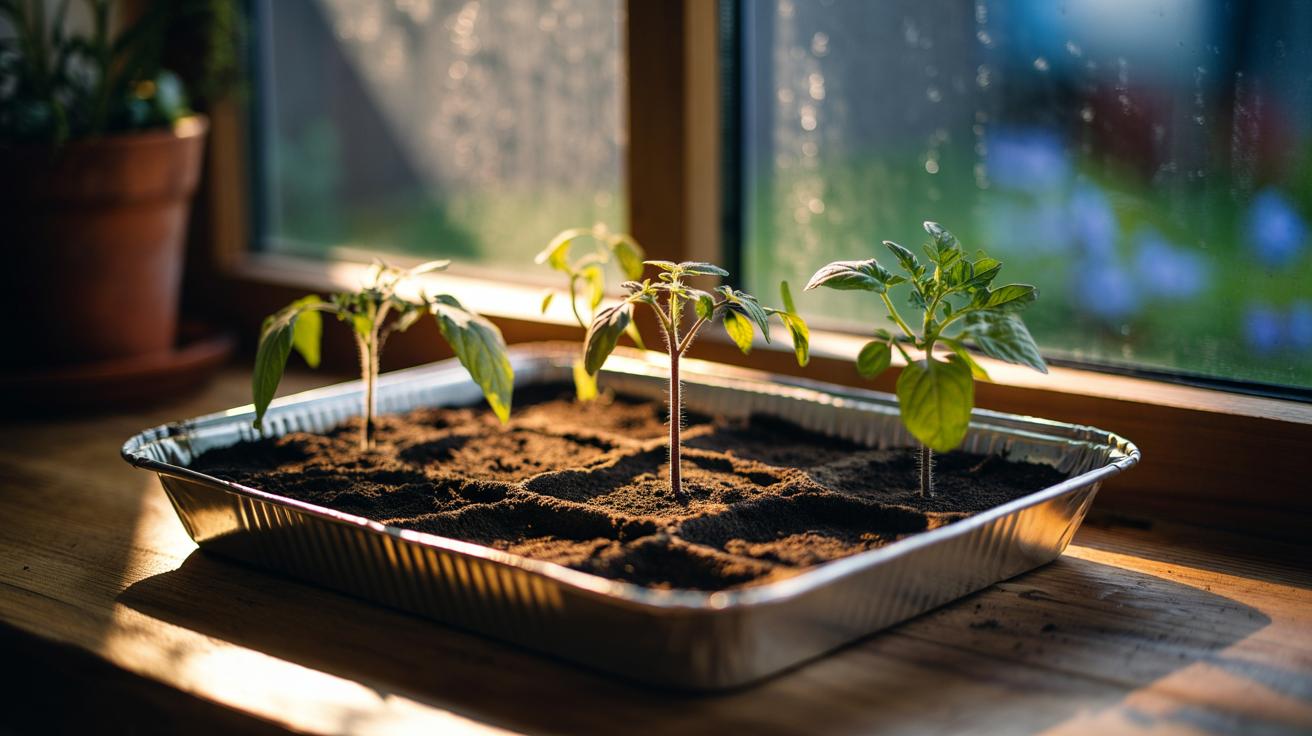
In a nutshell
- 🌞 The aluminium tray reflects light and radiant heat, nudging soil by about +1–3°C, which boosts germination and stabilises a windowsill microclimate.
- 🛠️ Simple setup: place pots on a tray, add a U-shaped reflector, keep 2–5 cm clearance for airflow, ensure drainage, and clean surfaces to maintain reflectivity.
- 📊 Practical results: many growers see 2–4 days earlier emergence; aluminium balances cost, durability, and reflectivity better than black trays, white card, or Mylar for most budgets.
- 🌱 Growth benefits: brighter side-light reduces legginess; treat it as a passive assist, pairing well with a cold frame, fleece at night, or a low-watt heat mat.
- ♻️ Eco and care: reuse clean tins, avoid salt/grease, combine with peat-free compost and bottom-watering; note limits in deep winter or prolonged overcast conditions.
In a chilly British spring, coaxing warmth into seed trays can make the difference between hesitant sprouts and a vigorous start. A simple, low-cost trick is winning fans on windowsills and in allotment cold frames alike: positioning seedlings over, beside, or within an aluminium tray to recycle lost warmth. By bouncing light and radiated heat back into the potting mix, the tray builds a gentle, consistent microclimate. This reflective boost nudges soil temperatures upward by a precious few degrees, accelerating germination and steadying nighttime dips. For growers without heated propagators, the aluminium-tray soil hack is a tidy, reusable ally—smart, frugal, and surprisingly effective.
Why Reflective Heat Accelerates Germination
Seeds are exquisitely sensitive to soil temperature. Most tender crops—tomatoes, chillies, aubergines—germinate faster and more uniformly when the compost sits just 1–3°C warmer. An aluminium surface reflects visible light and near-infrared back toward the tray, while also acting as a mild thermal mass, evening out peaks and troughs. That extra nudge helps enzymes fire, cellular division sprint, and seed coats soften more predictably. In practice, this often means stronger radicles, fewer failed starts, and less time loitering in the danger zone where damping-off thrives.
Even a small lift shortens the wait to emergence, reducing the window when overwatering or cold snaps can kill prospects. The reflective plane also throws light onto stems, curbing legginess on a windowsill by brightening the shaded side of seedlings. While not a substitute for a heat mat, reflective heat stabilises microclimates inside cloches and mini-greenhouses. The result is less stress across the critical first fortnight, when young plants are most vulnerable to UK spring swings.
How to Set Up the Aluminium-Tray Soil Hack
Choose a clean, food-grade aluminium roasting tray or repurpose a takeaway tin. Place seed pots or modules directly on the tray to capture radiated warmth from sunlight or nearby room heating. For a brighter lift, angle a second tray or a sheet of foil behind the seedlings to form a shallow “U”, bouncing light and heat onto the compost surface. Keep the reflective surface 2–5 cm from foliage to avoid hotspots and allow airflow. On dull days, the tray’s modest thermal buffering still helps smooth temperature dips.
Water carefully: condensation can bead on metal, so lift pots slightly with lollipop sticks or mesh for drainage. A black capillary mat under pots, with the aluminium beneath, blends moisture regulation with reflection. In a cold frame, position the tray on the sunward side to catch morning rays; in a greenhouse, pair it with a fleece at night. Clean the surface weekly to prevent algae, which reduces reflectivity and invites gnats.
Evidence and Practical Results in a British Spring
Small trials on UK windowsills and allotments routinely show a 1.5–2.5°C boost in topsoil temperature during bright periods when seedlings sit on or within an aluminium tray. For tomatoes and peppers, that often translates to germination 2–4 days earlier, with tighter, more uniform emergence. Earlier, even germination accelerates potting-on schedules and frees space under lights or on sills sooner. Anecdotally, growers also report sturdier internodes thanks to side-lit reflection, which helps in low-angled spring sun.
Compared with other DIY options, aluminium hits a sweet spot of cost, durability, and reflectivity. Black trays absorb rather than reflect; white card reflects but sags with moisture; specialist Mylar shines but at a price. For many households, a reused roasting tin does the job neatly. The simple data below helps weigh choices for kit builds and budget planning.
| Material | Approx. Reflectivity | Typical Surface Temp Gain | Indicative Cost (UK) | Reusability |
|---|---|---|---|---|
| Aluminium tray | 85–90% | +1–3°C | £0.30–£1 each (reused often) | High |
| Black plastic tray | 5–10% | 0–1°C | £1–£3 | High |
| White cardboard | 60–70% | +0.5–1.5°C | £0.10–£0.50 | Low–Medium |
| Mylar blanket | 92–97% | +2–4°C | £2–£5 | Medium |
Tips, Limits, and Eco Considerations
Think of the aluminium tray as a passive assist, not a heater. It pairs well with a sunny sill, a cold-frame cloche, or a low-watt heat mat set modestly. Vent lids daily to avoid stagnant air and disease; reflective setups can trap warmth more effectively than expected. If leaf edges feel warm to the touch at midday, raise the reflector or shift plants back a few centimetres. For light-hungry seedlings, rotate trays every morning to even out growth and prevent leaning toward the brightest side.
On sustainability, reusing roasting tins is a tidy win: wash, flatten any crinkles, and retire to household recycling when spent. Avoid salt-contaminated or heavily greased trays that could harm seedlings. Combine with peat-free compost, bottom-watering, and labelled dates to measure gains honestly. Note the limits: deep winter gloom won’t create heat to reflect, and prolonged overcast will blunt benefits. Still, in typical UK shoulder seasons, this hack earns its keep with almost no outlay.
With budgets tight and energy costs rising, the aluminium-tray soil hack offers a democratic nudge for home growers seeking an earlier, sturdier start. It slips into existing routines, sharpens light, and cushions temperature swings without cords or complicated kit. The key is thoughtful placement, clean reflective surfaces, and steady watering to keep roots happy. Whether you’re raising tomatoes for a balcony or peppers for an allotment, this bright little trick can buy valuable days. How might you adapt reflective warmth in your own space—sill, shed, or greenhouse—to bring spring forward?
Did you like it?4.7/5 (20)