In a nutshell
- 🌿 Garlic‑water spray harnesses natural sulphur compounds (allicin, diallyl disulphide) to repel pests and offers a mild antifungal effect; it deters rather than poisons.
- 🐜 Targets common rose problems: aphids, spider mites and thrips, while reducing early powdery mildew risk by making leaf surfaces less inviting.
- 🧪 DIY recipe: crush 3–4 garlic cloves per litre, steep 12–24 hours, strain, and add 1–2 ml mild liquid soap as a surfactant; use fresh and avoid strong detergents.
- 🕒 Application: spray lightly on leaf undersides in early morning/evening, reapply weekly and after rain, patch‑test first, and keep open blooms mostly unsprayed to protect pollinators.
- ⚠️ Safety & limits: wear gloves, don’t stack treatments the same day, combine with integrated pest management (pruning, airflow, base watering), and note it won’t cure severe mildew—consider disease‑resistant cultivars.
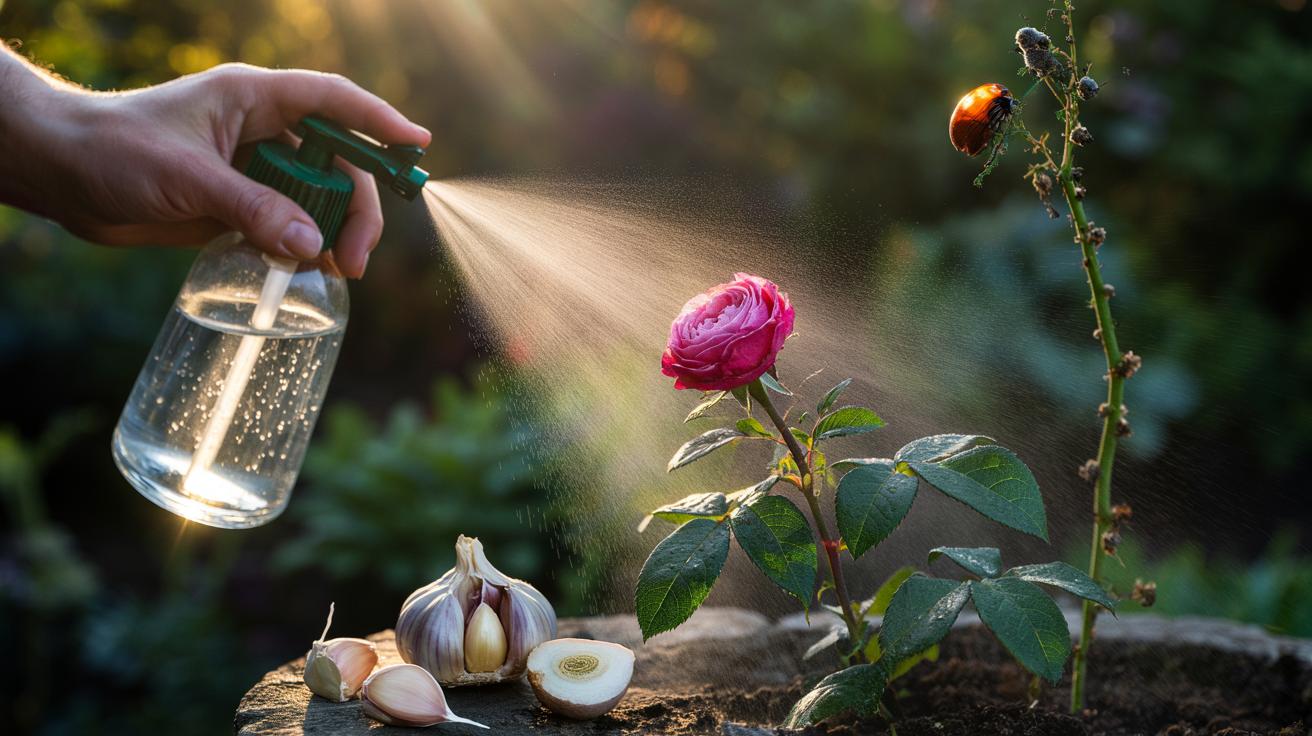
Roses are magnets for sap-sucking insects and opportunistic fungi, yet few gardeners want to drench their borders in harsh chemicals. A simple garlic‑water spray offers a practical middle path, harnessing natural sulphur compounds to shield foliage and buds without scaring off every beneficial insect. When crushed, garlic releases volatile molecules that confuse pests and create an inhospitable surface on leaves. The result is fewer colonies, cleaner growth and a noticeable lift in plant vigour. Used correctly, this homemade solution repels rather than poisons, fitting neatly into an eco‑friendly routine. Here’s how it works, who it targets on your roses, and the best way to mix, apply and combine it with other good habits.
Why Natural Sulphur in Garlic Deters Pests
Crushed garlic rapidly produces allicin and a suite of alliaceous sulphur compounds such as diallyl disulphide. These volatiles disturb the chemosensory cues that pests rely on to locate tender rose growth. Aphids, thrips and mites navigate by scent and taste; garlic’s strong odour forms a short-lived but effective barrier that nudges them elsewhere. The spray is a deterrent, not a systemic toxin, so it reduces feeding and egg‑laying pressure without the collateral damage associated with many synthetic pesticides.
The same chemistry shows mild antifungal activity. While garlic won’t cure an entrenched outbreak, it can lower the likelihood of spores germinating on leaf surfaces, useful where powdery mildew and black spot lurk in warm, humid spells. Because these molecules break down quickly in sunlight and rain, the protection is gentle and time‑limited. That’s an advantage for wildlife, but it also explains why gardeners see the best results with repeated, well‑timed applications that keep the “scent shield” topped up.
Common Rose Pests and What Garlic Spray Does
On UK roses, the headline troublemakers are aphids clustering on soft tips, spider mites stippling leaves in dry heat, and thrips rasping at petals and buds. Garlic spray interferes with host‑finding and feeding, helping plants outgrow minor attacks. A light film on the upper and undersides of leaves disrupts these pests’ mouthparts and reduces the appeal of young tissue. Early intervention keeps populations below the threshold where damage snowballs. Mild antifungal properties also assist at that critical point when spores land but before they establish.
| Pest/Problem | Symptoms on Roses | Effect of Garlic Compounds | Where to Target Spray |
|---|---|---|---|
| Aphids | Clusters on shoots; curled, sticky leaves | Repels and disrupts feeding; reduces colony build‑up | New growth, shoot tips, undersides of leaves |
| Spider mites | Fine speckling; webbing in hot, dry weather | Makes surfaces less hospitable; discourages recolonisation | Leaf undersides, inner canopy |
| Thrips | Silvery streaks; distorted petals and buds | Odour and taste deterrence; reduces probing | Buds, sepals, petal bases |
| Powdery mildew spores | White bloom on leaves; distorted growth | Mild antifungal effect at initial contact | Young leaves, congested areas |
While garlic helps across this spectrum, balance matters. Keep flowers mostly unsprayed to safeguard pollinators, and pair the spray with good hygiene: promptly removing heavily infested tips, spacing plants for airflow, and watering at the base to limit humidity spikes.
How to Make and Use a Garlic-Water Spray
For a practical batch, take 3–4 fresh garlic cloves per litre of clean water. Crush or finely mince the cloves to release allicin, then steep for 12–24 hours. Strain through fine mesh or muslin to avoid clogging your sprayer. For better leaf coverage, add 1–2 ml of mild liquid soap as a surfactant, stirring gently. Avoid stronger detergents that can scorch foliage. Use the mixture fresh or refrigerate for up to 48 hours; its potency fades as the volatiles dissipate.
Spray in the early morning or evening on dry leaves, coating the undersides where pests lurk. Aim for light, even coverage rather than run‑off. Reapply weekly during pressure periods and after rain. Test a small patch first, especially in heatwaves, and avoid spraying in direct midday sun to reduce any risk of leaf scorch. Keep the nozzle away from fully open blooms to protect visiting insects. Consistency matters more than concentration: resist the urge to double the dose, as stronger mixes do not perform better and can stress the plant.
Safety, Limits, and Integrated Garden Practice
Homemade garlic spray is low‑risk, but sensible handling still applies: wear gloves if you have sensitive skin, label your bottle, and dispose of leftovers on the compost rather than down drains. Do not combine with other treatments on the same day; wait several days before using horticultural soaps or sulphur products to avoid compounding leaf stress. Any deterrent works best inside a wider, balanced strategy. Encourage ladybirds, lacewings and hoverflies by leaving some habitat and avoiding blanket treatments. A quick blast of water to dislodge dense aphid clusters, prompt pruning of infested tips, and steady, not excessive, feeding will all cut pest rebound.
There are limits: garlic will not reverse severe mildew or rescue buds destroyed by thrips. Treat it as a preventative nudge that buys time while roses push fresh growth. If repeated use fails, switch tactics—improve airflow, thin congested centres, and select cultivars noted for disease resistance. Keep notes on weather, pest sightings and spray dates; patterns appear quickly, helping you act earlier next season.
Used with care, a garlic‑water spray gives roses a subtle shield, deterring hungry sap‑suckers and taking the edge off spore pressure without carpet‑bombing your borders. It’s inexpensive, quick to mix, and gentle on allies that keep your garden in balance. The trick is little and often, paired with good hygiene and sensible pruning. As you refine timing and technique, your plants respond with cleaner foliage, steadier growth and more confident blooms. Which pests are your roses most prone to, and how might you incorporate this simple spray into an integrated routine that suits your garden’s microclimate?
Did you like it?4.6/5 (24)