In a nutshell
- 🌿 Reused aquarium water provides a gentle, steady feed from converted fish waste (ammonia → nitrite → nitrate), promoting lush, greener growth.
- 💧 Apply with care: dilute roughly 1:1 to 1:3 (weaker for seedlings), water soil not leaves, and use within 24 hours for active microbes.
- 🧪 Nutrient profile includes nitrate, low-level phosphates, potassium, and trace minerals plus beneficial microbes that support root health.
- ⚠️ Avoid risks: never use medicated, salted, or marine tank water on houseplants or edibles; prevent runoff to ponds and label buckets to avoid mix-ups.
- 🔄 It’s smart resource recovery: turns routine water changes into free fertiliser, reduces synthetic inputs, and builds living, resilient soils over time.
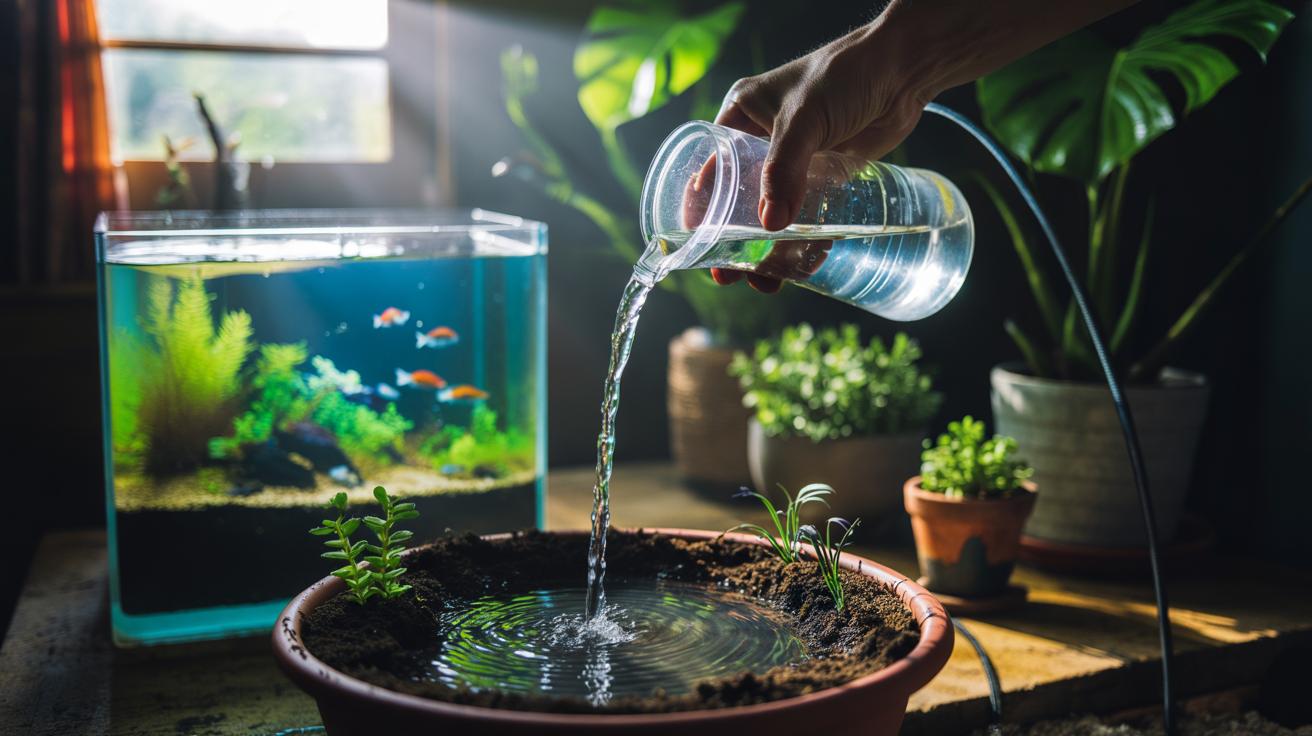
There’s a thrifty gardening secret hiding in plain sight: the water you siphon from a home aquarium is a ready-made tonic for houseplants, herbs, and vegetable beds. As fish excrete waste and leftover food breaks down, the tank becomes a reservoir of gentle, plant-available nutrition. Reusing this aquarium water transforms a routine water change into a free fertiliser service, cutting waste and boosting growth. Used sensibly, it delivers a soft, consistent feed that turns foliage richer and soils livelier without the scorch risk of strong synthetic formulas. Here’s why fish waste is such an effective nutrient source, how to apply it safely, and where the limits lie.
Why Aquarium Water Supercharges Green Growth
In a healthy tank, beneficial bacteria convert sharp-edged ammonia from fish waste into nitrite and then into nitrate—a far milder, plant-ready form of nitrogen. That steady flow of nitrate acts like a slow, weekly boost rather than a jolt, encouraging lush leaves and resilient stems. Add trace phosphates, a smidgen of potassium, and dissolved organic compounds, and you’ve got a living broth that nudges root microbiology into gear. This is not a miracle potion, but a naturally balanced tonic that plants recognise and use rapidly. Unlike many bottled feeds, it also brings a small inoculation of microbes that help unlock nutrients already in the pot.
Gardeners notice two things first: greener foliage and quicker recovery after pruning or repotting. Because the nutrient strength is modest, it’s forgiving—perfect for regular maintenance rather than emergency rescue. The result is cumulative: each watering helps to build soil life, improving texture and water-holding capacity over time. Aquarium water works particularly well on leafy edibles, ferns, monsteras, and spider plants that relish gentle nitrogen. Think of it as a low-strength, biologically active tea that sustains growth without overwhelming roots.
From Tank to Pot: Safe Dilution and Application
Draw water during your routine change, ideally from a mature tank with stable parameters. For most houseplants, dilute 1:1 to 1:3 with fresh water, adjusting by plant appetite and season. Seedlings prefer the weaker end; established, hungry plants can handle stronger. Water the soil, not the leaves, to minimise leaf spotting and mould. Apply every second or third watering in spring and summer, easing off in winter. When uncertain, dilute more; you can always feed again, but you can’t un-scorch roots. Avoid using water from tanks treated with salt or medication—those residues can harm plants and soil life.
| Plant Type | Suggested Dilution | Frequency | Notes |
|---|---|---|---|
| Seedlings & Cuttings | 1:3 to 1:5 | Every 2–3 waterings | Gentle feed prevents burn; watch for damping-off |
| Houseplants (leafy) | 1:1 to 1:3 | Weekly or biweekly | Great for ferns, pothos, monstera |
| Veg Beds & Herbs | 1:1 to 1:2 | Weekly in growth | Soak soil around the root zone |
| Lawns | 1:1 then water in | Fortnightly | Apply before rain or a hose follow-up |
Use the water promptly; within 24 hours is ideal to keep microbes active and odours down. Morning applications reduce evaporation and leaf disease risk. If you top up tanks with tap water, dechlorination has already occurred via conditioning or aging—your garden benefits too. Never use marine or brackish tank water on typical houseplants; salt accumulation damages roots and soils. For containers, let excess drain freely to avoid nutrient build-up, then return to plain water on the next cycle.
What Nutrients Are in Fish Waste, and How They Work
The headline act is nitrate (N), the principal driver of leafy growth and chlorophyll production. You’ll also find phosphorus (P) in the form of low-level phosphates for root expansion and flowering, plus a dash of potassium (K) that bolsters disease resistance and water regulation. Trace calcium, magnesium, iron, and other micronutrients arrive bound to organic matter, often more available to roots than their raw-salt counterparts. This cocktail is mild, balanced, and—crucially—delivered with the microbial partners that help plants absorb it effectively. In practical terms, it’s like a perpetual, light liquid feed that integrates with your normal watering rhythm.
Don’t expect lab-precise N-P-K numbers: aquarium water varies with stocking, feeding, filtration, and water changes. Typically, it’s a low-strength feed—perfect as a base layer. Heavy feeders such as tomatoes may still want targeted boosts of potassium and magnesium to fruit well. Watch your plants: pale leaves suggest more nitrogen; poor flowering may need extra K or P. Think of aquarium water as the foundation, not the entire fertiliser programme, especially for crop plants pushing for yield. Combined with compost and mulch, it completes a resilient, biologically rich system.
Risks, Limits and Ethical Considerations
Two red flags top the list. Never use medicated or salted tank water on edible beds or container plants. Treatments containing copper or other actives can damage roots and beneficial soil life. Secondly, saltwater aquarium water is unsuitable for most garden plants—sodium and chloride build-ups are toxic to typical houseplants and veg. If fish are ill, avoid using that water on crops you’ll eat raw; composting or decorative beds are safer destinations. Rinse leafy produce as you normally would, and keep runoff away from ponds and natural waterways to protect wildlife.
Ethically, this is elegant circularity: you’re turning a necessary maintenance task into resource recovery and reducing reliance on synthetic fertilisers. But don’t overstock or overfeed fish to “make” more fertiliser—stress and pollution follow. Fish health comes first; the garden benefits from what the aquarium naturally provides. If you keep several tanks, track which ones are medicated and label buckets to prevent mix-ups. Over time, you’ll find a rhythm where plants thrive, tanks stay stable, and nothing useful goes down the drain.
Put simply, aquarium water is a quiet workhorse: a gentle, living fertiliser that makes leaves lusher, soils richer, and routines smarter. By capturing the nutrients already cycling through your tank, you cut waste and cultivate stronger plant health with minimal effort. Start with light dilutions, observe how your plants respond, and dial in by season and species. Once you see the difference, it’s hard to pour a water change away again. Which plants in your home or garden will you trial first, and how will you tailor the dilution to match their appetite and growth stage?
Did you like it?4.4/5 (26)