In a nutshell
- 🧪 Soap nut liquid harnesses saponins to lower surface tension, dissolve cuticular waxes, and clog spiracles, causing suffocation in whitefly and other soft-bodied pests.
- 🔧 Prepare a potent stock by simmering 10–15 g/L, straining, and optionally diluting 1:1 for tender foliage; spot-test and avoid heat or direct sun.
- 🎯 Achieve control with a fine mist to runoff on leaf undersides, repeat every 3–4 days during outbreaks then weekly, and remember it’s a contact action.
- 🐞 Integrate with IPM: pair with sticky traps and pruning, and time sprays around releases of Encarsia formosa; the low residual limits harm to beneficials.
- 📦 Use fresh (48 hours at room temp, up to five days refrigerated), label and store safely, and note UK guidance—home-made solutions are for personal use only.
Across the UK, gardeners and growers are rediscovering the humble soap nut as an ally against outbreaks of whitefly and other soft-bodied insects. Soap nuts—dried fruits of Sapindus trees—release saponins, natural surfactants that, when diluted in water, create a plant-safe wash. The resulting liquid does not poison pests; it overwhelms them physically by collapsing protective waxes and wetting their breathing pores. This makes it a low-impact option for houseplants, greenhouses, and allotments where sensitive crops and beneficial insects matter. With careful preparation and timely spraying, soap nut liquid offers an accessible, biodegradable approach to keeping infestations under control without resorting to harsher chemistry.
What Are Soap Nuts and Why They Work
Soap nuts (often Sapindus mukorossi) contain saponins, which are natural surfactants that lower water’s surface tension. On contact with whitefly, aphids, or mealybugs, this soapy film spreads across their soft cuticles, dissolving waxes and penetrating the honeydew that shields colonies. It does not act like a synthetic pesticide; instead it creates physical stress. By stripping lipid barriers and improving wetting, the spray undermines the pests’ ability to maintain moisture and breathe. Because saponins are biodegradable, residues break down quickly, which helps reduce collateral impact when used judiciously.
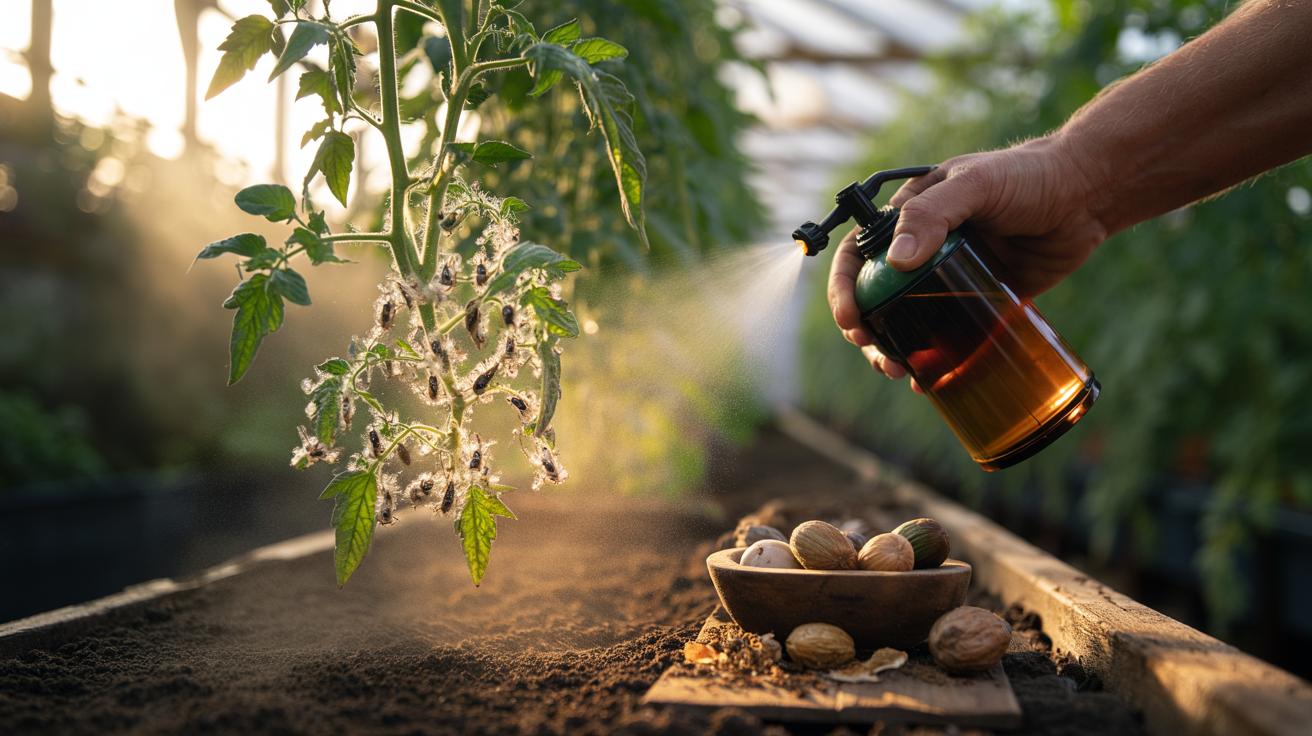
Critically, the surfactant film can occlude the insects’ spiracles—the small openings they use to breathe—leading to suffocation. Eggs and first-instar nymphs, with thinner coverings, are particularly vulnerable. At the right dilution, soap nut liquid is gentle on foliage and hard surfaces while remaining tough on soft-bodied pests. The key to results is coverage: a fine, even mist that reaches leaf undersides, growing tips, and the cloud of adults resting on the wing. Expect best control on young stages and repeated knock-down of adults.
Preparing a Soap Nut Liquid That Actually Works
For a reliable stock, simmer 10–15 g of whole soap nuts (or 1 heaped tablespoon of crushed shells) in 1 litre of water for 10 minutes, then steep until cool. Strain through muslin or a coffee filter to remove pith. Decant into a clean spray bottle at full strength, or dilute 1:1 with water for tender foliage. Optional: add 1 ml of horticultural oil per litre to slow drying on leaves. Always spot-test on one leaf, wait 24 hours, and avoid spraying in direct sun or on heat-stressed plants.
Apply in the evening when pollinators are inactive. Use a fine nozzle and spray to run-off, paying attention to the leaf undersides where whitefly congregate. Repeat every 3–4 days for two weeks to catch newly hatched nymphs, then weekly as prevention. Make small batches and use within 48 hours, or refrigerate for up to five days to prevent fermentation. Rinse sticky honeydew from leaves between sprays to improve wetting. Clean equipment after use; saponin residues can dry tacky if left.
| Key Point | Recommendation |
|---|---|
| Dilution (per litre) | 10–15 g soap nuts simmered; optionally dilute 1:1 for sensitive plants |
| Best Timing | Evening or early morning; avoid bright sun and high heat |
| Frequency | Every 3–4 days during outbreaks; weekly to maintain control |
| Contact Action | Direct spray must touch pests and leaf undersides |
| Compatibility | Safe with most IPM programmes; avoid mixing with sulphur or strong alkalines |
| Shelf Life | Use fresh; 48 hours at room temp, up to five days refrigerated |
| Safety | Wear gloves; keep out of eyes; rinse hands after use |
How Saponins Suffocate Whitefly and Other Soft-Bodied Pests
Whiteflies breathe through spiracles connected to a network of tracheae. The saponin film spreads rapidly across their bodies, forming micro-bubbles and micelles that lower surface tension and clog these openings. It is a physical blockade, not a neurotoxic hit. At the same time, saponins solubilise cuticular waxes, leaving nymphs prone to desiccation. Because the action is contact-based, adults fluttering above a canopy may only be stunned unless they are thoroughly misted.
The same vulnerability exists in other soft-bodied pests: aphids, mealybugs, whitefly nymphs, scale crawlers, and some thrips larvae. On tougher stages—armoured scale, older thrips, or heavy mealybug cotton—expect partial results unless you combine with mechanical removal. Persistence is limited: once the spray dries and degrades, protection fades. That short residual is a strength in integrated pest management, reducing non-target impact, yet it demands repeated, well-aimed applications to intercept successive hatchings and re-infestations from nearby plants.
Practical Use in UK Gardens, Houseplants, and Greenhouses
In glasshouses and conservatories, begin at the first sign of whitefly—yellowing leaves, sticky honeydew, drifting adults—before populations explode. Combine soap nut sprays with sticky traps to monitor pressure, prune congested growth for airflow, and introduce biologicals such as Encarsia formosa when conditions suit. Spray outside predator release zones or at times when beneficials are not actively foraging. Because residues break down quickly, compatibility with biocontrols is generally good if you avoid direct contact and allow sprays to dry.
For houseplants, carry infested pots to a sink or shower for targeted treatment and wash off honeydew first. In hard-water areas, use rainwater or filtered water to prevent spotting. Do not mix with bleach, bicarbonate, or strong foliar feeds. In the UK, only authorised plant protection products can be marketed; home-made soap nut solutions are for personal use on your own plants and should be applied responsibly. Store nuts dry, label bottles clearly, and keep all preparations away from children and pets.
Soap nut liquid offers a precise, low-impact way to suppress whitefly and allied pests by exploiting the wetting power of saponins. It shines when you prioritise careful preparation, steady coverage, and repetition timed to the pests’ life cycle. While it will not replace every pesticide in the shed, it can meaningfully reduce sprays of harsher chemistry and slot neatly into an IPM plan. The challenge is discipline: small, fresh batches and a regular routine beat a single heavy-handed drench. How will you adapt this simple, science-backed method to the rhythms and microclimates of your own growing space?
Did you like it?4.6/5 (28)