In a nutshell
- 🌧️ Switching to rainwater—naturally soft and slightly acidic—prevents mineral burn and leaf spotting by avoiding the chalky residues that clog stomata.
- 📊 Soft water chemistry makes fertilising predictable; with low hardness and stable pH, nutrients remain available—ideal for calcifuge plants like camellia and azalea.
- 🛠️ Set up a simple UK system: gutter diverter, first-flush diverter, sealed opaque water butt on a stand, and a fine mesh screen to keep debris and algae out.
- 🌿 Use rainwater for misting and leaf-wiping, monitor feed strength with an EC/TDS pen, top up calcium with Cal-Mag if needed, and maintain barrels with seasonal cleaning and winter protection.
UK gardeners know the tell-tale signs of hard water: chalky specks on leaves, crust at the pot rim, and a tired sheen on once-glossy foliage. The quiet fix is a simple habit with outsized impact—collecting rainwater. Naturally soft and faintly acidic, it spares plants the build-up that leads to mineral burn and splotchy leaf surfaces. Tap-water minerals do not evaporate; they accumulate, coating stomata and stressing tissues. By swapping the spray bottle or watering can to rain, you remove the source of residue and keep nutrients more available in the root zone. This piece explains why soft water matters, what to set up at home, and how to use your captured rain to keep leaves spot-free.
Why Hard Water Scorches Leaves and Spots Glassy Foliage
“Hardness” refers to dissolved calcium and magnesium salts, usually accompanied by bicarbonates that nudge pH upwards. When you mist or water foliage with hard tap water, the H2O evaporates but those salts stay behind. They crystallise into a light film that roughens the cuticle and can clog stomata, impairing gas exchange. On tender species—think calatheas and ferns—this stress shows as pale freckling, scorched margins, or dull patches that mimic disease. The white dots you see after misting are mineral residue, not fungus, and repeated deposits lead to the “burn” so many houseplants endure on windowsills.
At root level, bicarbonate-heavy water drives the substrate more alkaline. That shift interferes with iron, manganese, and phosphorus uptake, inviting chlorosis and weak growth. Elevated EC—the electrical conductivity that indicates total salts—also pulls water out of cells, compounding stress during dry indoor spells. In short, hard water quietly derails both the look and the physiology of foliage plants.
Rainwater’s Soft Chemistry and Plant Physiology Benefits
Fresh rainwater is naturally low in dissolved minerals, often slightly acidic from dissolved CO₂, and gentle on leaves and roots alike. Soft rainwater keeps leaves clean and stomata clear, so photosynthesis and transpiration hum along without a chalky film. Its low hardness and modest EC help keep potting media in a plant-friendly pH range, preventing the lockout that hard water can cause. When you mix fertiliser with rainwater, the final solution is predictable—nutrients aren’t riding on a hidden load of calcium carbonate or sodium, so plants get exactly what you feed.
| Parameter | Rainwater (typical) | Hard Tap Water (typical UK) |
|---|---|---|
| Hardness (ppm as CaCO₃) | 0–20 | 150–300 |
| EC (mS/cm) | 0.02–0.05 | 0.3–0.8 |
| pH | 5.6–6.5 | 7.2–8.5 |
| Bicarbonate (mg/L) | <20 | 100–250 |
| Residue after foliar misting | None | White specks/film |
Numbers vary by region, but the trend is consistent: softer water leaves leaves spotless. For calcifuge favourites—camellia, azalea, carnivorous plants—this can be the difference between steady growth and seasonal sulks.
Setting Up a Simple UK Rainwater System
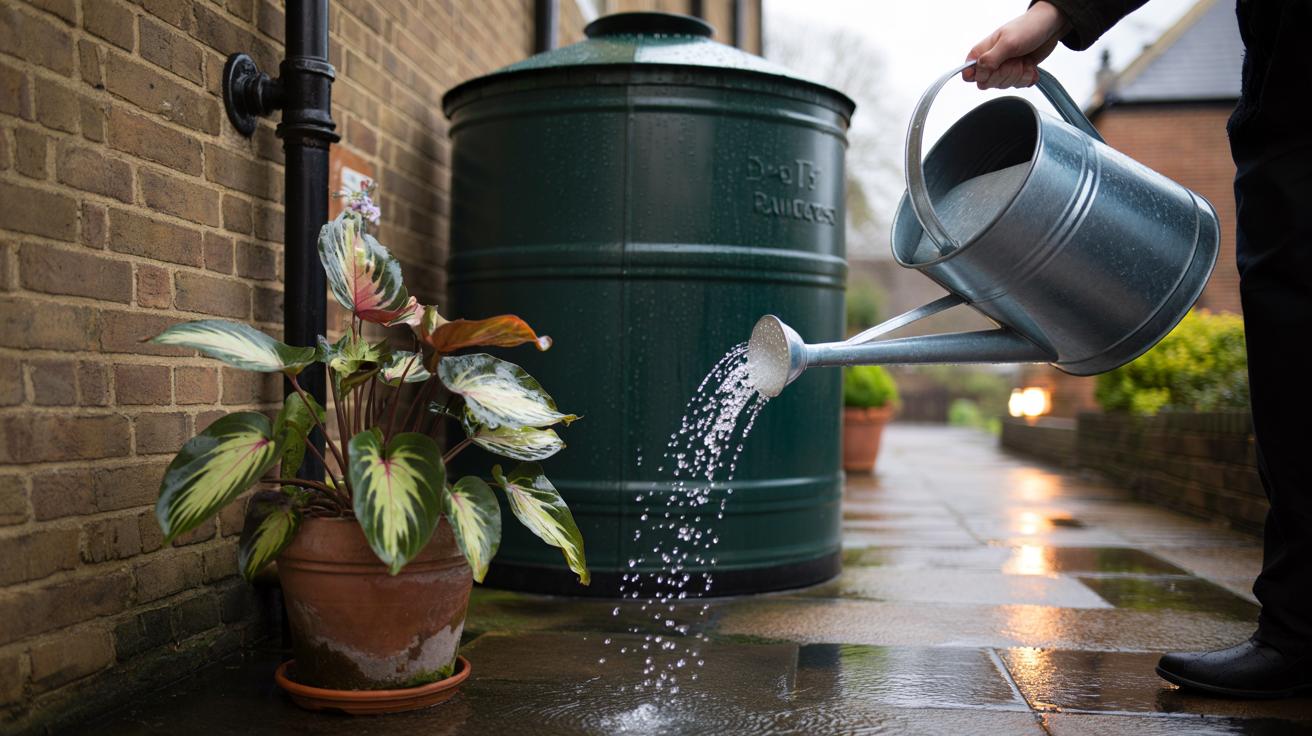
A practical system starts with the roof. Fit a gutter leaf guard and a downpipe diverter kit that feeds a lidded, opaque water butt (200–250 L is a versatile size). Add a first-flush diverter so the grubbiest initial rainfall bypasses your storage. Raise the butt on a stable stand for easy access to the tap, and include a fine mesh screen under the lid to stop debris. Keep storage containers sealed and dark to stop algae and to keep pets or wildlife safe.
Site the butt on level ground near your watering routine to make the habit stick. Link multiple butts with connector kits for greater capacity in wet months, and ensure an overflow routes to a soakaway or another barrel. For flats or balconies, a compact “city butt” or collapsible tank works well beneath a small roof or awning gutter. Every setup benefits from a quick-clean inline filter before your can or hose.
Using, Storing, and Troubleshooting Collected Water
Use rainwater for foliar misting, leaf-wiping with a microfibre cloth, and routine watering—especially for humidity lovers like maranta, calathea, and maidenhair fern. For feeds, dilute fertiliser into rainwater to control final EC; a simple EC or TDS pen helps you avoid over-salting. If your veg need calcium and magnesium, blend a portion of tap water or add a calibrated Cal-Mag supplement rather than reverting entirely to hard water. Soft water delivers what you add, nothing more, so dosing is straightforward.
Refresh barrels by drawing them down regularly and giving the interior a rinse each season. Avoid long-term stagnation: fit a tap that doesn’t dribble, keep lids snug, and clear the diverter filter after storms. For edibles, aim rainwater at the soil rather than directly onto harvest-ready leaves. In winter, insulate or drain small butts to prevent freeze damage. If you see odour or cloudiness, empty, scrub, and restart after the next good downpour.
Collecting rain is more than thrift; it’s plant care at the molecular level. By swapping mineral-heavy mains water for soft rainwater, you prevent residue, protect stomata, and stabilise substrate chemistry—results that show up as clearer leaves and steadier growth. With a small diverter, an opaque butt, and a simple filter, the habit takes minutes to establish and pays off all year. As wetter winters and drier summers reshape our routines, will you let the next shower charge your watering can—and which plants will you treat first to keep their leaves spot-free?
Did you like it?4.5/5 (27)