In a nutshell
- 🌹 Banana peel soak delivers natural potassium that steers sugars to buds, boosting rose bloom size, colour intensity, and stress resilience.
- 🧪 How-to: chop peels, steep 24–48 hours (up to 3–5 days for stronger extract), strain, then dilute roughly 1:5–1:10; a sour-sweet aroma is fine—discard if it smells foul.
- ⏱️ Apply mid-spring to late summer every 2–3 weeks as a root-zone drench (500 ml–1 L per established bush) after watering; keep off foliage and pause during heatwaves.
- ⚖️ Avoid nutrient imbalances: excess K can block magnesium and calcium; pair with balanced fertiliser and compost, and use sparingly on K-rich soils.
- 📊 Treat as a gentle supplement: evidence supports K for flowering, but for precision use sulphate of potash or tomato feeds; value lies in low cost, sustainability, and soil-life support.
Roses respond to generous feeding, yet many gardens deliver dazzling displays with a humble kitchen leftover: the banana peel soak. This simple infusion channels the peel’s natural potassium into a tonic that supports bud formation, colour intensity, and disease resilience. In an era of careful budgets and greener choices, it’s a low-cost, low-waste boost that dovetails with good pruning and watering. Think of it as a targeted nudge for bigger, better blooms without leaning on synthetic feeds. Below, I explain why potassium is the star nutrient for roses, how to brew a clean, effective soak, and when to apply it to avoid imbalances while keeping your borders in full flourish.
Why Potassium Supercharges Rose Blooms
Potassium (K) is the bloom-building element that helps roses move sugars from leaves to buds, regulate water through stomata, and activate enzymes that drive flowering. It doesn’t directly build tissue like nitrogen, but it fine-tunes a plant’s metabolism so energy arrives precisely where it’s needed—your rose’s buds. When potassium is sufficient, petals tend to be richer in colour, plants shrug off stress more easily, and flowering runs longer through the season. Banana peels are notably K-biased compared with nitrogen, making a soak a sensible complement when your goal is bigger blooms rather than lush but leafy growth.
Beyond K, peels carry small amounts of phosphorus, calcium, and trace minerals. In a soak, microbes begin breaking down these compounds into plant-available forms, and the solution delivers them gently to the root zone. You’re not forcing growth; you are improving the plant’s physiological tone. The magic isn’t just the nutrients but the way potassium supports carbohydrate transport to developing flowers. It’s a subtle difference with very visible results when buds begin to fatten and open cleanly.
How to Brew a Banana Peel Soak, Step by Step
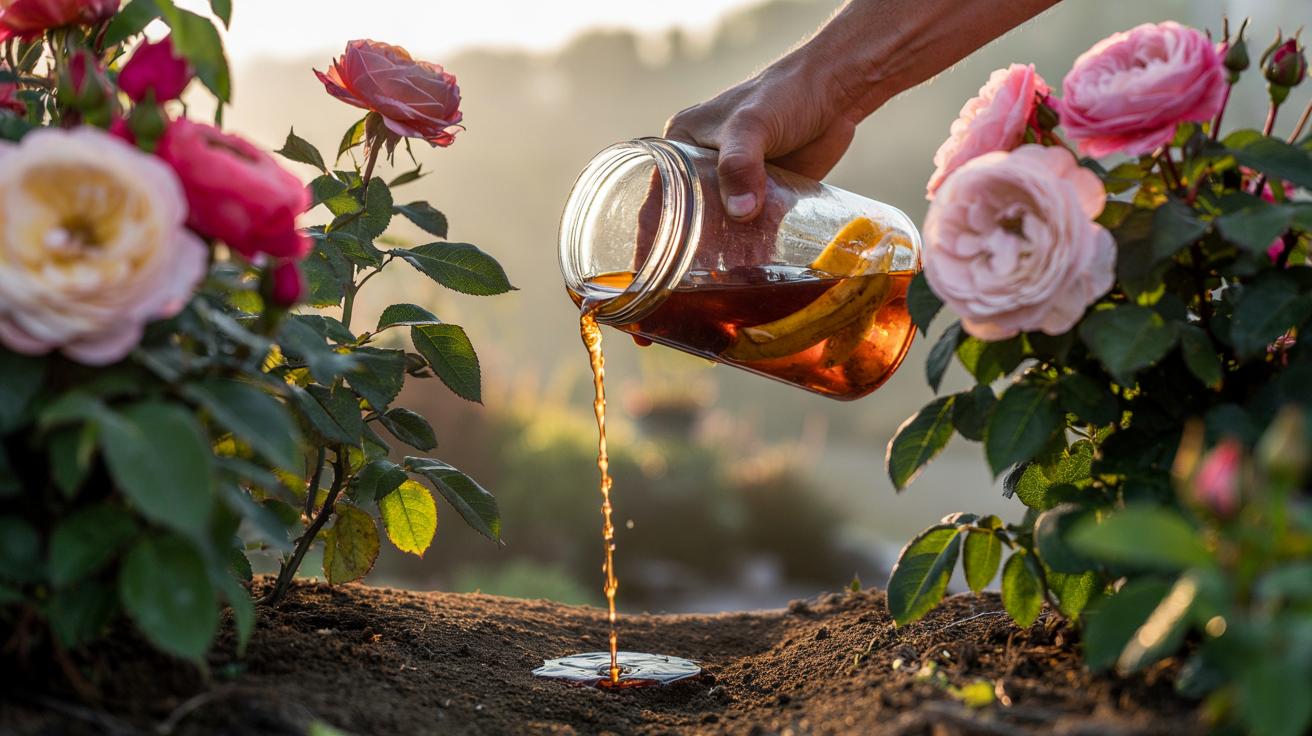
Choose unsprayed, well-rinsed banana peels. Chop two peels into small pieces and place them in a clean jar. Add about 1 litre of rainwater or tap water that has stood overnight to off-gas chlorine. Loosely cover—air should escape—and steep for 24–48 hours for a mild brew, or up to 3–5 days for a richer extract. Swirl daily. Strain through a fine sieve or cloth, then dilute at roughly 1:5 to 1:10 with water before use. If the liquid smells sour-sweet, it’s fine; if it smells foul like sewage, discard and start again.
Use the strained solids wisely. Work them into a compost heap or bury them 5–8 cm deep in the border, several centimetres away from stems to avoid mould and pests. Adding a teaspoon of unsulphured molasses can speed microbial activity, but it’s optional and may attract insects if spilled. Clean kit and short steep times reduce odour and keep the brew microbially gentle for young plants. Label the jar, note dates, and you’ll quickly learn the strength your roses prefer.
When and How to Feed Roses Without Upsetting Balance
Apply the diluted banana peel soak from mid-spring through late summer, every 2–3 weeks, focusing on pre-bud and flowering phases. Water the soil first, then drench around the drip line with 500 ml to 1 litre per established bush, less for young roses. Keep the liquid off foliage to avoid sticky residues that attract pests. This is a root-zone tonic, not a foliar feed. In hot spells, feed early morning so plants can uptake nutrients before heat stress sets in. Pause feeding during heatwaves or drought until normal watering resumes.
Avoid overdoing potassium. Excess K can interfere with magnesium and calcium uptake, leading to leaf yellowing or weak stems. Pair the soak with a balanced spring fertiliser and regular compost to maintain overall nutrition. If your soil test shows high K already, use the soak sparingly and favour organic matter. Never replace a well-rounded fertiliser regime entirely with banana tea. Consistency, not concentration, produces the most reliable flush of flowers.
Evidence, Limits, and Smart Alternatives
Claims that banana peels alone transform roses overnight are exaggerated, yet their potassium-rich profile is sound horticulture when used within a balanced plan. Studies on K in flowering crops consistently show improved bud set, colour, and stress tolerance; home brews vary in strength, but the direction of benefit aligns with established plant physiology. Treat the soak as a gentle supplement. For precise dosing, gardeners still rely on sulphate of potash or a K-leaning tomato feed during bloom. Use peels to stretch the budget and support soil life, not as a silver bullet.
| Input | Prep Time | Typical Dilution | Primary Benefit | Main Caution |
|---|---|---|---|---|
| Banana Peel Soak | 1–5 days | 1:5–1:10 | Gentle K boost; supports soil microbes | Variable strength; odour if oversteeped |
| Sulphate of Potash | None | Label rate | Accurate potassium dosing | Overuse can lock out Mg/Ca |
| Wood Ash | None | Light dusting | Quick K with trace minerals | Raises pH; use sparingly on alkaline soils |
| Compost | Weeks | Soil amendment | Broad nutrition; better structure | Slower release; variable K |
On balance, the peel soak’s strengths are cost, sustainability, and gentle delivery. Where soils are already rich, switch to compost and light potash to avoid skewing nutrients. In containers, alternate feeds to prevent salt build-up, and refresh the top 3–5 cm of compost mid-season. Healthy roses start with sun, air flow, mulch, and steady watering; potassium lifts performance once the basics are right. Let your plants be the judge: track bud size, number, and colour over a month to calibrate your approach.
If you crave generous clusters and saturated colour, a thoughtfully brewed banana peel soak is a smart, frugal ally. It amplifies what good cultivation already sets in motion, pushing sugars and strength towards the blooms you grow for. Keep timing, dilution, and balance in mind, and you’ll see roses respond without the pitfalls of heavy feeding. Feed the soil, not just the plant, and potassium will do the rest. How will you tailor your next feeding plan—will you trial a gentle peel soak beside a measured potash feed and compare the flush?
Did you like it?4.5/5 (26)