In a nutshell
- 🧪 Hydrogen peroxide (3%) breaks down into water and oxygen, disrupting fungal hyphae and biofilms; bubbling signals contact, not total sterilisation, and its action is short-lived but effective at the rhizosphere.
- 📏 Use safe dilutions for soil: roughly 1:10–1:15 (peroxide:water) for 0.15–0.3%; never pour full-strength, don’t mix with bleach or vinegar, avoid metal containers, and make solutions fresh.
- 🩺 Rescue steps: isolate the plant, apply a slow peroxide drench until runoff, wait 10–15 minutes, flush with water, trim mushy roots, and re-pot in an airy mix; repeat once after a week only if symptoms persist.
- 🛡️ Prevent recurrence with drainage, aeration, right pot size, proper dry-down, and grit top-dressing to deter fungus gnats; reintroduce beneficial microbes post-recovery and avoid routine peroxide use.
- 🔍 Key takeaways: treat peroxide as a short-term reset, not fertiliser; tool disinfection can use 3% neat, and healthy roots in airy soil remain the best antifungal strategy.
Houseplants and container veg often suffer a quiet killer: root fungus thriving in mouldy soil. A simple hydrogen-peroxide rinse can interrupt that spiral without resorting to harsh fungicides. When diluted correctly, the bubbly liquid lifts spores, breaks biofilms, and supplies a burst of oxygen to suffocating roots. The trick is restraint. Never pour full-strength peroxide into soil, and never make it a weekly habit. Used once or twice during a crisis, it can reset conditions so roots recover and the pot dries evenly again. Here’s the science, the safe dilutions, and the practical steps that protect plants while steering clear of collateral damage.
Why Hydrogen Peroxide Works Against Root Fungus
Hydrogen peroxide (H₂O₂) decomposes into water and oxygen, especially in contact with soil enzymes such as catalase. That fizzing is oxygen being released right at the rhizosphere. The immediate benefit is twofold: it lifts debris and disrupts fungal hyphae mechanically, and it creates an oxygenated zone that discourages organisms adapted to soggy, airless pockets—often implicated in root rot. Short-lived reactive oxygen species also help denature fungal cell walls and biofilms on the root surface. Oxygen is the active ingredient: bubbles signal contact, not complete sterilisation.
Because peroxide breaks down rapidly, it doesn’t linger in the pot, reducing the risk of residue build-up. That said, the same reactivity means it is non-selective: it can stress delicate root tips and beneficial microbes if overused or over-strong. Think of it as a first-aid rinse that resets the balance so air, drainage, and careful watering can finish the recovery. It is not fertiliser, and it cannot compensate for chronic overwatering or compacted compost.
Safe Dilutions and How to Rinse Mouldy Soil
The household bottle in Britain is usually 3% hydrogen peroxide. For soil, aim for a gentle final concentration around 0.15–0.3%. Mix with clean, cool water in plastic or glass, not metal, which accelerates decomposition. A conservative starting point is 1 part 3% peroxide to 10–15 parts water. Never mix peroxide with bleach, vinegar, or ammonia. Label your jug, make it fresh, and use it the same day because potency fades quickly. If the plant is very tender, begin at the weaker end and observe for 48 hours before considering a repeat.
| Task | Mix from 3% H₂O₂ | Approx. final % | Notes |
|---|---|---|---|
| Soil rinse for mouldy pots | 1:10 (peroxide:water) | ~0.27% | Apply once; reassess after 7 days |
| Root rot rescue drench | 1:15 | ~0.19% | Use after removing mushy roots |
| Surface spray for fungal growth | 1:20 | ~0.14% | Light mist; avoid runoff onto leaves |
| Tool disinfection | Use 3% neat | 3.0% | Contact time 5–10 minutes; rinse |
If you own 35% “food-grade” peroxide, do not use it for casual houseplant care; it is hazardous and unnecessary here.
Step-By-Step: A Gentle Rescue for Root Rot
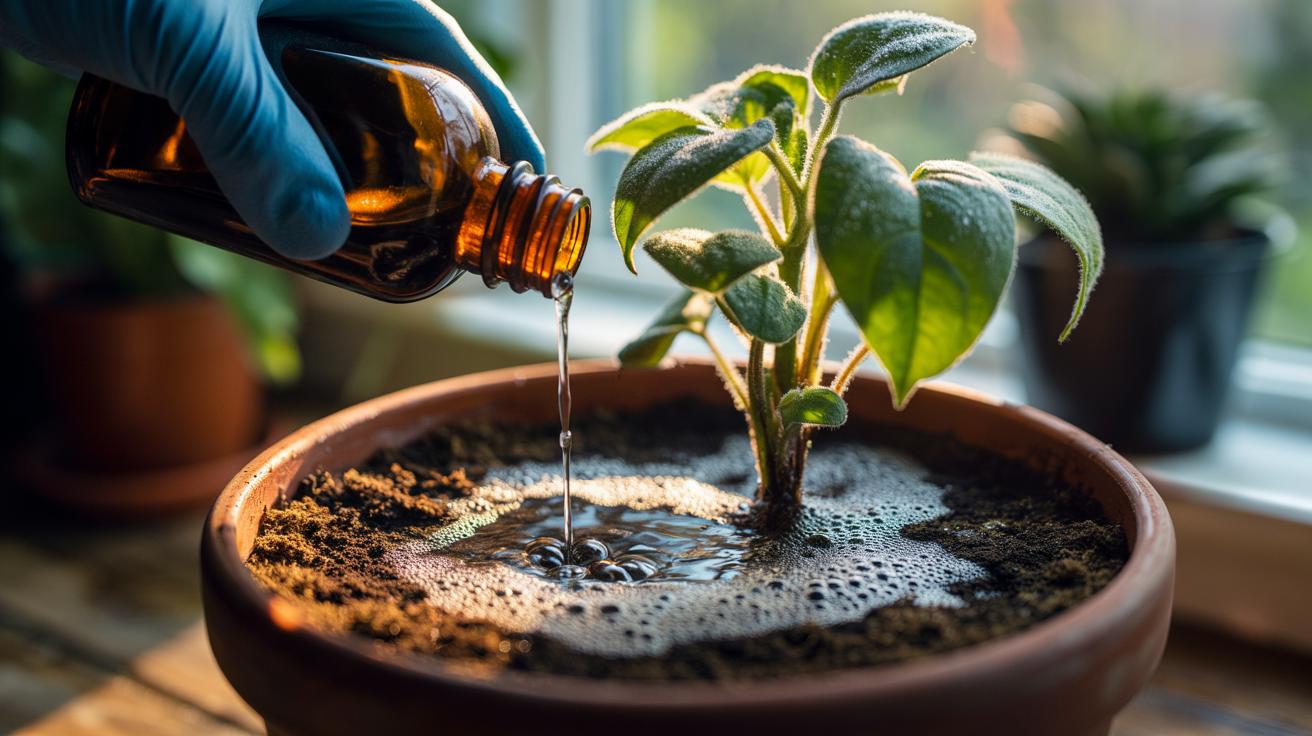
First, isolate the plant and check moisture with a finger or a probe; if the pot is wet, let it drain for a day. Prepare your dilution (for rescue, 1:15 from 3% hydrogen peroxide). Protect your surface and wear gloves. Water the plant slowly with the solution until it runs from the drainage holes, ensuring an even soak. The fizzing you see is oxygen being released; allow 10–15 minutes for contact. For plants in severe distress, lift the root ball, trim brown, mushy roots with sterilised scissors, and re-pot into a fresh, airy mix.
After the contact window, flush once with plain water to disperse any remaining reactivity and settle the mix. Keep the plant warm with good airflow and bright, indirect light. Resume normal watering only when the top few centimetres are dry; use a pot with excellent drainage. One well-judged rinse is better than repeated assaults that scorch root tips. If symptoms persist after a week—wilting, sour odour, collapsing stems—repeat at the same dilution once, then focus on cultural fixes: light, air, and soil structure.
Preventing Recurrence and Protecting Beneficial Life
Peroxide is a reset button, not a lifestyle. To keep mould and fungus gnats away, improve conditions that favour roots over rot. Use a potting blend with chunky aggregates for aeration, match pot size to the root mass, and water to full runoff before allowing a proper dry-down. Skim and discard any white fuzz on the surface, then top-dress with horticultural grit or sand to discourage gnat larvae. Rinse saucers, avoid standing water, and ventilate shelves and windowsills. During cool, dim months, reduce watering frequency and rotate plants for even drying.
Because peroxide is non-selective, overuse can deplete helpful microbes that assist nutrient uptake. After recovery, consider reintroducing biology with quality compost, worm castings, or a light mycorrhizal dust when repotting. Keep feeding gentle: a diluted, balanced fertiliser once growth resumes. Healthy roots in airy soil are the best antifungal strategy. If you repeatedly face mould, reassess location, light levels, and potting medium rather than reaching for the bottle again.
Used sparingly and at the right strength, a hydrogen-peroxide rinse can save a mouldy pot and give roots a breath of life, then vanish into water and oxygen. The method is simple, the science sound, and the risks manageable with care. The deeper win is habit: better drainage, measured watering, and keen observation. Treat the cause, not just the symptom, and the fizz becomes a rare rescue, not a routine. How will you adjust your soil mix, watering rhythm, or plant placement so peroxide remains an emergency tool rather than a crutch?
Did you like it?4.6/5 (30)