In a nutshell
- 🌿 Banana water is a gentle, DIY tonic leaching trace minerals—especially potassium—from peels; treat it as a micro‑boost, not a full meal for houseplants.
- 🧪 Safe method: rinse peel, chop, steep in 500 ml water for 12–24 hours in the fridge, strain, then dilute 1:4; keep batches clean, discard within 48 hours, and avoid fermentation.
- 🪴 Use on moist soil during active growth (spring–autumn); never foliar spray; helpful for pothos and peace lilies; skip succulents and cacti; reduce frequency in winter.
- ⚠️ Myths busted: it’s not a complete fertiliser (low nitrogen), won’t fix chlorosis or pests; sour smells, cloudiness, or gnats signal overuse—flush and extend intervals.
- ♻️ Smarter upgrades: choose vermicompost, compost tea, or seaweed extract; prioritise clean water, good light, and balanced feeds for consistent results.
Among houseplant obsessives, the phrase “banana water” pops up with surprising regularity. It’s the frugal, pantry‑to‑pot trick that promises gentler feeding and lush leaves without commercial inputs. The idea is simple: soak banana peels in water, strain, then use the lightly mineralised liquid on soil. Fans swear by its boost of potassium, with whisperings of steadier flowering and tougher stems. Skeptics counter that the science is thin, and that mishandled brews attract gnats. Both can be right. Used carefully, banana water can play a small but useful role in an indoor plant routine. Here’s how to do it properly, what to expect, and—crucially—when to skip it.
What Is Banana Water and Why Gardeners Swear by It
At heart, banana water is a weak, homemade plant tonic created by soaking banana peels to leach trace minerals into clean water. Measured in lab terms, it’s modest. Yet plants don’t eat in headlines; they respond to cumulative care. Peels contain potassium (K) and small amounts of phosphorus (P), calcium, and magnesium, which support sturdier stems, flower set, and enzyme function. Indoor growers like it because it’s soft on roots, unlikely to burn, and makes use of kitchen scraps. Think of it as a micro‑boost, not a full meal. Used alongside balanced fertilisers and good light, it can help keep leafy favourites—pothos, peace lilies, monsteras—ticking along between regular feeds.
There’s also a behavioural bonus. Mixing a small batch every fortnight nudges better habits: consistent watering, closer observation of leaves, and timely repotting. That rhythm often explains the glow‑up more than any miracle nutrient. Still, there’s a sensory test worth noting: fresh banana water should smell faintly sweet, never sour. If it’s funky, toss it. Bad odour equals bacterial overgrowth and potential root trouble.
How to Make Banana Water Safely at Home
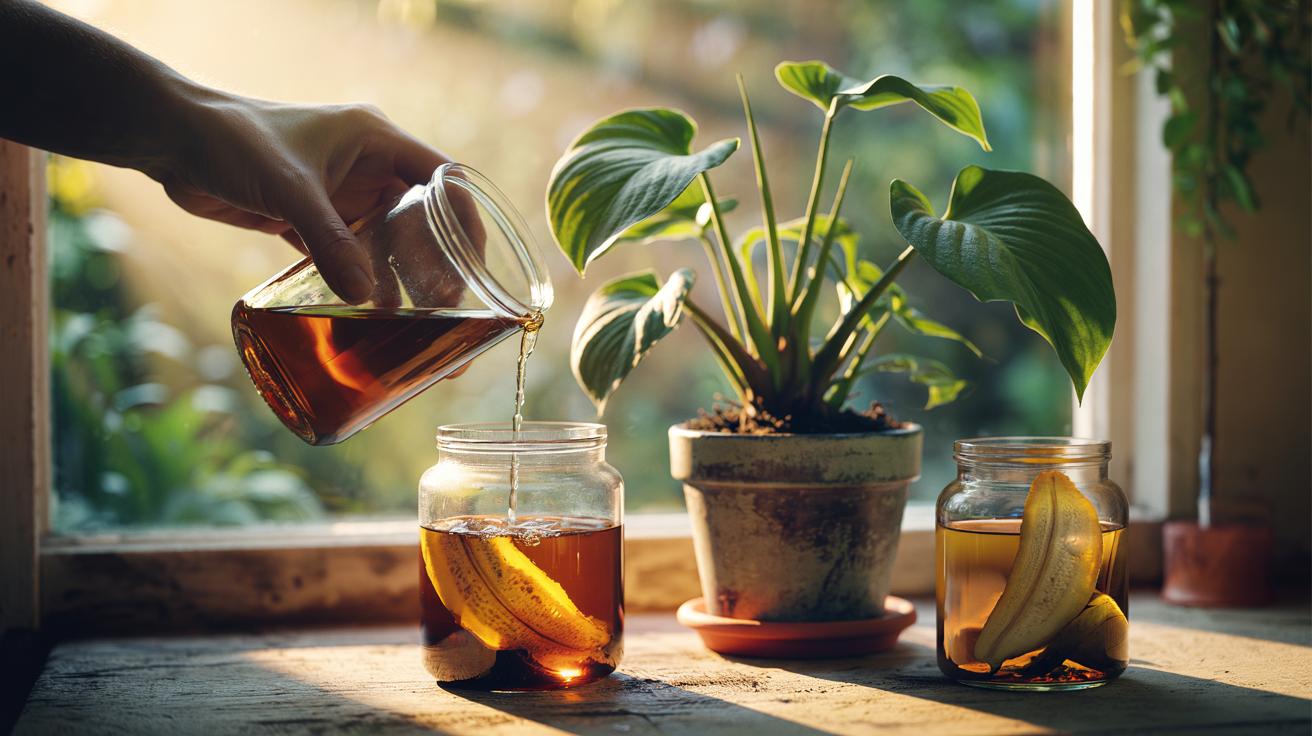
Start clean. Rinse the peel of one ripe banana to remove residues. Chop into small pieces to increase surface area. Place in a jar with 500 ml of cool, filtered water. Refrigerate and steep for 12–24 hours. Strain very well, pressing the peel to extract liquid. Dilute one part banana water with four parts fresh water before use. Always dilute—concentrated brews can sour soil and invite pests. Skip added sugar or yeast. Label the jar with time and date, then discard leftovers after 48 hours. If you prefer zero mess, dry peels in a low oven (or a dehydrator), crumble, and later steep a teaspoon of peel flakes in hot water, then dilute as above.
Choose organic bananas when possible and keep everything—knife, jar, sieve—scrupulously clean. Hygiene matters indoors, where containers trap moisture and roots have limited oxygen. A fridge‑steep keeps microbial growth slower and aroma at bay. The goal is a light mineral infusion, not a fermentation experiment. If bubbles form or the liquid turns cloudy, do not use it.
| Method | Ingredients | Dilution | Frequency | Best For |
|---|---|---|---|---|
| Cold Peel Soak | 1 peel + 500 ml water | 1:4 (water:plain) | Every 2–4 weeks | Houseplants with moderate feeding needs |
| Dried Peel “Tea” | 1 tsp dried peel + 250 ml hot water | 1:5 after steeping | Monthly | Low‑risk, low‑odour option |
| Compost Tea Alternative | Finished compost + water | Strain well; 1:10 | Monthly | Broader nutrient profile |
When and How to Use It on Indoor Plants
Apply diluted banana water to moist soil, never bone‑dry mix. That buffer helps roots avoid shock. Pour slowly until a little drains from the pot’s base, then finish with plain water if needed. It pairs well with foliage plants that appreciate steady potassium—think pothos, dieffenbachia, spider plants, and peace lilies. Flowering windowsill herbs and orchids may enjoy an occasional nudge, but don’t expect blooms on command. Never spray banana water on leaves—sticky residues invite fungus and gnats. Succulents and cacti? Skip it. They prefer lean diets and excellent drainage.
Timing matters. Use it during active growth: spring through early autumn, or any period under bright, reliable grow lights. In winter, light dips and metabolism slows, so scale back to once every six to eight weeks or pause entirely. Watch your plants. Dark, lush leaves and sturdy new growth suggest you’re in the sweet spot. Mushy stems, sour smells, or fungus gnats signal overdoing it. When in doubt, flush with plain water and extend the interval. Remember, banana water complements—rather than replaces—your regular, balanced feed.
Myths, Caveats, and Smarter Alternatives
Let’s puncture the hype. Banana water is not a complete fertiliser. It’s thin in nitrogen, the driver of leafy growth, and inconsistent batch to batch. It won’t fix chlorosis from iron deficiency, nor will it “banish” pests. Worse, letting peels ferment creates a microbe soup that can outcompete roots for oxygen. Indoors, that’s a recipe for trouble. If your plant needs real food, reach for a balanced liquid fertiliser—something near 3‑1‑2 or 10‑10‑10—and follow the label at half strength for container situations.
Prefer a sustainable upgrade? Compost peels properly or feed them to a worm bin and use the resulting vermicompost or compost tea, which deliver broader nutrients and beneficial microbes. Seaweed extract offers trace elements without the sugar load. If your tap water is hard, address that first; high bicarbonates can lock out nutrients regardless of what you pour. Clean water, good light, and right‑sized pots outperform any hack. Use banana water as a light, occasional complement—not as dogma.
Handled with care, banana water can be a gentle nudge rather than a silver bullet. Think of it as a ritual that keeps you observing your plants closely, topping up moisture sensibly, and noticing problems before they bite. Keep batches small, smells clean, and expectations realistic. Pair it with proper feeding, sharp pruning, and better light, and you’ll see results that have less to do with magic and more to do with method. Ready to try a measured, cleaner version of the banana water trick on your own windowsill jungle? What plant will you test first, and how will you track the difference?
Did you like it?4.5/5 (21)