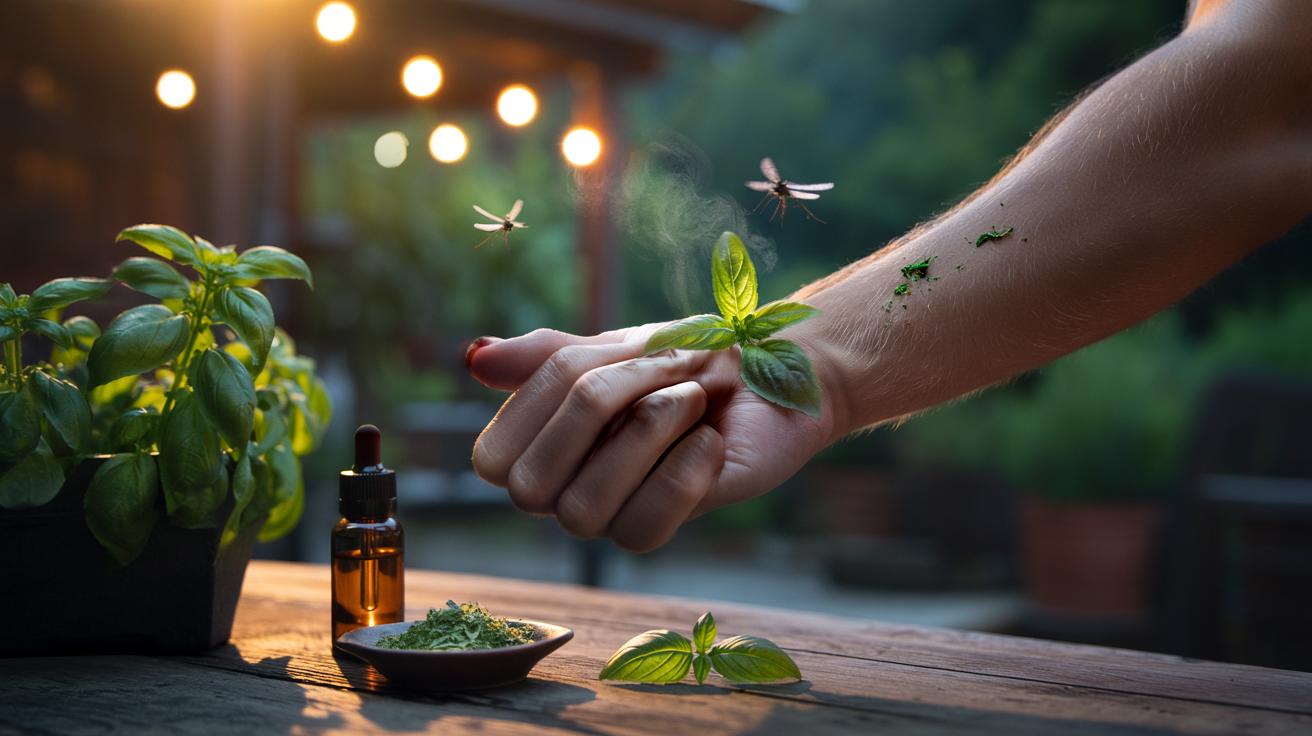
In a nutshell
- 🪴 Basil’s volatile compounds—linalool and eugenol—create a short-lived scent barrier that confuses mosquitoes, acting as a spatial repellent strongest soon after application.
- 🧴 How-to: bruise fresh basil leaves for a quick rub or infuse in a carrier oil; keep total dilution at 0.5–2% and reapply every 45–90 minutes for consistent coverage.
- 🧪 Layering boosts performance: pair basil with citronella, geranium, or lavender; apply to pulse points and clothing edges; avoid eyes and use lower dilutions for sensitive skin and children.
- 📊 Evidence and limits: natural oils reduce landings but evaporate quickly; oily carriers and balms extend the protection window; combine with sleeves, screens, fans, or treated clothing for reliability.
- 🧭 Practical takeaways: choose fragrant sweet basil, store infusions cool and dark, patch test, and carry a 10 ml roller; excellent for patios and gardens, but not a full DEET replacement in high-risk zones.
On warm evenings when the whine of mosquitoes frays tempers and sleep, a simple kitchen remedy can tip the balance. A fresh basil leaf rub, backed by the science of essential oils, offers a pleasantly aromatic way to reduce bites without synthetic sprays. By releasing volatile constituents that confuse an insect’s sense of direction, basil creates a soft, invisible barrier around the skin. It will not make you invisible to every mosquito, yet it can meaningfully reduce landings when used correctly. Here is how basil works, how to prepare it safely, and how to combine it with other plant oils to improve staying power.
Why Basil Works: The Chemistry of Scent
Basil’s distinctive aroma comes from linalool, eugenol, and methyl chavicol (estragole), volatile molecules that evaporate readily to form a protective vapour halo. Mosquitoes navigate using a blend of carbon dioxide, body heat, and skin odours. Basil’s compounds interfere with these cues at the antennae, reducing landing rates. The effect is strongest within minutes of application, while the scent plume is freshest. Unlike DEET, which blocks receptors more comprehensively, basil operates as a spatial repellent and partial mask, useful for gardens, patios, and short dusk walks where you want relief without a chemical haze.
Not all basils are equal. Sweet basil (Ocimum basilicum) tends to be richer in linalool, lending a floral lift; holy basil (Ocimum tenuiflorum) leans spicier. Studies indicate linalool and eugenol contribute most to repellent activity, though their evaporation rate means protection wanes with wind, sweat, and time. Think of basil as a scent shield that must be renewed. Selecting fresher, fragrant leaves raises the concentration of actives released as you bruise them, while warm skin increases vapour diffusion, improving short-term coverage around wrists, ankles, and necklines.
How to Make a Basil Leaf Rub at Home
For a quick, single-use rub, take a handful of freshly washed basil leaves, clap them between clean palms to bruise, then glide the green, fragrant side over pulse points and exposed skin. The light green oil that transfers carries the key volatiles. Reapply every 45–90 minutes, as the scent fades. For a more durable option, craft a pocketable infusion: finely chop 20 g of basil, submerge in 100 ml of a light carrier oil (sweet almond or fractionated coconut), and leave sealed for 24–48 hours, shaking occasionally. Strain, bottle dark, and label with the date.
To boost potency, add 12–18 drops of basil essential oil to the strained infusion (about 0.6–0.9% dilution), then blend 6–8 drops of citronella or lemongrass for lift. Never apply undiluted essential oils directly to skin. For adults, keep total dilution at 1–2%; for older children, stay at 0.5–1% and avoid faces, hands, and broken skin. Patch test on the inner forearm for 24 hours. Store your basil rub in a cool, dark place and use within six weeks for best aroma. A 10 ml roller bottle travels well and makes reapplication frictionless.
Applying and Layering Essential Oils Safely
Application matters as much as formulation. Aim for a thin, even film over exposed areas—wrists, ankles, behind knees, neckline—and lightly sweep over clothing hems where mosquitoes probe. Reapply after swimming, heavy perspiration, or every two hours in breezy conditions. Layering can extend cover: pair basil with citronella for spatial pushback and geranium or lavender to soften scent while contributing their own active terpenes. A hat or scarf misted lightly (off-skin) helps surround your head with a protective plume without overloading skin.
Safety is straightforward. Do not use essential-oil rubs on infants or during pregnancy without professional advice. Keep away from eyes and mucous membranes; wash hands after application. Basil is not known for phototoxicity, but many citrus oils are—stick to citronella and avoid expressed bergamot on sun-exposed skin. People with sensitive skin should prefer lower dilutions and fragrance-free carriers. In high-pressure mosquito zones or disease-risk areas, use plant rubs as a complement to long sleeves, permethrin-treated clothing, screens, and fan-driven air that disrupts flight paths.
Evidence and Practical Limits: What Studies Suggest
Laboratory and field studies support the repellent role of several basil constituents. Linalool and eugenol have shown measurable reductions in mosquito landings, particularly in early minutes after application. Protection is time-limited because these molecules evaporate quickly. Formulas that slow evaporation—oily carriers, wax balms, and combining with other volatiles—extend useful windows. Real-world variables matter: wind disperses vapours, sweat dilutes the film, and species differ in sensitivity. Treat these rubs as effective first lines for gardens and campsites, while acknowledging their ceiling compared with long-duration synthetics.
| Oil/Material | Key Actives | Typical Skin Dilution | Estimated Protection Window |
|---|---|---|---|
| Basil (Ocimum basilicum) | Linalool, Eugenol | 0.5–2% | 45–120 minutes |
| Citronella | Citronellal, Geraniol | 0.5–2% | 60–120 minutes |
| Geranium | Citronellol | 0.5–2% | 45–90 minutes |
| Lavender | Linalool, Linalyl acetate | 0.5–2% | 30–90 minutes |
Numbers vary with climate, skin chemistry, and activity, but the pattern is consistent: fresh scent equals stronger deterrence. Keeping a small roller or balm to hand, topping up before dusk peaks, and pairing with physical barriers yields the most reliable comfort outdoors. For travel, decant into leak-proof bottles and label ingredients for quick reference.
A basil leaf rub is an elegant, low-cost way to reclaim your patio or allotment from biting pests, enriching the air with a herbaceous veil while blunting mosquito interest. It respects the skin, sidesteps harsh odours, and can be made in minutes from market herbs and a kitchen cupboard oil. The trick is regular, light reapplication and sensible layering with other proven plant scents. As summer stretches on and evenings lengthen, what blend of basil, citronella, and geranium would you experiment with to craft your ideal natural barrier?
Did you like it?4.4/5 (28)