In a nutshell
- 🌶️ Capsaicin acts as an antifeedant, irritating insect TRP channels to deter chewing; especially effective against caterpillars and flea beetles, with variable impact on aphids and mites.
- 🧪 Safe DIY mix: steep 1 tsp chilli in 500 ml water, strain, and add 1–2 drops surfactant; patch-test, avoid full sun, wear protection, and reapply every 3–7 days or after rain.
- 🍃 Best use: deploy early at first nibble, focus coverage on leaf undersides, and pair with barriers and monitoring; limited effect on leaf miners, scale, and slugs post-shower.
- ♻️ Sustainability: behavioural deterrence fits IPM, degrades quickly, and helps spare beneficials when sprayed carefully and sparingly.
- 📜 UK note: check HSE guidance for authorisation on edibles, label and store mixes safely, and consider approved products if regulatory status is unclear.
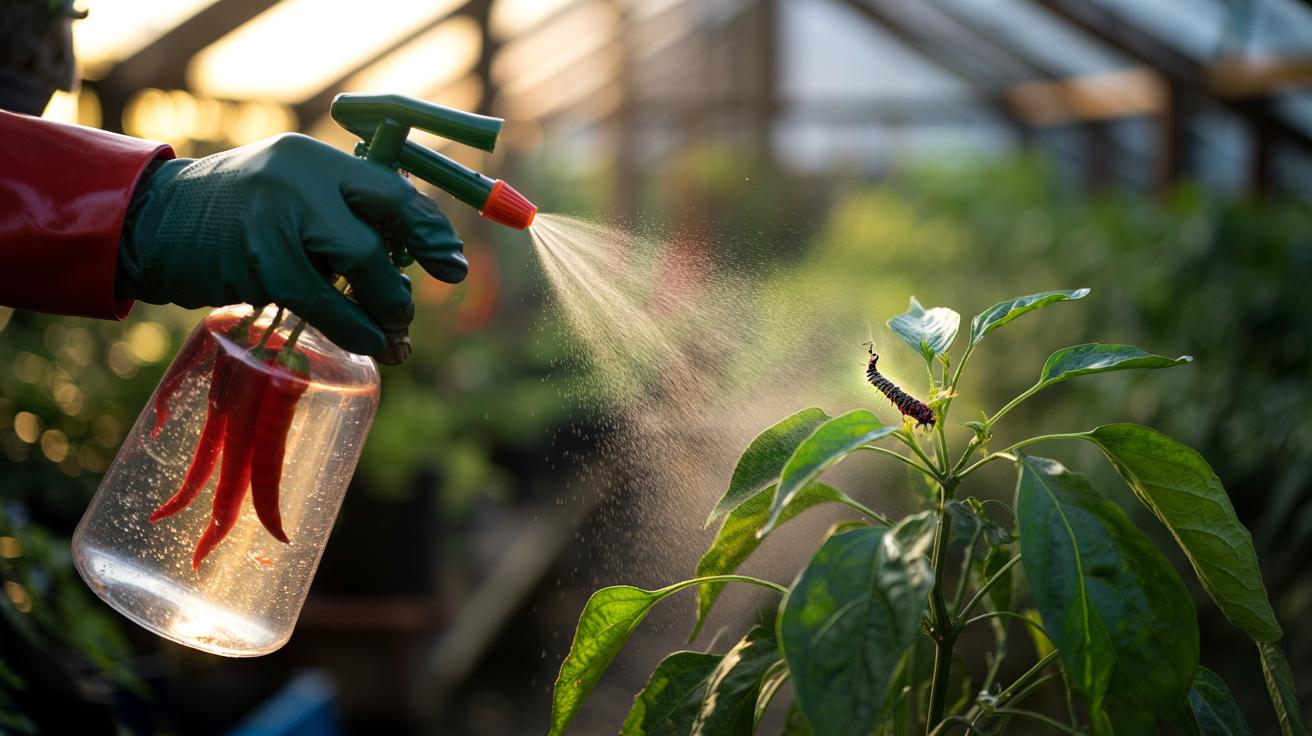
Gardeners have long whispered about the power of a simple chilli-water mist to save their crops from shred-happy pests. At the heart of this folk wisdom is capsaicin, the fiery compound that makes chilli peppers hot. In the plant world, heat is not bravado; it is defence. Capsaicin’s chemistry cues a potent sensory response in would-be leaf chewers, turning a tender salad buffet into a mouth-stinging misadventure. Used carefully, a chilli mist can nudge insects away without dousing borders in harsh synthetics. Here’s how it works, where it excels, and how to deploy it with a cool head and a clear conscience.
How Capsaicin Disrupts Chewing and Feeding
The bite-stopping effect begins at the mouthparts. In many insects, capsaicin agitates TRP channels—sensory proteins that register chemical irritation and heat-like signals. The result is a swift, uncomfortable feedback loop that dissuades chewing, often after the first exploratory nibble. It is an antifeedant: a compound that persuades rather than poisons. That distinction matters—capsaicin deters, it rarely kills outright. On leaf surfaces, this irritation is reinforced by taste: to generalist pests, capsaicin reads as a warning flag, reshuffling their foraging choices to easier, milder pickings nearby.
Because the mechanism is behavioural, success varies with the pest and the pressure. Caterpillars, flea beetles and some leaf-chewing beetles commonly back off. Sapsuckers such as aphids may also reduce probing when residue is fresh, though colonies already entrenched respond less. Think of it as a seatbelt, not an airbag: it curbs risk during the vulnerable early stages of infestation, especially when paired with integrated pest management (IPM) tactics such as hand-picking, barriers and beneficial insects. Consistent reapplication keeps that sensory tripwire primed.
Mixing a Safe, Effective Chilli-Water Mist
A practical mix relies on extraction, dilution and spread. A common home method is to steep 1 teaspoon of dried chilli flakes or a finely chopped hot chilli in 500 ml of warm water for 12–24 hours, then strain through fine cloth. Add 1–2 drops of unscented surfactant (plain washing-up liquid) per 500 ml so the spray clings to leaves. Mist in the cool of morning or evening, targeting the undersides where pests loiter. Always patch-test on a few leaves and wait 24 hours: sensitive plants, including basil and some ornamentals, may show phytotoxicity as scorch or spotting.
| Component | Typical Ratio | Role | Notes |
|---|---|---|---|
| Chilli (flakes or fresh) | 1 tsp per 500 ml | Capsaicin source | Hotter varieties increase strength; strain thoroughly |
| Warm water | — | Solvent | Steep 12–24 hours; avoid boiling on foliage |
| Surfactant | 1–2 drops | Leaf coverage | Unscented, minimal dose to reduce leaf stress |
| Protective gear | Gloves/eye shield | Safety | Capsaicin irritates skin and eyes |
Apply every 3–7 days in dry weather or after rain, avoiding heat-stress windows and open blooms to limit disturbance to pollinators. Never drench; a fine film suffices. Store any surplus safely, marked, and away from children and pets. Do not spray in full sun, and never mix with strong oils or fertilisers on the same day unless you’ve tested compatibility.
When and Where It Works Best
Capsaicin excels as a frontline shield when pests are scouting, not feasting. It’s most reliable on vegetables and ornamentals targeted by generalist chewers—young brassicas, salad leaves, and tender annuals. Pair it with mesh covers for brassicas, sticky traps for whitefly monitoring, and vigilant pruning of damaged tissue. Rain dilutes residues, so sheltered beds or greenhouse staging give you longer intervals. Spray coverage on the leaf underside is decisive: that’s where mites and aphids congregate. Avoid using on drought-stressed plants; irritation layered on stress can tip leaves into scorch.
| Pest | Likely Response | Application Tip |
|---|---|---|
| Caterpillars | High deterrence | Start at first nibble; reapply after rain |
| Flea beetles | Moderate–high | Use alongside fleece or collars for seedlings |
| Aphids | Variable | Combine with jetting off and predator-friendly tactics |
| Spider mites | Moderate | Improve humidity and coverage under leaves |
Note the limits. Leaf miners, scale insects and eggs inside tissues are largely unaffected. Slugs and snails may shun treated leaves yet return after showers. Deterrents buy time; management wins the season. Keep records of what you spray, when, and the observed response so your approach sharpens each year.
Science, Sustainability, and Legal Notes
Research from entomology and chemical ecology consistently tags capsaicin as an antifeedant with repellent properties, acting through sensory disruption rather than toxicity. That makes it attractive in IPM: fewer collateral effects, no persistence issues, and a nudge rather than a knockout. Because capsaicin degrades, residues don’t build up, and beneficial insects—if not directly sprayed—face less risk. The greenest spray is the one you barely need: start with monitoring, thresholds, and habitat for predators, then layer a chilli mist when pressure creeps up.
Regulation matters. In the UK, plant protection products must be authorised for use; household mixtures can fall within that definition. Check current HSE guidance before spraying, especially on edible crops. Where authorisation is a concern, restrict use to non-edible ornamentals, opt for mechanical controls, or choose an approved product with similar mode of action. Always label mixes, store safely, and protect skin and eyes. Thoughtful, sparing use keeps gardens productive while respecting wildlife and the rulebook.
Chilli-water mist proves that sharp science can spring from a simple kitchen staple, translating a pepper’s natural defence into a leaf-saving nudge. It won’t topple an infestation alone, yet as part of a patient, observant routine it can keep tender growth one step ahead of hungry mouths. If you’re weighing your next move against chewers this season, how might you blend sensory deterrents like capsaicin with monitoring, barriers and beneficial insects to craft a resilient, low-chemical defence for your patch?
Did you like it?4.5/5 (24)