In a nutshell
- 🪨 Mechanism: Crushed eggshells create an abrasive, drying surface that can deter slugs only when the ring is dry, coarse (2–5 mm), wide (5–8 cm), and unbroken.
- 🧪 Evidence: Trials show slugs often cross shells—especially after rain—with no proof of cutting; any deterrent effect is brief as moisture softens and binds fragments.
- 🧰 Practical Setup: Rinse, dry (oven helps), and crush shells to coarse flakes; maintain the ring after wet weather and remember shells add minimal short-term calcium.
- 🐸 Alternatives and IPM: Pair shells with copper tape, wool pellets, night hand-picking, and predator habitat; use wildlife-friendly iron phosphate baits since metaldehyde is banned.
- 🌿 Ethics and Biodiversity: Eggshells are non-lethal and pet-safe but limited; aim for a balanced defence with resilient planting and habitat that supports urban ecosystems.
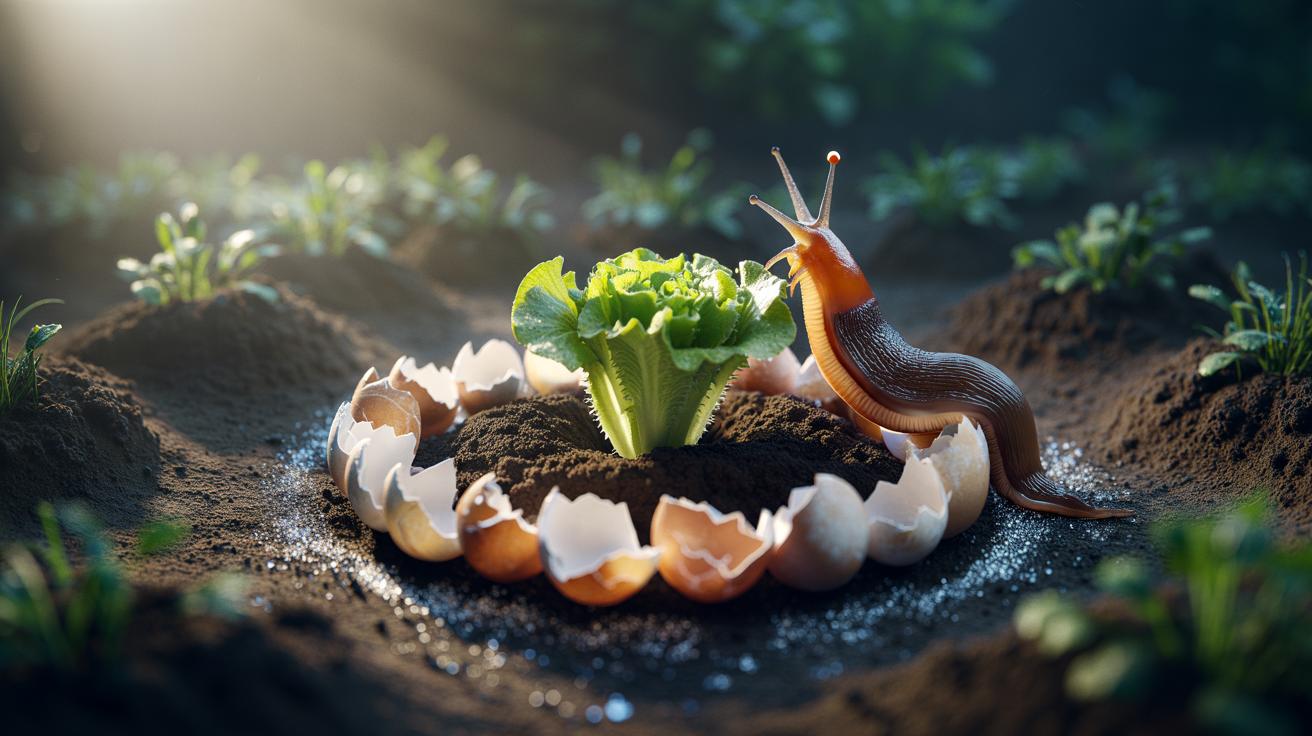
The image is irresistible: a glittering ring of crushed eggshells around tender lettuce, and marauding slugs skidding to a halt before the makeshift moat. Garden lore says the sharp fragments act like broken glass, slicing soft bodies and protecting crops. Yet the truth is knottier than a tidy myth. Slugs move on a muscular foot coated in mucus, a slick that both cushions and lubricates. Eggshells, for their part, are mostly calcium carbonate, brittle when dry but quick to soften in damp beds. This report explores how the barrier is supposed to work, what evidence actually shows, and the practical and ethical choices for UK gardeners. The heart of the debate is simple: are slugs repelled by pain, by dryness, or simply not at all?
How a Crushed Eggshell Barrier Is Meant to Work
On paper, the case looks straightforward. When you crush and scatter eggshells, the irregular shards create an abrasive surface. Slugs propel themselves by rippling a muscular ventral foot across a film of mucus; crossing coarse grit increases friction, demands more energy, and may create micro-abrasions. Gardeners often frame this as “sharp edges cut their bellies,” but anatomically the action happens under the foot, not the abdomen. The secondary claim is desiccation: porous, jagged fragments wick moisture from the mucus, making movement uncomfortable. For the eggshell moat to work at all, it must be dry, coarse, and continuous—conditions UK weather rarely supplies for long.
Texture and particle size are the make-or-break factors. Powdered shell compacts into a smooth dusting that slugs traverse with ease. Coarse pieces—think 2–5 mm flakes—form a spiky mat that’s harder to bridge. A wide ring also matters: narrow lines are quickly breached or buried beneath mulch and leaf-fall. In theory, then, a well-built eggshell barrier imposes enough mechanical nuisance to make a slug reroute, especially on dry nights. It is a deterrent, not a wall.
What Science Says About Eggshells and Slugs
When the claim meets controlled conditions, the picture changes. Trials by UK gardening bodies, field tests by allotment groups, and lab observations suggest slugs will cross crushed eggshell lines, particularly after rain or heavy dew. Mucus production ramps up under stress, effectively “floating” the animal over roughness. Surface moisture also rounds the edges and binds fragments into a less hostile carpet. Reports of genuine cuts are scarce to nonexistent; soft-bodied does not equal easy-to-slice. There is no robust evidence that eggshells slice slug bodies; at best, the barrier sometimes slows or diverts them in dry weather.
Experts also note that shells weather quickly. Calcium carbonate degrades, fragments sink, and soil life mixes them into the bed. Any deterrent effect is short-lived, often hours after rainfall. This does not render eggshells useless—only that the mythology outpaces measurable performance. As a low-cost, low-risk tactic, they can play a minor role, but treating them as a stand-alone defence misleads gardeners and risks lost crops.
| Method | Proposed Mechanism | Best Conditions | Evidence Summary |
|---|---|---|---|
| Crushed eggshells | Abrasive barrier deters movement | Dry, coarse, wide ring | Mixed; no proof of cutting |
| Copper tape | Contact galvanic sensation | Clean, dry surfaces | Moderate when maintained |
| Wool pellets | Desiccating fibres irritate | Dry start, light mulch | Variable; improves after rain |
| Iron phosphate bait | Disrupts feeding | Damp soils | Backed by trials; wildlife-safe |
Practical Setup: From Breakfast Waste to Garden Defense
If you still want to try the eggshell approach, preparation matters. Rinse shells to remove residues, then dry them thoroughly—an oven at 100–120°C for 10 minutes speeds things up and reduces smell. Crush by hand or with a rolling pin to coarse flakes; avoid powder. Create a ring 5–8 cm wide and a few millimetres deep around each plant, removing any bridging leaves or mulch. Keep the ring unbroken and raised above surrounding soil. The method only functions while the ring stays dry, coarse, and intact—regular checks are essential.
Replenish after rain or watering, and top up weekly in peak slug season. Combine with basic hygiene: lift pots, clear hiding spots, and water early in the day so the surface dries by nightfall. Remember, shells add minimal calcium to soil in the short term; they are not a fix for blossom-end rot. Treat the barrier as a small, recyclable component of integrated pest management, not a silver bullet.
Ethics, Alternatives, and Garden Biodiversity
British wildlife thrives on messy edges, and slug controls carry moral and ecological weight. Eggshell rings are largely non-lethal and pet-safe, which is appealing. Yet effectiveness is limited, especially in wet summers. Consider layering methods that respect biodiversity: copper barriers on raised beds, beer-free passive traps, nocturnal hand-picking into soapy water, and habitat for natural predators such as frogs, ground beetles, and hedgehogs. Since metaldehyde pellets are banned in Great Britain, wildlife-friendly iron phosphate remains the main bait option when crops are at real risk.
Planting strategy also helps. Grow resilient varieties, use sacrificial plants as decoys, and space seedlings to reduce concealed runways. Rough mulches like horticultural grit can outperform eggshells in staying power, though cost and aesthetics differ. Aim for balance: enough defence to save lettuces, enough tolerance to support urban ecosystems. In that spirit, eggshells become a frugal nudge rather than a crusade.
So, do slugs truly “refuse” to cross crushed eggshells? The honest answer is: sometimes, briefly, and mostly when the weather cooperates. The shards are abrasive, not lethal; their effect fades with moisture, traffic, and time. As a tidy use for kitchen waste and a low-risk experiment, a shell ring has charm. As a sole line of defence, it is brittle in every sense. The smartest strategy blends small deterrents with habitat and timing to tip the odds in your favour. What combination of methods will you test this season to discover the mix that works best in your garden’s microclimate?
Did you like it?4.4/5 (29)