In a nutshell
- 🌿 Deep-watering fully saturates the root zone, driving deeper roots, stable turgor, and richer flavour, while shallow sips cause weak roots, salt build-up, and quick wilting.
- 🪴 Set-up matters: choose pots with strong drainage, use an airy peat-free mix (compost, bark, perlite), pre-wet hydrophobic media, and avoid “drainage stones” that create perched water.
- 💧 Adopt a soak–rest–soak routine targeting 15–25% runoff; water in the morning and follow signals—top 2–3 cm dry and pot weight—rather than a calendar for consistency.
- 📊 Practical benchmarks: Basil 300–400 ml every 2–3 days; Mint 500–600 ml every 3–4 days; Parsley 400–500 ml every 3–5 days; Thyme 200–300 ml every 5–7 days—adjust for light, heat, and harvests.
- 🧰 Troubleshooting: Overwatering is excess frequency, not volume; reset with a measured dry-down, use bottom-watering for hydrophobic soil, flush salts monthly, curb fungus gnats by drying the top layer and adding sand, and up-pot when rootbound.
Windowsill herb gardens promise fragrance and flavour, yet countless pots wither after a fortnight of erratic watering. The fix is not more water, but smarter water. A deep-watering routine saturates the entire root zone and then allows a measured dry-down, priming basil, mint, parsley, and thyme for vigorous growth. Shallow sips only moisten the surface, encouraging weak roots and quick wilting. By treating soil like a sponge rather than a sieve, you stabilise temperature, feed microbes, and keep nutrients moving. The result is steadier foliage, sturdier stems, and harvests that bounce back days after a cut.
Why Deep Watering Beats Little Sips
The science is simple: roots chase reliable water. When you dribble a teaspoon here and there, moisture stays in the top centimetre, salts concentrate, and roots cluster near the surface. Deep-watering drives moisture to the pot’s base, drawing oxygen down as water drains, and stimulating a broader root network. Capillary action then evens out distribution, which keeps turgor pressure high in leaves and wards off mid-afternoon droop. Water should reach the full depth of the pot, not just the surface crust. That is the difference between herbs that bolt early and those that keep throwing lush, tender leaves.
Deep hydration also moderates temperature and nutrient flow. Even, cool moisture helps tender roots resist heat spikes from radiators or sunny ledges. With a proper soak-and-dry rhythm, fertiliser remains available without burning tips, because salts are flushed during each thorough watering. The method reduces fungus gnat pressure too: the top centimetre can dry while lower layers stay moist, frustrating larvae and protecting fine feeder roots. Consistent moisture prevents stress cycles that trigger bitterness in basil and woody textures in mint.
Setting Up Pots, Soil, and Drainage
Good outcomes start with containers. Choose pots with generous drainage holes and pair them with saucers. Terracotta breathes and suits vigorous drinkers like basil; plastic retains water longer for parsley. Add a thin layer of coarse grit over the holes to prevent clogging, then use a high-porosity mix: two parts peat‑free compost, one part fine bark, one part perlite. This structure holds water yet allows air to circulate, which is essential for active roots. Never rely on stones at the bottom to “improve drainage”; they create perched water that drowns roots.
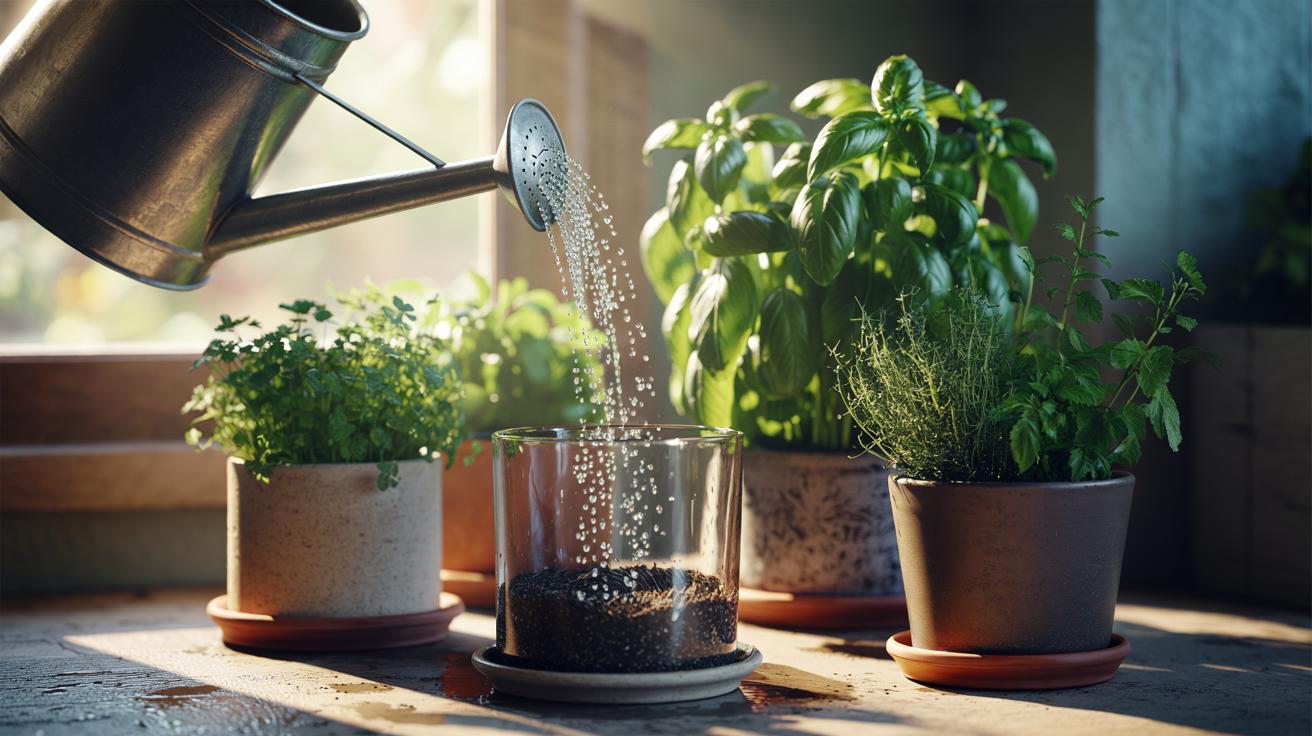
Before the first deep drink, pre-wet the mix with a gentle pass to prime hydrophobic particles. On watering day, add room‑temperature water slowly until you see a steady trickle from the base, pause for five minutes, then repeat to saturate evenly. This “soak–rest–soak” approach avoids channels and ensures the root zone is uniformly moist. For herbs prone to rot, such as thyme, allow a slightly longer dry-down; for basil, shorten the interval but keep intensity high during each soak.
A Practical Routine: Timing, Volume, and Signals
Let signals, not the calendar, guide your routine. Probe the top 2–3 cm; if it’s dry and the pot feels lighter, it’s time. Aim for roughly 15–25% runoff to flush salts. As a rule of thumb, small herbs in 12–15 cm pots take 250–400 ml per deep-watering; larger 18–20 cm pots can take 500–700 ml. Consistency is the goal: thorough watering, then a measured pause until the upper layer dries. Morning waterings reduce overnight humidity spikes and mildew risk. In heatwaves or with strong south‑facing light, check sooner, but resist the temptation to “sip top‑ups.”
Bottom-watering helps when surfaces become water‑repellent. Stand the pot in a saucer with 2–3 cm of water for 20–30 minutes, then drain. Combine this with an occasional top soak to wash salts from the crown. Keep notes: light level, temperature, and harvest frequency all alter demand. After a heavy cut, plants drink less for a day or two as they reset growth. Consistency still beats frequency; your log will reveal a stable rhythm unique to your room.
| Herb | Pot Diameter | Deep-Watering Volume | Top Dry Depth | Typical Interval |
|---|---|---|---|---|
| Basil | 15 cm | 300–400 ml | 2 cm | Every 2–3 days |
| Mint | 18 cm | 500–600 ml | 2–3 cm | Every 3–4 days |
| Parsley | 15–18 cm | 400–500 ml | 2–3 cm | Every 3–5 days |
| Thyme | 12–15 cm | 200–300 ml | 3 cm | Every 5–7 days |
Common Mistakes and Troubleshooting
Overwatering is not about volume; it is about frequency. The danger lies in never letting air return to the mix. If leaves yellow from the base and the soil smells stale, you’re water‑logging. Reset by letting the pot dry to the prescribed depth, then resume deep, spaced waterings. Limp leaves with dry soil signal underwatering; limp leaves with wet soil signal root stress from lack of oxygen. Adjust placement too: herbs near radiators or draughts need closer checks. A cheap moisture meter can corroborate your finger test, but the pot’s weight is the most reliable cue.
Address repellency with a drop of biodegradable washing‑up liquid in a litre of water to break surface tension, then flush with plain water at the next soak. Flush fertiliser salts monthly by watering until runoff doubles. If fungus gnats appear, let the top 2–3 cm dry, use bottom-watering for a week, and add a thin layer of horticultural sand. When roots circle densely, up‑pot by one size with fresh, airy mix. Drainage, light, and deep-watering in harmony will steady growth through the British winter.
The joy of indoor herbs is a kitchen that smells like summer, even as rain lashes the window. A thoughtful deep-watering routine gives plants the stable moisture they need to photosynthesise efficiently, rebuild after harvests, and resist pests. Water thoroughly, then wait just long enough—that is the rhythm that keeps leaves supple and flavours sweet. Keep notes, tweak intervals with the seasons, and let the pot’s weight and the topsoil’s feel guide you. Which cues in your home—light, temperature, pot material—most shape the rhythm your herbs seem to prefer?
Did you like it?4.5/5 (24)