In a nutshell
- 🌧️ The slow-pour watering technique matches soil infiltration rate, preventing runoff and leaks that damage indoor floors.
- 🪴 Gentle flow engages capillary action for even moisture at the root zone, avoiding channeling, surface compaction, and stressed plants.
- 🧰 Use a narrow-spout can or squeeze bottle, plus a moisture meter and timer; protect floors with waterproof mats, double-walled pots, and gravel saucers.
- ⏱️ Method: pre-wet very dry mix, pour in slow pulses (about 10–20 seconds per 250 ml), wait for first drips, then decant excess after 10–15 minutes; adjust volumes seasonally.
- 🧪 Tackle hydrophobic compost with pauses or brief bottom-watering (10–15 minutes) and rotate large pots to prevent preferential flow—yielding fewer leaks and stains.
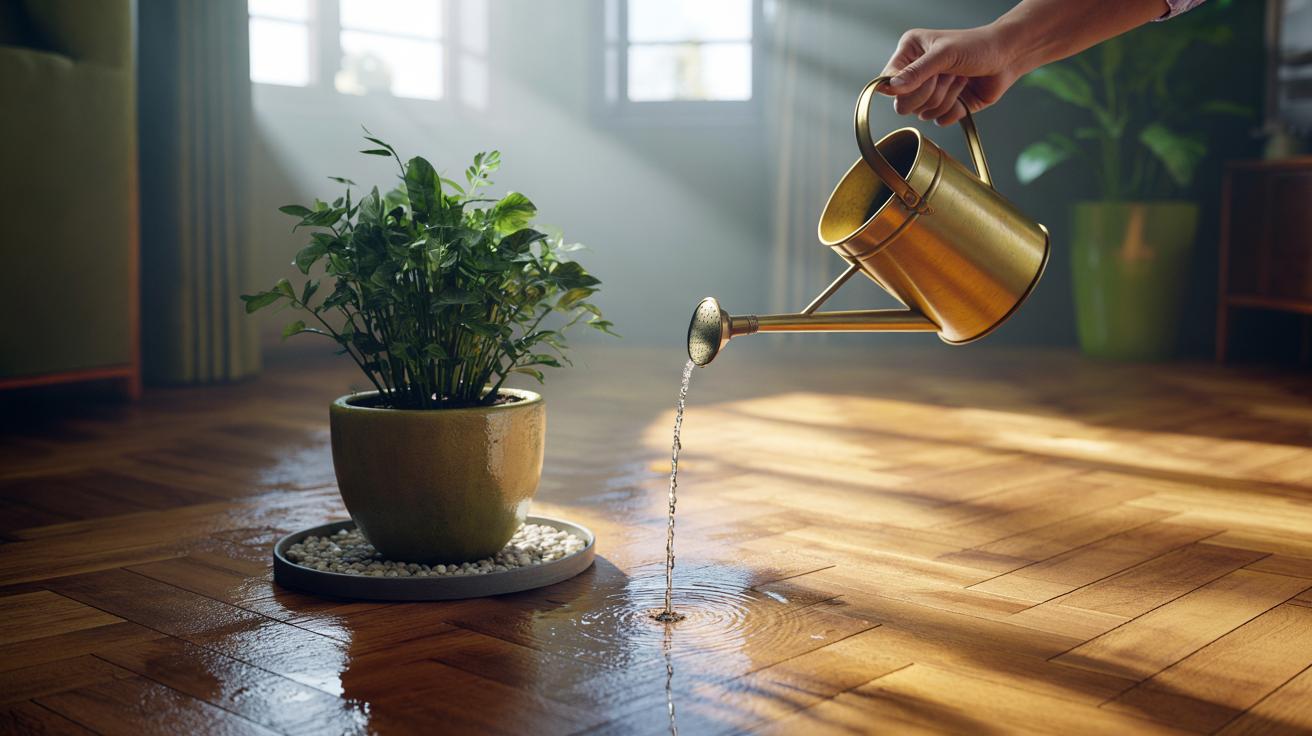
Indoor plants bring life to rented flats and family homes alike, yet a single spill can warp wood, stain grout, and sour relations with landlords. The solution is disarmingly simple: the slow-pour watering technique. By trickling water at a controlled pace, you let compost absorb moisture evenly, preventing the dreaded overflow that escapes saucers and laps onto expensive floors. Think of it as matching your pour to the soil’s natural uptake. Instead of a gush, aim for a steady thread that feeds the root zone, stops channeling, and protects finishes from splashes. Here is how a gentle flow keeps plants happy and floors pristine.
Why Gentle Flow Protects Floors
Water damage indoors rarely begins with a dramatic flood; it starts with small leaks slipping past pot edges and overloaded saucers. A gentle flow gives the potting mix time to accept moisture at its infiltration rate, the speed at which soil can drink. When application exceeds absorption, water bypasses roots, rides gaps along the pot wall, and collects where it shouldn’t. A slow trickle wets the surface uniformly, engages capillary action, and reduces runoff that can streak parquet or seep between tiles. It also helps prevent compacting the surface, which makes future watering even harder to control.
Many indoor mixes include bark and peat substitutes that turn hydrophobic when dry, briefly repelling water. A fast pour skates across this surface and straight out through drainage holes. A slow pour, paused at intervals, coaxes fibres to rehydrate. As the structure opens, moisture wicks to the root zone rather than racing to the tray. The result is a pot that holds water where plants need it, a saucer that doesn’t brim, and a floor safe from rings and swelling. Less pace, less waste, less risk.
How to Practise the Slow-Pour Method Indoors
Start with a narrow-spout can or squeeze bottle and a measured volume, such as 500 ml for a medium houseplant. Pour slower than the compost can absorb: imagine a thin pencil-width stream taking 10–20 seconds per 250 ml. Circle the rim, pausing every few seconds to let the sheen vanish from the surface. If the mix is very dry, pre-wet with 50–100 ml, wait two minutes, then resume. The goal is to let the top layer unlock, so water migrates down through the profile rather than racing to the drainage holes.
Watch for first drips into the saucer, then stop and wait five minutes. If the saucer remains nearly dry, offer a second small pour. Never leave pots sitting in a flooded saucer; decant excess after 10–15 minutes to prevent wicking back into floors. For large containers, rotate the pot a quarter turn during watering to avoid preferential flow paths. Choose early morning or lunchtime so any stray damp dries before evening, reducing the chance of moisture trapped under rugs or protective mats.
Tools and Settings That Make It Easier
Consistency comes from tools that tame flow. A narrow-spout watering can or squeeze bottle gives you control over volume and angle. A flow-control nozzletimer or phone to pace pours, and a moisture meter or wooden skewer to check depth after watering. Small adjustments—slower pour, shorter pulses—have a big impact on both plant health and floor safety.
| Tool | What It Does | Best For |
|---|---|---|
| Narrow-Spout Can | Delivers a steady, thin stream | Daily houseplant care |
| Squeeze Bottle | Precise dosing in small pots | Windowsills and desks |
| Turkey Baster/Syringe | Targets root ball without splashes | Dense foliage or tight spaces |
| Capillary Mat | Even uptake from below | Hydrophobic mixes, weekend care |
| Saucer with Gravel | Elevates pot above runoff | Protecting wood floors |
Where floors are valuable—oak boards, engineered timber—add a waterproof mat beneath saucers and choose double-walled pots that catch stray drips. If you prefer bottom-watering, limit the soak to 10–15 minutes so the pot doesn’t wick excessively. The safest routine combines slow top-watering with brief, supervised soaks when soil is stubbornly dry. Calibrate volumes by season: in low winter light, cut your total by a third; in summer, maintain pace but repeat a day sooner. Precision, not pressure, is what keeps both plants and floors thriving.
The slow-pour approach is less a fad than a mindset: match your watering to the soil’s capacity, and you stop leaks at the source. By protecting the root zone, you also protect skirting, tiles, and precious parquet. Add a few simple tools, keep an eye on saucers, and you will notice cleaner pots, fewer watermarks, and steadier growth. Gentle flow is the quiet ally of tidy homes and healthy plants. Which part of your routine could you slow down this week to give your compost time to drink—and your floors time to stay flawless?
Did you like it?4.6/5 (24)