In a nutshell
- 🌱 Deep-watering with slow saturation drives roots deeper by matching water flow to the soil’s infiltration rate, yielding sturdier plants, better drought tolerance, and reduced disease.
- 🕰️ Structure the routine: water early morning to reach 20–30 cm for lawns/annuals and 30–45 cm for shrubs, verify with a trowel/probe, mulch 5–7 cm, and space sessions rather than sprinkling daily.
- 🛠️ Use soaker hoses or drip lines (2–4 L/h); for trees deploy deep-watering rings/slow-release bags; on slopes, pulse watering prevents runoff; success shows as cool moisture 15 cm down and less midday wilt.
- ⚠️ Avoid pitfalls: surface runoff, compaction, and hydrophobic soil—fix by forking, aeration, and slower flow; in containers ensure free drainage and allow partial dry-down; adjust duration for heatwaves but keep frequency steady.
- 🧭 Calibrate by soil type: sand needs longer soaks every 3–5 days, loam 5–7 days, clay 7–10 days; targets of 20–40 cm depth and gentler flow reduce leaching and train a deeper root system.
Quick sprinkles leave plants thirsty and complacent. A deep-watering routine, by contrast, applies water slowly enough to soak the root zone and draw roots downward in search of reliable moisture. The effect is visible: sturdier stems, improved drought tolerance, and fewer crises during heatwaves. With the UK facing changeable weather and rising water costs, slow saturation offers a practical, evidence-led route to healthier borders, lawns, and beds. Water less often, but long enough for moisture to penetrate 20–30 cm, and the soil becomes a reservoir rather than a slippery surface. This piece breaks down the science, the schedule, and the small adjustments that turn a hosepipe habit into a resilient garden strategy.
Why Slow Saturation Changes Root Behaviour
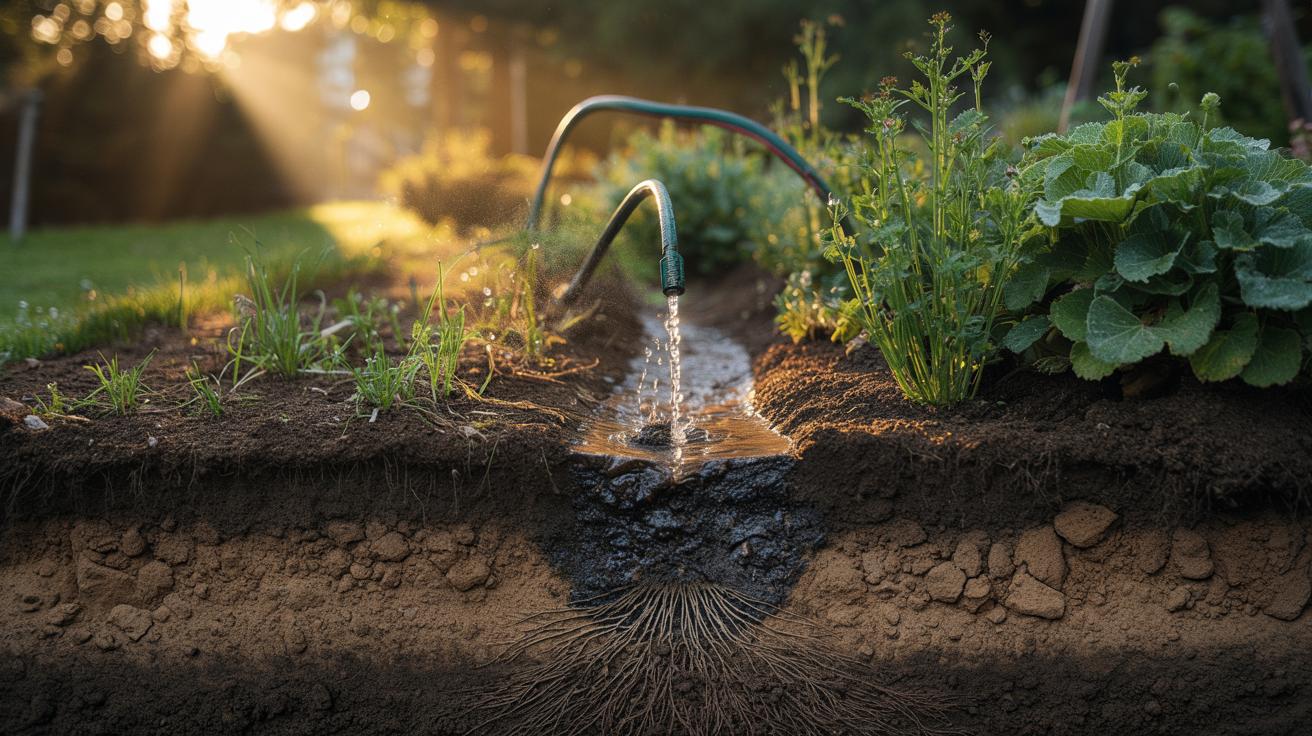
Plants respond to the depth and reliability of moisture. Shallow, frequent watering concentrates roots near the surface, where evaporation is relentless. Deep watering reverses this, encouraging a stronger, more extensive network that explores deeper pores and pockets. The key is the creation of a descending wetted front that approaches field capacity without suffocating roots. Slow inflow matches the soil’s infiltration rate, avoiding runoff and ensuring uniform distribution. As the profile dries gradually, capillary forces lift water upwards, giving roots a steady supply and nudging new growth downward to chase it.
This behavioural shift improves stability in wind, buffers against hot spells, and reduces nutrient leaching. Deep-rooted plants access minerals locked in lower horizons and cope better with erratic summer rain. By spacing sessions several days apart, you also lower the risk of fungal disease. The soil retains pore oxygen between waterings, preventing the anaerobic conditions that drive root dieback. Put simply: slow saturation builds resilience and trims your watering time in peak season.
How to Structure a Deep-Watering Routine
Start with soil and site. Loams accept water steadily, clays absorb slowly then hold it, and sandy soils gulp quickly but drain fast. The method is the same—apply water slowly, steadily, and less often—but timing differs. Early morning watering limits evaporation and keeps foliage dry. Aim for a soak that penetrates at least 20 cm for annuals and lawns, 30–45 cm for shrubs, and deeper for trees. Use a trowel or soil probe to check penetration; if the top looks wet but the subsoil is dry, you’re moving too fast or stopping too soon. Consistency, not intensity, is the goal.
Match application rate to the soil’s infiltration rate. A trickle from a soaker hose or low-flow drip emitter usually outperforms spray heads. Mulch with 5–7 cm of organic matter to cut evaporation and moderate temperature. Space sessions: lawns may need a weekly soak in summer; shrubs might manage 10–14 days. Pots require more frequent attention, but bottom-watering trays can mimic deep saturation without runoff.
| Soil Type | Infiltration Rate | Interval (Summer) | Target Depth | Tip |
|---|---|---|---|---|
| Sand | Fast | 3–5 days | 20–30 cm | Add compost; use longer sessions |
| Loam | Moderate | 5–7 days | 25–35 cm | Soaker hose at low flow |
| Clay | Slow | 7–10 days | 25–40 cm | Pulse watering to prevent runoff |
Tools, Techniques, and Indicators of Success
For beds and borders, a drip line with emitters rated 2–4 L/h promotes even infiltration. For trees, use a deep-watering ring or a slow-release bag to deliver several buckets over hours, not minutes. On slopes, pulse watering—15 minutes on, 15 minutes off—prevents runoff while the profile equilibrates. A £10 moisture meter helps, but the simplest check is a spade: if the top 5 cm is dry and 15 cm down feels cool and damp, the timing is right. Uniform, slow delivery beats occasional deluges.
Watch for feedback. Leaves that stay perky through midday, reduced afternoon wilting, and steadier growth signal success. Lawns respond with a richer hue and fewer dry patches. If water pools or refuses to sink, you’re applying too quickly or battling compaction. Address this with aeration, organic matter, and gentler flow. Over time, expect fewer weeds—shallow-rooted opportunists dislike the drier surface maintained between deep sessions.
Common Pitfalls and How to Fix Them
Runoff is the classic error, especially on clay or baked summer soil. Break the hydrophobic crust with a fork, wet the surface lightly, then switch to a trickle so water penetrates. Compaction starves roots of oxygen; aerate lawns and avoid treading on wet beds. New plantings need closer monitoring: their limited root ball dries quickly, so split a deep soak into two pulses to saturate both the planting hole and surrounding soil. Fast watering wastes water and teaches roots to stay shallow.
Beware of overwatering containers. Use pots with generous drainage, water until you see consistent outflow, then allow the mix to partly dry. If leaves yellow and growth stalls, check for waterlogged media rather than assuming thirst. In borders, mulching and wind protection reduce transpiration demands, tightening your schedule. Finally, calibrate to weather: after heavy rain, skip a session; during heatwaves, lengthen the soak but keep frequency steady. The aim is a predictable, deep reservoir—never a daily sprinkle.
Deep watering is less a trick than a change of tempo: slow, measured, and rooted in how soil holds and releases moisture. By aligning flow rate with infiltration, and spacing sessions so the profile dries gradually, you foster deeper roots, steadier growth, and lower water bills. Add mulch, improve soil structure, and verify depth with a spade, and the routine becomes second nature. Watering wisely is as much observation as it is equipment. As your garden faces hotter summers and tighter restrictions, what will you adjust first: the timing, the tools, or the way you read the soil?
Did you like it?4.5/5 (20)