In a nutshell
- 🪨 Eggshell crumble acts as a mechanical barrier, with sharp, irregular edges that deter soft-bodied pests by increasing abrasion, effort, and mucus loss.
- 🧪 The effect is physical, not chemical: dried, gritty pieces (about 2–6 mm) disrupt slug locomotion; calcium carbonate weathers slowly and won’t rapidly alter soil pH.
- 🛠️ Preparation and use: rinse, dry or low-bake shells, crush to a coarse mix, and lay a 3–5 cm unbroken ring around plants—refresh after rain and keep away from stems.
- ⚖️ Limits and myths: not foolproof in wet spells or heavy pressure; won’t “feed” soil quickly; performance drops if shells compact or foliage bridges the barrier.
- 🕸️ Integrated Pest Management boosts results: tidy refuges, water mornings, encourage predators, and consider copper tape, wool pellets, diatomaceous earth, or iron phosphate as complements.
Across Britain’s veg patches and balcony pots, a humble waste product has gained a loyal following: eggshell crumble. Gardeners scatter the crisp, chalky shards beneath hostas, lettuces, and strawberries, claiming fewer nibbled leaves and fewer midnight raids. The appeal is obvious—free, biodegradable, and easy to replenish from the kitchen. But the real intrigue lies in how those sharp edges impede soft-bodied pests. This is a tactile, not chemical, defence; it doesn’t perfume the air or leave toxic residues. Think of it as a gritty moat that persuades slugs and snails to turn back before damage is done. Here’s what the science and practical experience suggest—and how to deploy it well.
How Eggshells Form a Defensive Perimeter
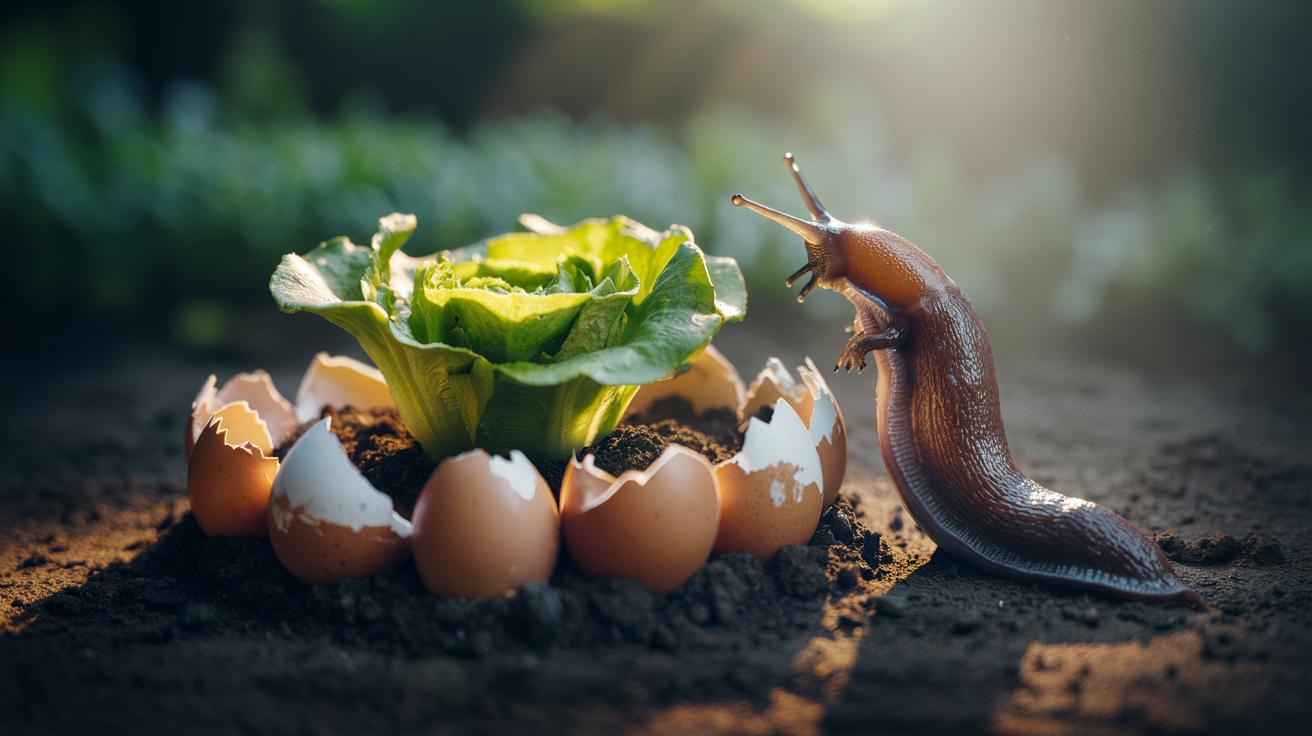
Crushed eggshells create a ring of irregular, angular fragments that act as a mechanical barrier. When slugs or snails encounter the jagged texture, their delicate foot—designed for gliding over leaves and moist soil—meets abrasion and instability. The uneven surface demands more mucus to cross, increasing energy costs and water loss. Many individuals choose an easier route, which is precisely the point. It’s a deterrent, not a booby trap: discomfort encourages withdrawal before feeding begins. For best results, form a continuous band 3–5 cm wide around vulnerable plants, ensuring there are no bridges of leaves or mulch that allow effortless passage.
Maintenance matters. Rain compacts shells and soil sifts up through gaps, reducing sharpness. Topping up after wet spells keeps the texture harsh and the line unbroken. Because shells are chiefly calcium carbonate, they weather slowly; they will not meaningfully change soil pH in the short term. Keep the layer coarse and fresh, and avoid piling it against stems where damp grit might encourage rot.
The Science of Sharp Edges and Soft Bodies
A slug’s underside is a muscular, ciliated surface that cycles waves of movement across a thin film of mucus. This film reduces friction—unless the terrain becomes abrasive. Eggshell shards behave as a microabrasive: they snag the foot’s surface, disrupt smooth gliding, and can produce tiny scrapes. The effect is amplified where edges are acute and the shell is well dried. Unlike salt, which dehydrates rapidly and can harm soil life, eggshells act physically without chemical burn. They repel by increasing effort and risk, not by poisoning.
Texture and particle size are crucial. Powdered shells are too fine and pack down; large chunks create stepping stones. Aim for a gritty mix with pieces roughly 2–6 mm and lots of irregular edges. Think of it as a spiky carpet rather than gravel. Compared with diatomaceous earth, shells are less dust-like, less messy in wind, and easier to handle—though they may be slightly less aggressive in dry, hot conditions.
How to Prepare and Use Eggshell Crumble in the Garden
Collect shells, rinse quickly, and allow them to dry. For hygiene and to boost brittleness, spread them on a baking tray and place in a low oven (100–120°C) for 10–15 minutes. Then crush: a rolling pin inside a bag produces an ideal gritty crumble. Store in an airtight jar so moisture doesn’t soften the edges. When planting out tender crops, apply a neat ring around each plant, leaving a few centimetres between the stem and the shell band for airflow and to deter slugs sheltering at the collar.
Reapply after heavy rain or vigorous weeding. Combine with good garden hygiene—lifting pots off the ground, removing slug refuges such as stacked boards, and watering in the morning so evening surfaces are drier. Do not expect miracles on their own: shells work best as part of layered protection. If pets are tempted to eat shells, keep rings thin and tidy; the material is inert but sharp. Avoid using shells where bare feet will tread.
Limits, Myths, and Smarter Integrated Control
Eggshells shine as a low-cost, low-impact measure, but they are not a force field. Hungry slugs will sometimes cross; persistent rain dulls the barrier; sprawling foliage can bridge it overnight. They won’t rapidly “feed” your soil with calcium, either—calcium carbonate breaks down slowly. For robust protection, pair shells with Integrated Pest Management (IPM): encourage predators (frogs, ground beetles, hedgehogs), reduce damp hiding spots, and hand-pick at dusk. Wildlife-friendly baits based on iron phosphate can be used sparingly around high-value crops; metaldehyde products have been withdrawn in Great Britain for environmental reasons.
| Barrier | How It Works | Pros | Cons |
|---|---|---|---|
| Eggshell Crumble | Sharp, abrasive texture deters crossing | Free, biodegradable, non-toxic | Needs upkeep after rain; not foolproof |
| Copper Tape | Creates mild galvanic sensation on contact | Neat on pots; long-lasting | Costly for beds; gaps reduce efficacy |
| Wool Pellets | Fibrous mat irritates and absorbs moisture | Easy to apply; breaks down into soil | Can mat in heavy rain; needs topping up |
| Diatomaceous Earth | Microscopic silica fossils abrade soft tissue | Effective when dry | Clumps when wet; dusty to handle |
| Iron Phosphate Bait | Ingested, stops feeding | Wildlife-friendly when used as directed | Must be used carefully; not for every site |
Only a layered approach truly shifts the odds in your favour. Rotate tactics through the season, protect new plantings early, and observe where slugs travel so you can fortify those “desire lines.” In drought, shells hold their edge; in sodden weeks, refresh them and add alternative barriers. Over time, as predators settle and habitats balance, the nightly raids usually recede.
Eggshells earn their place because they turn kitchen cast-offs into a tactile line of defence that’s safe, frugal, and surprisingly persuasive. They won’t eliminate slugs, but they frequently draw the line—literally—where it matters most, around precious seedlings and salad crops. The trick is to keep the edge sharp, the ring unbroken, and the tactics diverse. With those habits, nibble damage often falls to tolerable levels. Which combination of gritty shells, clever barriers, and wildlife allies will you experiment with in your beds this season?
Did you like it?4.5/5 (20)