In a nutshell
- 🧪 How it works: Washing-up liquid surfactants disrupt the aphid’s epicuticular wax, lower surface tension, wet spiracles, and cause desiccation; vinegar adjusts pH and dissolves honeydew to improve coverage; contact-only, minimal residual.
- ⚗️ Recipe & method: Per 1 L water, add 5–10 ml mild washing-up liquid + 5–10 ml 5% white vinegar; spray in cool hours, target leaf undersides, allow 20–30 minutes, then rinse; repeat every 3–5 days to catch new nymphs.
- 🌿 Plant & wildlife safety: Patch-test; avoid heat/sun; keep off blooms to protect pollinators; don’t mix vinegar with bleach; watch for phytotoxicity on tender or hairy foliage; use rain/soft water if hard water reduces wetting.
- 🇬🇧 UK guidance: Vinegar and washing-up liquid aren’t authorised plant protection products; for routine or commercial use, choose labeled insecticidal soap with HSE authorisation; DIY mixes are for private, targeted use.
- 🛡️ Alternatives & IPM: Combine with water jets, horticultural soap, neem (where permitted), pruning, balanced feeding, and beneficial insects; aim for integrated pest management rather than blanket spraying.
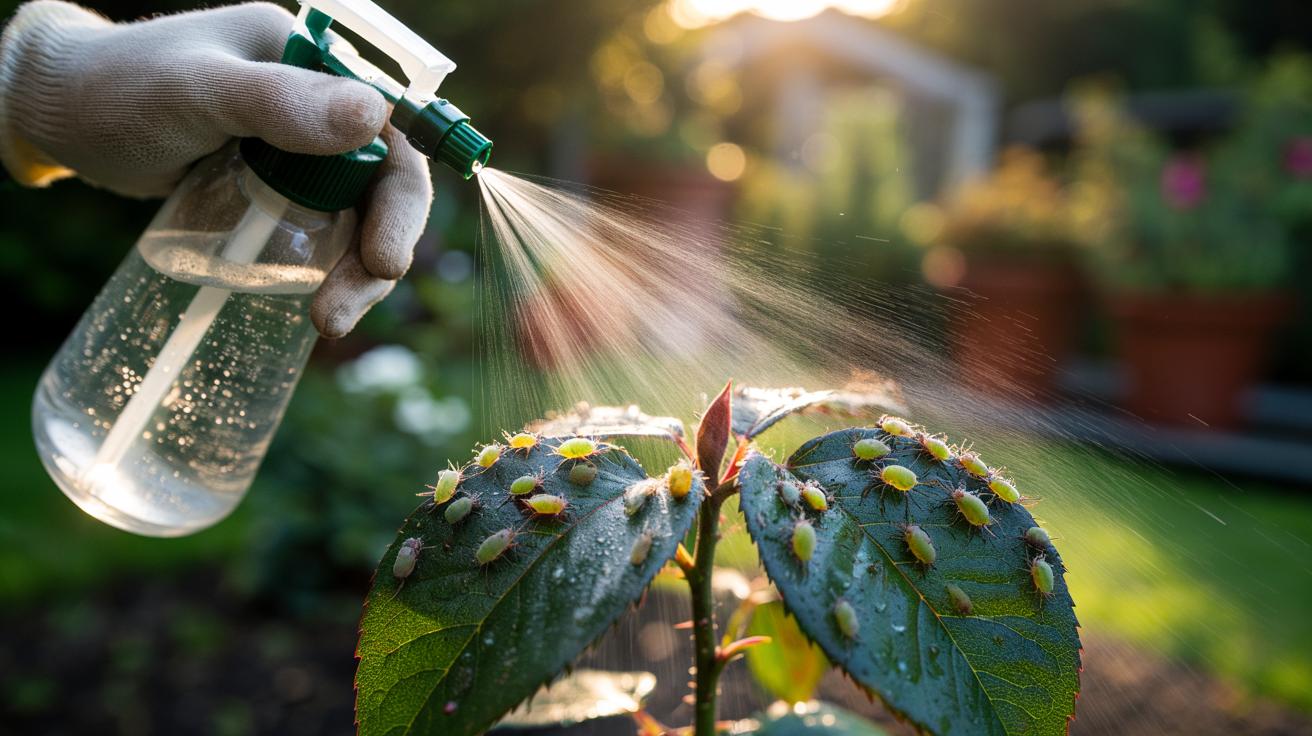
Across British gardens, a humble mix of washing-up liquid and white vinegar is quietly toppling aphid colonies. The secret is not alchemy but chemistry: household detergents contain surfactants that pull apart the insect’s waterproof armour, while a splash of vinegar shifts the spray’s pH and helps loosen honeydew. Used carefully, this DIY remedy can be a precise, low-cost tool against sap-sucking outbreaks. It is a contact treatment, not a long-term protective cure, so success depends on technique, timing, and repetition. Below, we unpack how the science works, how to mix and apply it safely, where it sits within UK rules, and when alternative strategies may better serve plants and pollinators.
What Surfactants Do to Aphids’ Protective Cuticle
Aphids survive on delicate foliage thanks to a tough exterior. Their exoskeleton is layered: a thin outer epicuticular wax that repels water and a deeper matrix containing chitin and proteins. Surfactants in washing-up liquid are amphiphilic molecules that slash surface tension and insert into lipids, disrupting that waxy seal. When the seal fails, water spreads and penetrates, wetting spiracles (breathing pores) and collapsing the insect’s moisture control. The result is rapid desiccation and suffocation. This breakdown targets the armour, not the plant, which is why contact coverage matters more than strength. Vinegar (acetic acid, typically 5%) contributes by slightly acidifying the droplets and helping dissolve sticky honeydew that protects aphid clusters and fosters sooty mould. The acid itself is not the primary killer; it optimises the wetting action and cleaning effect, which allows the surfactant to reach the cuticle more efficiently without resorting to harsh concentrations.
A key nuance: these sprays do not persist. Once dried, surfactants offer little residual control and can be rinsed off leaves. That limits collateral impacts but means new arrivals or sheltered nymphs may survive. Expect to repeat treatments and target the undersides of leaves where colonies cluster. Because aphids reproduce viviparously and rapidly, interrupting their cycle through timely contact is more reliable than chasing total eradication. In practice, the chemistry provides a window to reduce pressure while predators, plant vigour, and cultural measures do the longer work.
Dish Soap and Vinegar: Ratios, Method, and Timing
Use a mild, unscented washing-up liquid and standard 5% white vinegar. For a 1-litre spray: add 1–2 teaspoons (5–10 ml) washing-up liquid and 1–2 teaspoons (5–10 ml) vinegar, then top with lukewarm water. Swirl gently to minimise foaming. This creates a ~0.5–1% surfactant solution with modest acidity. Avoid concentrated “cleaning vinegar” or any caustic acids; high acetic levels can scorch foliage. Fit a fine-mist trigger bottle and set it to a narrow fan. Always trial on one leaf and wait 24 hours. Spray when temperatures are cool (evening or early morning), never in full sun. Thoroughly wet aphids, especially leaf undersides and shoot tips, until just short of runoff. After 20–30 minutes, rinse with clean water to reduce potential phytotoxicity, particularly on tender growth.
Never mix vinegar with bleach, and keep the solution off open blossoms to spare pollinators. Frequency depends on pressure: every 3–5 days for two cycles is typical, followed by inspection. If leaves show spotting, dilute further or discontinue. Hard water can reduce surfactant performance; if your area is very hard, consider boiled and cooled water or rainwater for mixing. Store only small volumes and refresh weekly; old mixes lose punch and may grow microbes. Wear gloves if you have sensitive skin. Direct, deliberate application beats blanket spraying: treat clusters, wipe heavy infestations with a cloth, and follow with a light mist.
| Component | Amount per 1 L Water | Purpose | Key Notes |
|---|---|---|---|
| Washing-up liquid | 5–10 ml | Disrupt wax; lower surface tension | Use mild, unscented; avoid degreasers with solvents |
| White vinegar (5%) | 5–10 ml | pH shift; loosen honeydew | Do not use concentrated acids |
| Contact time | 20–30 minutes | Allow wetting and cuticle collapse | Rinse foliage after |
| Interval | Every 3–5 days | Catch new hatchlings | Stop if leaf damage appears |
Plant Safety, Beneficial Insects, and Legal Notes in the UK
Even gentle surfactants can stress plants, especially succulents, ferns, African violets, hairy leaves, and very young growth. Do not spray in bright sun or above roughly 25°C; heat amplifies phytotoxicity and evaporation reduces contact time. Avoid runoff into pots where acetic acid could nudge substrate pH. If treating edible crops, rinse produce well before eating. Keep sprays off bees and blooms; target aphid clusters when pollinators are inactive. Ladybirds, hoverfly larvae, and lacewings are allies; the contact nature of soap means you can spare them with spot treatments and timing, but a broad drench will hit anything small and soft-bodied.
On regulation: in the UK, washing-up liquid and household vinegar are not authorised as plant protection products. You may use them privately, but you cannot market them as pesticides or make commercial claims. Where you want an approved option, choose a labelled insecticidal soap (potassium salts of fatty acids) or ready-to-use products carrying an HSE authorisation number. These are formulated to balance efficacy and plant safety. If in doubt, lean on approved products for regular use and reserve DIY mixes for small, targeted interventions. Responsible application protects both your plants and the wider garden ecology.
When to Choose Alternatives and How They Compare
The soap–vinegar route excels at quick knockdown on accessible foliage, but it is not a silver bullet. For dense hedging, tall trees, or persistent reinfestation from nearby hosts, consider complementary tactics. Horticultural soap delivers similar surfactant action with formulations tuned for leaves. Neem-based products (where permitted) offer growth regulation and feeding deterrence, though they act slower and may smell. A strong water jet dislodges colonies without chemistry. On indoor plants, yellow sticky traps help monitor winged aphids. Outdoors, diversify planting to attract beneficial insects and tolerate light feeding; many ornamentals outgrow minor damage.
Cultural steps matter: avoid high-nitrogen feeds that spur the lush, soft growth aphids crave; prune overcrowded shoots; remove heavily infested tips; and wash away honeydew to deter ants that protect aphids. For food crops, lightweight mesh can exclude colonising adults. The common thread is precision: intervene early, keep coverage targeted, and reassess weekly. If leaves show repeated sensitivity or predators are abundant, pause spraying and let nature finish the job. The best programmes blend quick contact tools with prevention, so outbreaks become blips rather than battles.
The washing-up liquid and vinegar mix works because surfactants puncture the aphid’s waterproof armour, while a modest acid tweak helps the spray spread and clean away honeydew. Used at low concentrations, applied in cool conditions, and rinsed after brief contact, it is a sharp, economical instrument in an integrated pest management toolkit. Yet restraint is vital: protect allies, test first, and prefer approved products for routine jobs. Think of it as a spot scalpel, not a blanket cure. As your garden moves through the season, where might a careful, contact-only spray fit alongside pruning, predators, and plant choice to keep sap-suckers in check?
Did you like it?4.5/5 (30)