In a nutshell
- 🌿 Epsom-water rinse supplies magnesium to rebuild chlorophyll, quickly restoring green colour with foliar delivery and minimal impact on soil pH.
- 🔬 Diagnose correctly: look for interveinal chlorosis on older leaves for Mg shortage; iron affects young leaves first, while nitrogen causes uniform paling.
- 🧪 Apply with care: 1 tsp/L for foliar spray, 1 tbsp/4 L for soil drench; mist in cool hours and stop after recovery to prevent salt build-up.
- ⚠️ Mind the limits: excess salts stress roots; high potassium or calcium can cause an uptake blockade; do a small-leaf test before broad spraying.
- 📊 Use the decision aid: the article’s table maps symptom patterns, leaf age, causes, and actions to guide targeted treatments.
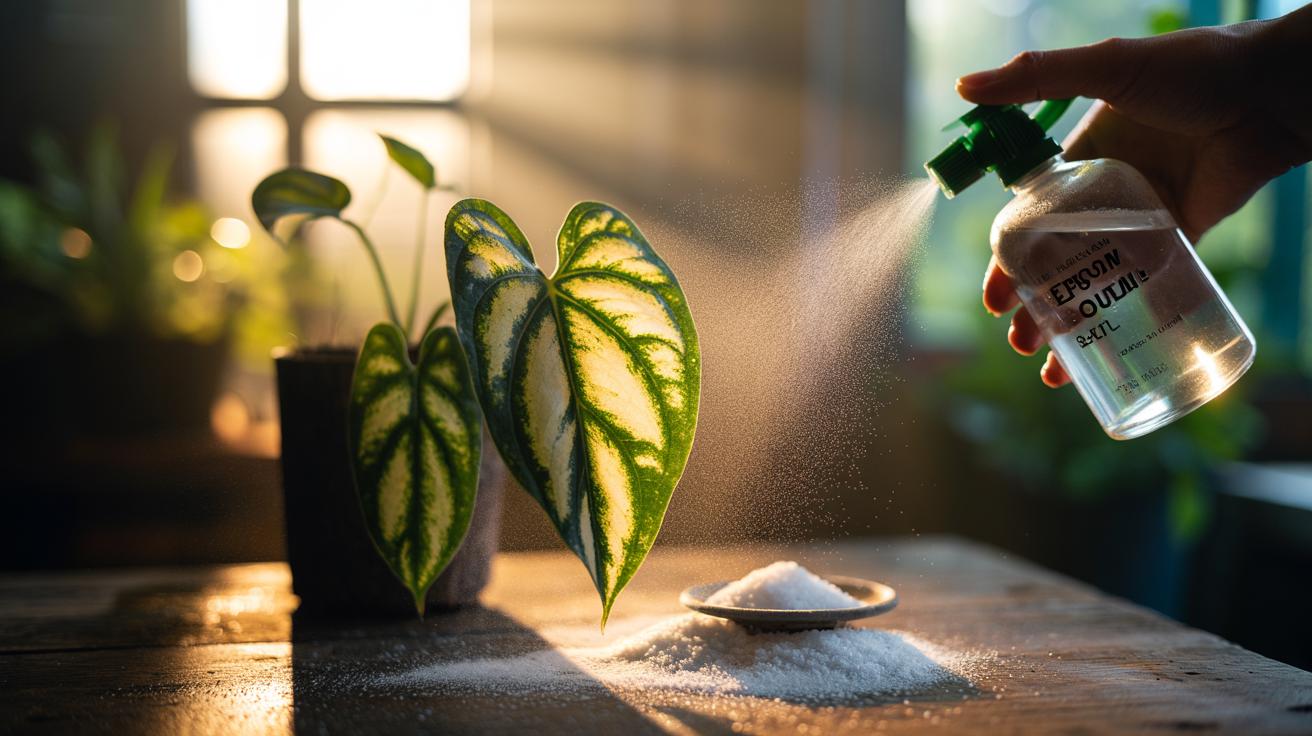
Yellowing leaves can transform a prized houseplant into a tired-looking specimen in days. One low-cost fix shared by growers is an Epsom-water rinse—a foliar spray made from Epsom salt (magnesium sulfate) that feeds plants exactly where they’re struggling. The logic is simple: magnesium is the metallic heart of chlorophyll, the green pigment that captures light. When it’s short, leaves fade, veins stand out, and growth falters. Because magnesium moves inside plants, older foliage yellowing between veins is the tell-tale pattern. Foliar rinses work quickly, but using them wisely matters. Here’s the science behind the green revival, smart diagnostics, and a safe method that avoids overdoing it.
How Magnesium Powers Chlorophyll Recovery
Every chlorophyll molecule holds a magnesium ion at its centre, anchoring the porphyrin ring that traps light. When magnesium runs low, plants strip it from older leaves to feed new growth, leaving a lattice of pale tissue with greener veins. Restore magnesium and the chloroplast factory can restart, rebuilding the pigment that puts colour back into foliage. Beyond chlorophyll, magnesium activates ATP-related enzymes, stabilises ribosomes, and supports carbon fixation. That’s why a shortage dims both colour and energy, turning leaves dull and plant metabolism sluggish.
An Epsom-water rinse—made from magnesium sulfate (MgSO4·7H2O)—addresses this deficit fast. Foliar sprays deliver soluble Mg2+ through the cuticle, bypassing cold or compacted soils that limit uptake. The sulfate partner is largely benign in small doses and can help balance nutrient uptake. Used correctly, a rinse speeds recovery without changing soil pH dramatically, a key advantage over lime-based amendments that alter chemistry more broadly and act far more slowly.
Spotting True Magnesium Deficiency Versus Other Causes
Yellow leaves don’t always point to magnesium deficiency. The classic sign is interveinal chlorosis on older leaves first: green veins with yellowing between them, sometimes with slight marginal scorch. Because magnesium is mobile in the phloem, plants reallocate it to young tissues, so older foliage shows stress earliest. By contrast, iron issues hit young leaves first, and nitrogen shortages usually cause an even, overall paling of older leaves. Overwatering, cold roots, and high potassium can also block magnesium uptake even when the soil contains enough.
Good diagnosis prevents wasted sprays. Check watering habits, root health, and recent feeding, then inspect which leaves are affected. If possible, use a soil test to gauge Mg and confirm pH; many garden centres and councils offer affordable services. Apply an Epsom-water rinse only when symptoms match and cultural conditions are reasonable. If plants respond with deepening green within one to two weeks, you likely hit the right target. If not, reassess fertiliser balance and root-zone conditions.
| Symptom Pattern | Leaf Age First Affected | Likely Cause | Suggested Action |
|---|---|---|---|
| Interveinal yellowing, green veins | Older leaves | Magnesium deficiency | Epsom-water foliar rinse; review K levels and watering |
| Uniform pale yellowing | Older leaves | Nitrogen deficiency | Balanced feed with nitrogen; avoid overwatering |
| Interveinal yellowing, green veins | Young leaves | Iron deficiency | Chelated iron; maintain slightly acidic pH |
Making and Using an Epsom-Water Rinse
For a foliar spray, dissolve 1 teaspoon (about 5 g) of Epsom salt per litre of clean water. Mist both sides of leaves until just shy of runoff in the cool of morning or early evening. Indoor plants usually need one light spray every 2–4 weeks during active growth. Never exceed 2 teaspoons per litre, and avoid spraying under hot sun or on heat-stressed plants. For a soil drench in containers, mix 1 tablespoon (about 15 g) in 4 litres of water and apply sparingly to moist compost.
Shake the solution well; strain if your sprayer nozzle is fine. Test on a single leaf and wait 24 hours to rule out sensitivity. Keep the rinse separate from oil-based leaf shines or soap mixes, which can irritate the cuticle. If your tap water is very hard, use rainwater or filtered water to reduce antagonism from calcium and bicarbonates. Stop treatments once leaves regain healthy colour to prevent salt build‑up, and resume only if the same pattern returns.
Safety, Soil Science, and When to Avoid It
Epsom salt is gentle at low doses, yet it’s still a salt. Overuse raises electrical conductivity, stressing roots in pots and compacted beds. If your soil or compost already contains dolomitic lime, slow‑release feeds, or high potassium, plants may struggle to absorb magnesium until those factors balance; adding more Mg won’t fix an uptake blockade. Always prioritise good drainage, steady moisture, and moderate feeding before reaching for the sprayer. In chalky soils with very high calcium, foliar rinses are often more effective than soil amendments.
Some plants—especially succulents, certain ferns, and epiphytes—resent frequent salts on leaves. Skip foliar spraying when buds are opening, and don’t combine with copper or phosphoric-acid sprays the same day. If you’ve applied a complete fertiliser recently, wait and reassess. Soil or tissue tests remain the most reliable green light for routine magnesium supplements. Think of the Epsom-water rinse as a precise tool: rapid relief for confirmed deficiency, not a cure‑all for every yellow leaf.
A well-timed Epsom-water rinse can restore the deep green that makes foliage glow, because magnesium sits at the core of chlorophyll and plant energy flow. By matching symptoms to causes, measuring a sensible dose, and watching for response over one to two weeks, you turn a household staple into a targeted horticultural aid. The key is restraint: enough to correct a shortage, never so much that salts accumulate. With that in mind, which of your plants show classic interveinal chlorosis on older leaves—and what small changes, alongside a measured rinse, could help them hold their colour for the long season ahead?
Did you like it?4.5/5 (28)