In a nutshell
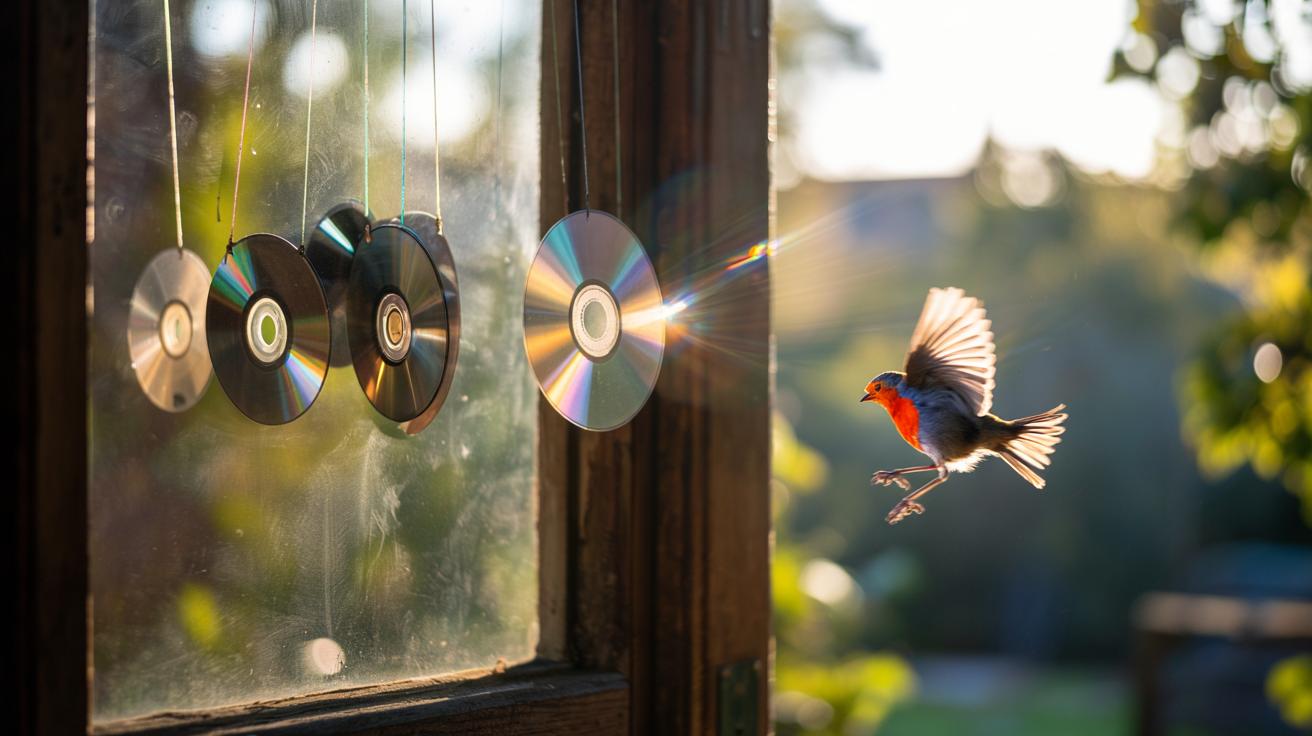
- 🪩 Old CDs deter window strikes by producing specular flashes, diffraction rainbows, and movement cues that create temporal contrast, signalling a solid surface to birds.
- 🔧 Installation essentials: mount on the exterior, use varied lengths with swivels so discs spin freely, keep them 5–10 cm off the glass, and position to catch morning or afternoon sun while minimising neighbour glare.
- 📐 Spacing standards: apply the proven 2 × 4 rule (no gaps larger than 5 cm high or 10 cm wide) when using CDs or patterns so birds cannot perceive “flyable” passages across the pane.
- 🧰 Alternatives and upgrades: consider dot/stripe films, UV decals, or external screens/netting; CDs are a quick, low-cost start, while screens offer the highest, always-on protection.
- 🧪 Evidence and follow-up: conservation guidance (e.g., RSPB) supports making glass visible; log collisions for two weeks and, if strikes persist in dull light or at dawn/dusk, add outside films or a lightweight screen.
The humble compact disc, once a soundtrack to our commutes, has found a second life in an unexpected place: the window. Hanging old CDs outside panes has become a low-cost, surprisingly effective way to reduce bird strikes, a problem that kills millions of birds in the UK each year. As the sun shifts, CDs throw transient glints and shifting rainbows that birds read as movement and hazard rather than open sky. Because they break up the illusion of clear flight paths, reflective discs can make glass visible to fast-moving birds before impact. Here is how the physics works, where to place them, and when to consider more permanent solutions.
Why Old CDs Work Against Window Strikes
Birds collide with glass because they see what is reflected—trees, clouds, safe corridors—not the pane itself. An old CD disrupts that deceit. Its mirror-like aluminium layer delivers specular flashes that change with angle, while its grooved surface diffracts light into shifting rainbow spectra. To a bird’s highly tuned vision—sensitive to motion and, in many cases, ultraviolet—those glints scream: “object, not air.” Movement cues matter most, and a gently spinning disc introduces the dynamic signal birds rely on when split-second choices mean life or death.
Beyond brightness, CDs create temporal contrast: a pattern that appears, vanishes, and reappears across the day as wind and sun vary. This rolling flicker differs from the static reflections that make glass dangerous, helping to dismantle the false window to the sky. When placed outside the pane, the disc’s activity sits in the same plane as the hazard, reinforcing the message that the surface is real and must be avoided.
How to Hang and Position Discs for Maximum Effect
Start by fixing CDs on the exterior of the window; placing deterrents outside is crucial because it breaks reflections before birds commit to a trajectory. Use monofilament or biodegradable twine cut to varied lengths so discs spin freely without fouling brickwork. A small swivel fishing clip reduces tangling in gusts and improves movement at low wind speeds. Multiple, moving points are better than a lone charm.
Spacing is key. For garden windows facing vegetation, aim for coverage that birds cannot confidently fly through. A practical rule is to arrange discs or strands so gaps appear no wider than a hand’s breadth across the glass. On large panes, run two or three lines of discs from the top frame, staggered like a curtain. Keep discs 5–10 cm off the glass to avoid knocking and scratching, and check fixings after storms.
Consider orientation and time. East-facing panes benefit early, while west-facing windows need afternoon sparkle. In dull weather, keep some discs near edges where wind funnels, ensuring motion even under flat light. If neighbours object to glare, shift to the top third of the window or combine a few discs with subtle dot films to maintain coverage without dazzle. Consistency across the risky pane matters more than dramatic shine.
CDs Versus Other Bird-Safe Options
Old CDs are cheap and cheerful, ideal for testing and for seasonal risk peaks during spring and autumn. Yet they are not the only tools. Feather-friendly patterns applied to the outer glass—dots, stripes, or UV-reactive decals that follow the “2 × 4 rule” (no gaps larger than 5 cm high or 10 cm wide)—offer reliable, always-on visibility. External screens or netting mounted a few centimetres off the glass act like a trampoline, absorbing impact if a bird misjudges. Think of CDs as a quick win, and films or screens as a long-game upgrade.
| Method | Cost | Effectiveness | Notes |
|---|---|---|---|
| Hanging CDs | Very low | Good in daylight; variable in dull light | Reuse waste; relies on movement and sun |
| Dot/stripe films | Low–medium | High when spaced to 2 × 4 rule | Install outside for best results |
| UV decals | Medium | Good for species with UV sensitivity | Even spacing still required |
| External screens/netting | Medium | Very high | Acts as physical buffer; preserves views |
For renters or listed buildings, CDs and removable films are typically the least intrusive options, with screens suited to known hotspots such as conservatories facing dense planting.
Evidence, Limits, and When to Upgrade
Studies and field trials from conservation groups, including the RSPB and window-safety researchers, converge on a simple idea: make glass visible and birds will avoid it. CDs do this by injecting motion and glare, but their performance varies with weather, shading, and wind exposure. On consistently overcast days, the flashes diminish; at dawn and dusk, reflectivity drops. If you still record hits—tell-tale marks on the glass or stunned birds—supplement CDs with exterior films or a lightweight screen mounted 5–10 cm from the pane.
Keep a log for two weeks after installing any deterrent. If collisions persist, add coverage until no “flyable gaps” remain. Always prioritise the outside of the glass and follow the 2 × 4 spacing principle for anything patterned. Finally, check local rules for fixtures, but remember that preventing strikes supports protected wildlife and avoids heartbreaking injuries on the patio. When in doubt, combine modest shine with guaranteed visibility.
With a handful of rescued discs and a few minutes’ rigging, you can turn deceptive windows into honest boundaries that birds read and respect. The scientific edge is simple: movement plus contrast breaks the illusion of open sky, reducing collisions without spoiling your view. If you test CDs now, you will know within days whether they solve the problem for your aspect and planting. And if they do not, you have a clear path to films or screens that will. What’s the first window on your property you will treat, and how will you measure whether the birds are safer tomorrow than today?
Did you like it?4.6/5 (20)