In a nutshell
- 🌿 Pebble tray boosts local humidity via gentle evaporation, creating a moist microclimate around foliage without soaking roots.
- 💧 Tropical plants often need 50–70% humidity; reducing vapour pressure deficit (VPD) prevents crisping, curling, and stalled growth.
- 🛠️ How-to: use a shallow watertight tray and washed pebbles; keep water just below pebble tops; clean every 2–4 weeks (vinegar helps with limescale) and protect furniture.
- ⚖️ Versus alternatives: trays are silent and cheap; humidifiers give room-wide control but need maintenance; misting is short-lived; plant grouping enhances tray effects.
- 📍 Best practice: choose larger trays, avoid radiators and strong drafts, cluster compatible plants, and monitor with a hygrometer for a steady 50–60%.
In centrally heated UK homes, dry rooms can leave tropical houseplants struggling, even when watering is on point. The simplest fix is hiding in plain sight: a shallow dish, some stones, and a splash of water. The pebble tray creates a moist microclimate around foliage without drenching roots or fogging up windows. It is inexpensive, quiet, and low-tech, yet surprisingly effective when you understand how evaporation and airflow work. Here’s how to deploy it properly, why it helps plants such as calatheas, ferns, orchids, and anthuriums, and how it stacks up against gadgets and misting routines. Done well, a pebble tray can lift local humidity precisely where leaves need it most.
Why Humidity Matters for Tropical Houseplants
Humidity is not a luxury for rainforest natives; it’s a key part of their physiology. Leaves open tiny pores to exchange gases, but when indoor air is very dry, they lose too much moisture, causing crisp edges, curling, and stalled growth. In UK living rooms, winter humidity can sink to 30–40%. Many tropicals prefer 50–70%. That gap explains why a plant looks fine after watering yet declines between waterings. Elevating ambient moisture narrows this stress, steadies transpiration, and helps foliage maintain turgor so new leaves unfurl cleanly instead of tearing.
Growers also talk about vapour pressure deficit (VPD): the drier the air, the stronger the pull on leaf moisture. You can’t turn a terrace flat into a jungle, but you can improve the zone around your plants. By nudging humidity upwards near foliage, you reduce VPD and encourage steady growth. Think of the pebble tray as a local climate tweak rather than a whole-room solution—subtle, targeted, and kind to fussy genera that resent parched air.
How the Pebble Tray Works
The pebble tray is simple physics. Water evaporates from a broad surface, increasing moisture in the thin boundary layer of air around leaves. The effect intensifies when the water is warmer, the surface area is larger, and air moves gently rather than in strong drafts. By lifting the pot above water on stones, you create a safe reservoir. Never let the pot sit directly in water, or you’ll invite root rot and fungus gnats. Instead, evaporation quietly raises local humidity by a few percentage points—often enough for sensitive plants clustered together.
Scale and placement matter. A dinner-plate-sized tray under a trio of plants will outperform a teacup saucer under one. Position the tray where air circulates softly—near a window but away from blasting radiators or fans. The water line should sit just below the top of the stones: keep the water level below the pebble surface so capillary action cannot wick into the pot. Top up as needed, and refresh the water often to keep it clean.
Step-by-Step: Building a Pebble Tray
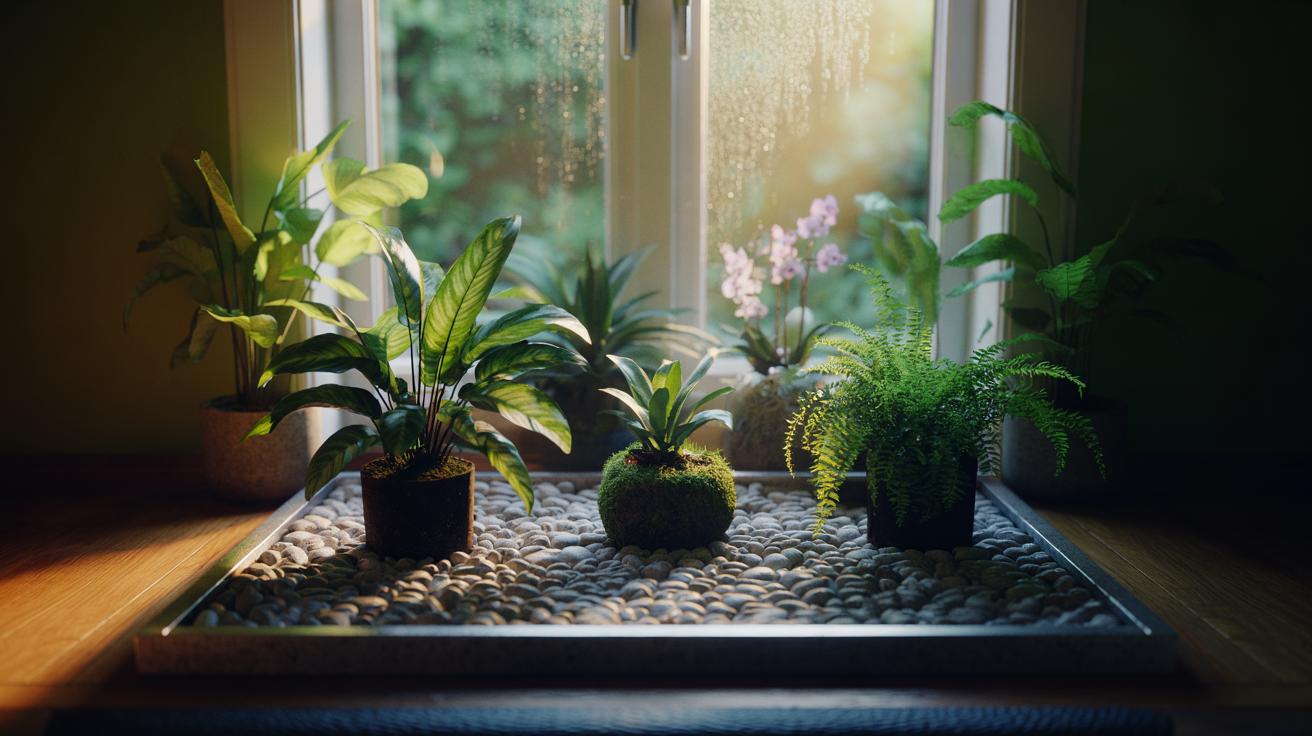
You need a watertight shallow tray, washed gravel or aquarium pebbles, and tap water. Choose a tray wider than your pot to maximise evaporative surface. Rinse pebbles to remove dust, then fill the tray with a 2–3 cm layer. Add water until it sits just under the pebble tops. Set your pot on the stones so the base stays dry. The golden rule: water below the pebbles’ surface at all times. If you group several plants around one tray, leave a few centimetres between pots so air can move around leaves.
Maintenance is light but essential. Topping up is not the same as cleaning: empty and rinse pebbles every two to four weeks to prevent algae, limescale, and odours. In hard-water areas, a splash of vinegar during cleaning helps dissolve mineral crust. Replace any slimy stones. In winter, keep trays away from radiators to slow evaporation spikes; in summer, expect to refill more often. For wooden furniture, use a waterproof mat beneath the tray to protect against accidental spills and condensation.
Pebble Tray vs Other Humidity Boosters
The pebble tray excels at targeted, silent humidity with no electricity and minimal visual clutter. It won’t transform a whole room, but near leaves it can tip conditions into the comfort zone. Compare that with cool-mist humidifiers: they offer measurable, room-wide gains but need filters, descaling, and regular hygiene to avoid bacterial build-up. Intermittent misting offers fleeting relief yet risks spotting on leaves and encourages disease if done late in the day. Choose the method that matches your space, habits, and plant mix rather than chasing a one-size-fits-all solution.
For renters or small flats, combining a tray with plant grouping and avoiding hot drafts delivers a noticeable lift without energy costs. Bathrooms with bright, indirect light can also provide naturally higher humidity. If you do use a humidifier, aim for 50–60% and place a hygrometer nearby. Consistent, moderate humidity beats dramatic peaks and troughs, keeping foliage resilient and new growth unmarred.
| Method | Typical Cost | Effective Range | Notes |
|---|---|---|---|
| Pebble tray | Low (tray + stones) | Local (immediate area) | Silent, simple; clean regularly; no root contact with water. |
| Humidifier | Medium–High | Room-wide | Powerful; needs maintenance; manage limescale and hygiene. |
| Misting | Low | Very short-lived | Minimal impact on humidity; can spot leaves; time-sensitive. |
| Plant grouping | Low | Local cluster | Plants trap each other’s moisture; pair with trays for best effect. |
| Bright bathroom | None | Room-dependent | High baseline humidity; ensure adequate light and ventilation. |
The pebble tray earns its keep because it’s cheap, quiet, and hard to get wrong. By leveraging gentle evaporation and smart placement, you create a stable bubble of moisture that helps leaves unfurl cleanly and colours stay saturated. Pair it with good light, correct watering, and routine cleaning, and many “diva” plants become steady performers. Think of it as microclimate management rather than a magic trick. Ready to try it under your own ferns, prayer plants, or orchids—perhaps alongside a hygrometer to track the change? What combination of small tweaks will you test to craft the ideal indoor habitat for your tropical collection?
Did you like it?4.5/5 (29)