In a nutshell
- 🌧️ Adopting a rainwater habit supplies naturally soft water that prevents leaf spot and mineral burn by avoiding salty residues and keeping cuticles and stomata clear.
- 🧪 Hard water (rich in calcium and magnesium bicarbonate) raises leaf-surface pH, leaves a crust, and causes osmotic stress—conditions that invite pathogens and intensify spotting.
- 🍃 Rainwater has low TDS and alkalinity with gentle acidity, delivering cleaner mists and more reliable foliar feeds while denying spores the mineral film they exploit.
- 🛠️ Build the habit: install a lidded water butt with mesh and a first-flush diverter, store in shade, verify with a TDS meter (<50 mg/L), or blend deionised with tap; flush pots to purge salts.
- 📊 Key contrasts: rainwater TDS ~5–30 mg/L vs hard tap 250–500+; pH ~5.6–6.5 vs 7.3–8.5; negligible leaf residue vs visible crust—meaning a markedly lower disease risk.
If your prized calathea or rose bush keeps developing mysterious brown rims and freckled lesions, your watering routine may be to blame rather than a hidden pathogen. In hard-water postcodes, misting and foliar spraying can leave a salty film that stresses tissue and invites infection. Adopting a simple rainwater habit—collecting and using naturally soft water—is a quiet revolution for healthy leaves. It avoids crunchy residues, moderates pH on the leaf surface, and keeps pores clear for gas exchange. Switching from hard tap water to rainwater often stops recurring leaf spot and prevents mineral burn before you reach for fungicides. Here is the science, the home set‑up, and the practical cues that will keep foliage spotless.
Why Hard Water Fuels Leaf Spot
Across large swathes of the UK, mains supplies carry high alkalinity and dissolved salts—chiefly calcium and magnesium bicarbonate. When sprayed, these minerals dry on the blade as a pale crust, raising the immediate surface pH and disrupting the waxy cuticle. That microcracking invites opportunists: fungal spores of Cercospora or Alternaria, and bacterial agents that colonise damp films. The salts also create osmotic stress, drawing water out of epidermal cells and imprinting the familiar tan halo of mineral burn. Salty residues are not just cosmetic; they weaken leaf defences exactly where moisture lingers longest.
Plant physiology pays a second price. Crusted deposits clog stomata, throttling transpiration and CO₂ exchange, which slows recovery from any infection. Each mist with hard water refreshes the residue, compounding stress. High-alkalinity droplet marks can spike the leaf-surface pH beyond the sweet spot for beneficial microbes, tilting the balance towards pathogens. In short, the chemistry of hard water primes the disease triangle: susceptible host, favourable environment, and available inoculum. The fix is not stricter hygiene alone but replacing the medium that creates the problem.
How Soft Rainwater Protects Plants
Fresh rain is naturally low in TDS and alkalinity, its gentle acidity (from dissolved CO₂) keeping minerals in solution rather than on your leaves. That means no crust, stable cuticles, and open stomata. Soft water reduces osmotic shock during misting and foliar feeds, so droplets hydrate rather than dehydrate the epidermis. By removing the abrasive mineral layer, rainwater restores the leaf’s first line of defence and denies spores the foothold they exploit on hard-water films. It also complements fertilisers: because there’s minimal background hardness, nutrients land at predictable concentrations, cutting the risk of tip scorch and mottling misdiagnosed as disease.
For clarity, here is how rainwater compares with a typical hard tap supply.
| Parameter | Rainwater | Hard Tap Water |
|---|---|---|
| Typical TDS (mg/L) | 5–30 | 250–500+ |
| Alkalinity (as CaCO₃ mg/L) | 10–40 | 150–300+ |
| pH | 5.6–6.5 | 7.3–8.5 |
| Leaf residue after misting | Negligible | Visible spotting/crust |
| Risk of mineral burn | Low | Moderate–High |
| Leaf spot risk after misting | Reduced | Elevated |
Building the Rainwater Habit at Home
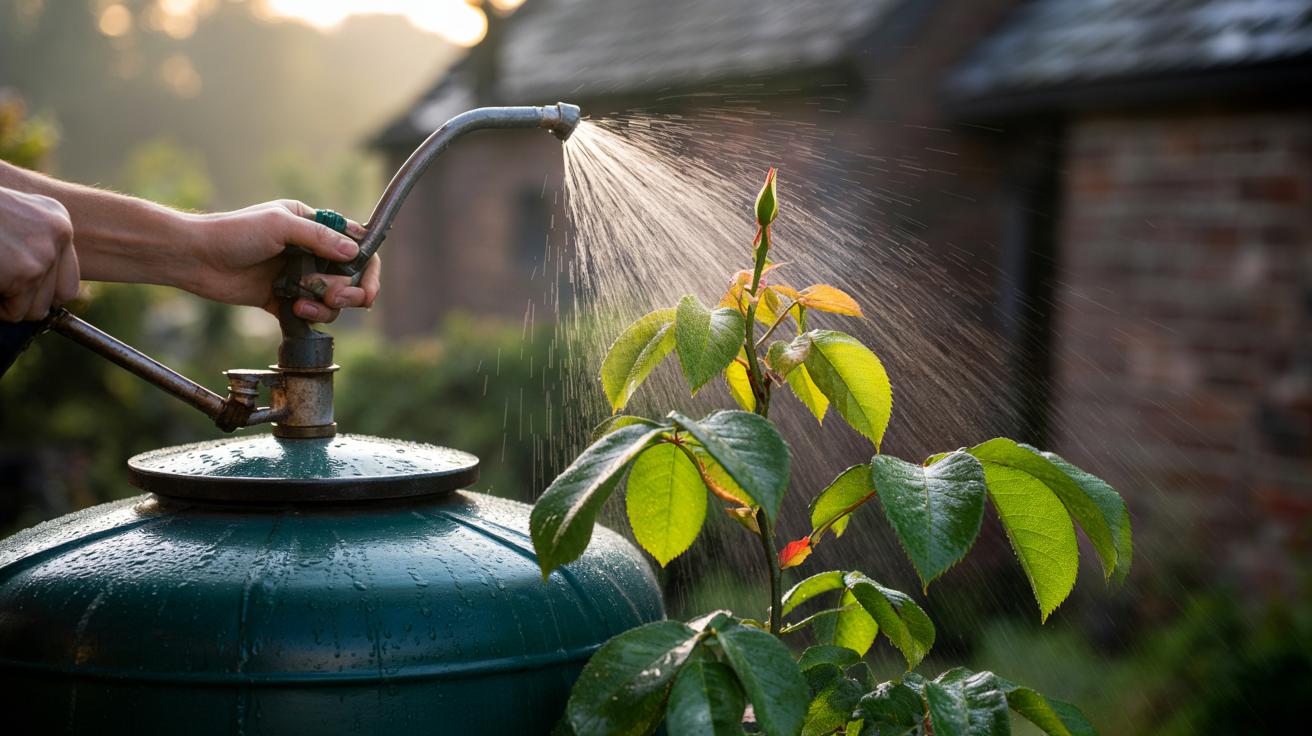
Start with a lidded, opaque water butt fed from a clean downpipe; fit a fine mesh and a first‑flush diverter to exclude debris and roof dust. Store in shade to limit algae and use within a few weeks, drawing from the tap rather than dipping cans. A cheap TDS meter confirms quality; readings under 50 mg/L are ideal for misting and humidifiers. If collection is impossible, blend one part deionised water with one part tap to soften, or run tap water through a carbon block and let it stand to reach room temperature.
Use rainwater for foliar sprays, orchid mists, and to dilute feeds for sensitive species; flush pots monthly to purge salts left by fertilisers. Avoid collecting from lead or freshly tarred roofs, and keep gear clean to prevent introducing pathogens. Make it a routine: soft water for leaves, any water for roots only when you must. Within weeks, the freckles fade, new growth emerges glossy, and humid corners stop breeding splash‑borne blights.
Gardeners often chase cures when prevention is sitting in the next shower. Embracing the rainwater habit removes the mineral triggers behind leaf spot and mineral burn, while simplifying fertiliser management and reviving plant sheen. Keep your set‑up simple, test occasionally, and reserve misting for cool mornings so foliage dries before nightfall. Soft water turns every spritz from a risk into a restorative. As weather grows erratic and water quality varies street to street, what tweaks—collection, storage, or blending—will you adopt to make soft water your plants’ everyday protection?
Did you like it?4.5/5 (21)