In a nutshell
- 🌱 Companion planting boosts yield through chemistry, architecture, and timing—masking scents, layering canopies, and staggering growth to keep each square metre productive.
- 🐞 Natural pest control: flowers and herbs attract beneficial insects (hoverflies, lacewings) and confuse pests like carrot fly, cutting reliance on sprays and lowering disease spread.
- 🌿 Soil synergy: legumes drive nitrogen fixation, deep-rooted “miners” recycle nutrients, and living mulches improve moisture retention and microclimate stability for steadier growth.
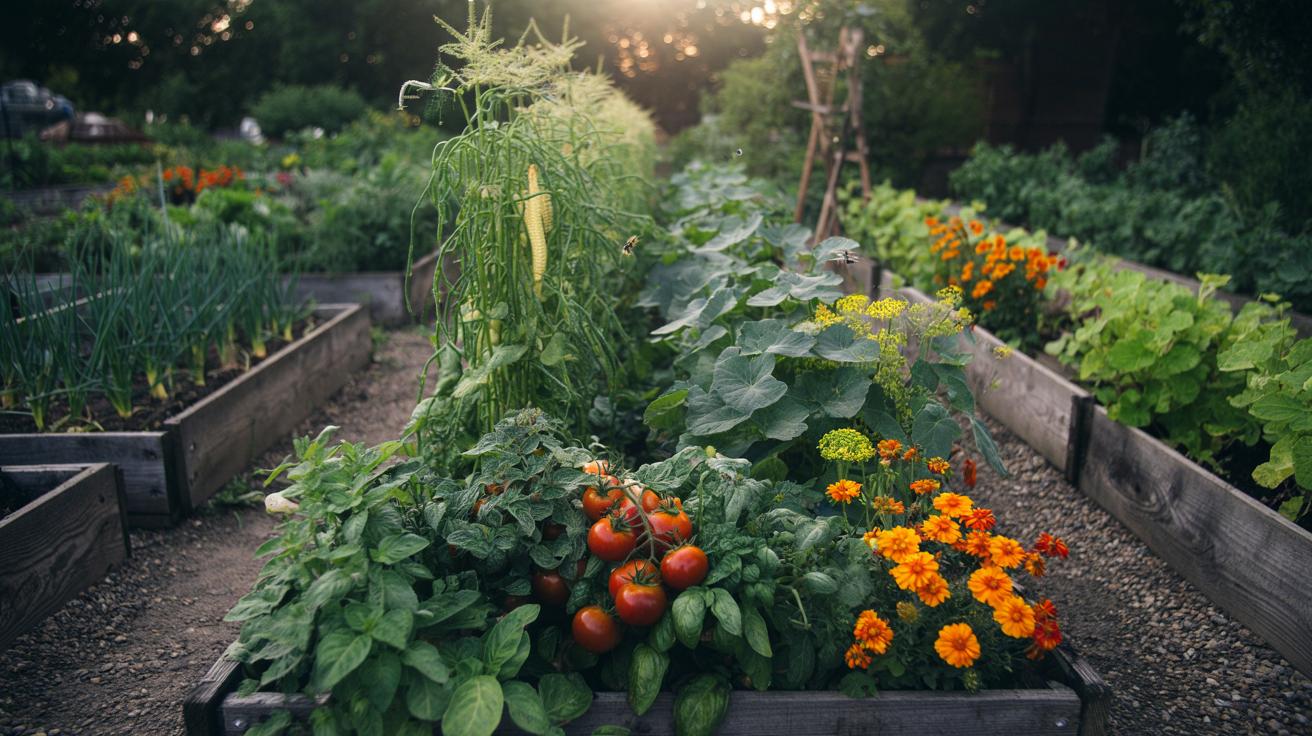
- 📐 Design matters: mix 60/40 main crops to helpers, layer heights, and use proven pairings (tomato–basil–marigold; carrot–onion; the Three Sisters) with smart spacing to compound gains.
- 📈 Real-world payoff for UK gardens: fewer stress spikes, fewer pests, richer soil, and higher productivity—often approaching double harvests from the same footprint.
In a year when every seed counts and budgets feel stretched, companion planting offers a quietly radical promise: bigger harvests with fewer inputs. By pairing crops that help each other, you shape a living support system that deters pests, feeds the soil, and squeezes performance from small spaces. Think more peas from the same trellis, denser lettuces beneath taller neighbours, fewer munched brassicas. It’s not folklore. It’s practical ecology. Plants don’t grow alone; they communicate, compete, and collaborate. In a British garden, where weather swings from damp chill to surprise heat, that collaboration can be the difference between middling and abundant. Here’s how smart partnerships can, quite realistically, double your vegetable yield.
How Companion Planting Works
Companion planting rests on three pillars: chemistry, architecture, and timing. Chemistry first. Some species release root exudates and aromas that alter neighbouring behaviour. Allelopathy can suppress weeds; basil’s volatile oils can mask tomato scents from pests. Architecture matters too. Tall sweetcorn casts dappled shade for lettuce, while broad squash leaves shelter soil from evaporation. Timing closes the loop. Quick radishes mark rows for slower carrots, then vacate, leaving space and a loosened seam of soil. By stacking functions, each square metre does more. The result is a polyculture that mimics nature’s efficiency, trading monoculture’s fragility for resilience.
Under the soil, the action is even richer. Legumes host rhizobia for nitrogen fixation, feeding neighbours that would otherwise demand fertiliser. Finer roots from onions and leeks comb compacted ground between chunkier brassica roots, improving structure. Mycorrhizal networks shuttle nutrients, especially phosphorus, between species. Above ground, dense mixed canopies disrupt pest flight patterns and soften wind, creating a stable microclimate. Short story: fewer stress spikes, steadier growth curves, stronger plants. Long story: compounding advantages that accumulate week by week, quietly boosting yield without another trip to the garden centre.
Natural Pest Control Without the Price Tag
Forget costly sprays. Mixed plantings are a home for beneficial insects. Umbellifers like dill and fennel feed hoverflies whose larvae massacre aphids. Calendula and marigolds lure in lacewings and parasitic wasps. Strongly scented herbs—rosemary, thyme, sage—distract cabbage whites hunting brassicas. Confuse the pest, feed the predator, protect the crop. In UK plots, carrots suffer from carrot fly; onions and leeks are a classic mask, their sulphurous smell interrupting the fly’s low, linear search. For slugs, sacrificial lettuce borders spare your main salad patch, while interplanted chives reduce fungal issues in cucurbits and tomatoes.
Diversity also breaks disease cycles. When potatoes aren’t shoulder-to-shoulder with potatoes, blight spores have fewer landing strips. Mixed heights reduce splash-back, lowering the risk of soil-borne infections after summer downpours. The trick is pattern. Slot nectar-rich companions at intervals through the bed, not parked at the ends. Keep something flowering from April to September. Plant low, plant high, plant messy—on purpose. Monocultures invite outbreaks; polycultures dampen them. That’s pest control as design, not reaction, and it leaves more time for picking than policing.
Soil Synergy: Nutrients, Microbes, and Moisture
Healthy soil is your unseen ally. Legumes—beans and peas—share atmospheric nitrogen through nodules, trimming the need for bought feeds. Deep-rooted “miners” like comfrey and borage haul potassium and calcium up the profile; chop-and-drop mulches lock those nutrients near the surface for hungry feeders like tomatoes. Add a lacework of living roots, and microbial life booms. Microbes are the quiet workforce of fertility. They stabilise nutrients, improve cation exchange, and turn organic matter into plant-ready meals. In practice, you feed the soil community, and the soil community feeds your veg.
Moisture is the other dividend. Broad-leaved companions such as squash and nasturtiums act as a living mulch, shading soil and reducing evaporation during hot spells that catch out British gardens. Fine-rooted companions stitch aggregates together, improving infiltration after sudden summer storms. Think of it as water banking. Less runoff. Less crusting. More even hydration between rains. Stressed plants stall; evenly watered plants keep powering on. That steadiness shows up as extra trusses on tomatoes and heavier pods on beans—real kilogrammes, not theory. Good guilds turn every watering can into an investment.
Designing Your Beds: Proven Pairings and Spacing
Start with reliable pairs and build outward. Aim for a 60/40 mix of primary crops and helpers. Keep canopies layered: climbers up, sprawlers down, fillers in the dapple. Stagger sowing dates so support plants hit peak usefulness as the main crop needs them. Small tweaks pay off. Short rows of flowers every 1.2 metres. Herbs at corners to perfume the air. Fast salad gaps between slow brassicas. Design is yield, disguised as aesthetics. Below is a concise guide to combinations that consistently earn their keep in UK beds.
| Crop | Companion | Key Benefit | Spacing Tip |
|---|---|---|---|
| Tomato | Basil, Marigold | Scent masking; predator support | One basil per plant; marigolds every 60 cm |
| Carrot | Onion, Leek | Carrot fly deterrence | Alternate rows 20 cm apart |
| Brassicas | Nasturtium, Dill | Trap pests; feed hoverflies | Edge with nasturtiums; dill clumps mid-bed |
| Beans | Sweetcorn, Squash | Nitrogen, support, living mulch | “Three Sisters”: corn grid 45 cm, beans at bases, squash between |
| Lettuce | Radish, Spring Onion | Quick intercrop; pest confusion | Slot radishes every 10 cm; onions in corners |
Observe, adjust, repeat. If basil sulks in a cold summer, swap to parsley. If slugs feast on nasturtiums, raise edges and add copper bands. Keep notes on what thrives in your microclimate—wind corridors, fence shade, south-facing bricks. Companion planting isn’t dogma; it’s a toolkit. The goal is simple: more harvest from the same footprint, supported by plants that pull their weight. When the system clicks, yields jump without extra fertiliser or fuss. That’s the quiet revolution inside a busy bed.
There’s no silver bullet, yet the compounding gains of companion planting are hard to ignore: steadier growth, fewer pests, richer soil, and a calendar that stays productive from spring to frost. It’s pragmatic, thrifty, and surprisingly beautiful. You’ll taste the difference too—stressed plants are bland; supported plants are sweet. Start small, test pairings, iterate. Your allotment or patio bed is a living laboratory, not a textbook diagram. Double harvests often arrive not from doing more, but from arranging better. Which partnerships will you trial first, and how will you adapt them to your own patch this season?
Did you like it?4.5/5 (27)