In a nutshell
- 🌱 Annual repotting acts as preventive care, restoring aeration and drainage, refreshing nutrients, and disrupting pests—a full physical, chemical, and biological reset for healthier roots and steadier growth.
- 🧪 Fresh, peat-free substrate improves cation exchange and resets pH (vital in hard-water areas), delivering greener leaves and better nutrient uptake while supporting a richer root microbiome tailored to each species.
- 🪴 Prevents root-bound stress and disease: pruning dead roots, teasing circling roots, and stepping up only one pot size reduce rot, fungus gnats, and pathogen risk while oxygenating the root zone.
- 🕒 Smart timing and technique: in the UK, late winter to early spring is best; pre-water, use pots with drainage, customise mixes (bark for aroids, grit for succulents), and pause feeding for 4–6 weeks post-repot.
- 🧰 Actionable diagnostics: water rushing through, white salt crusts, or sour smells signal degraded media—repot or top-dress, flush salts, and rebuild structure for rapid recovery and cleaner watering.
Houseplants soldier on in our homes, battling low light, dry radiators, and irregular watering. One annual habit quietly tips the balance in their favour: repotting. Replacing tired compost and giving roots fresh space is not cosmetic; it is maintenance with measurable benefits. As media collapses, water lingers and oxygen falls. Nutrients wash out or crystallise. Pests find a foothold. Switching a plant into renewed, well-structured substrate once a year resets that downward spiral. In practice, it takes minutes and pays off for months. Fewer yellowing leaves. Better flowering. Steadier growth. And crucially, peace of mind that the unseen half—the root system—is set up to thrive.
What Annual Repotting Actually Does
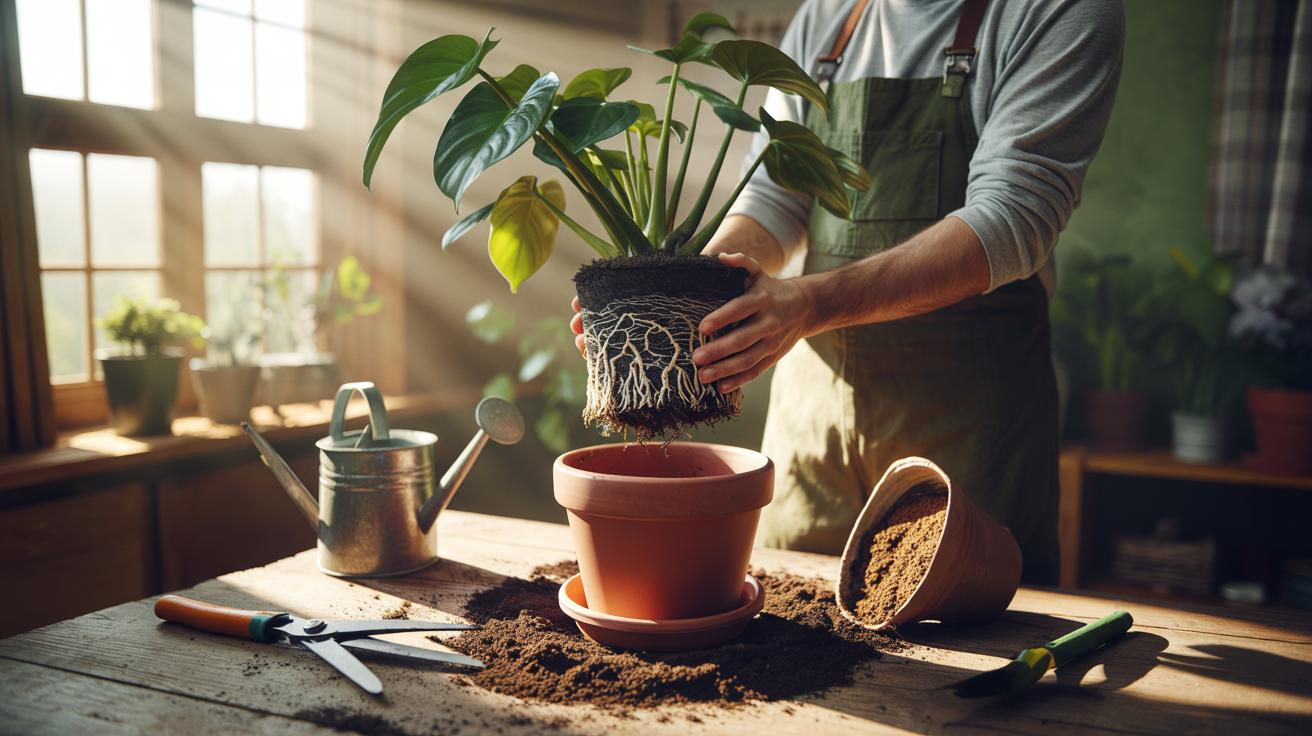
Repotting is a physical, chemical, and biological reset. Fresh potting compost restores aeration by reintroducing pore spaces that compacted mixes have lost. That frees up oxygen for root respiration, improving water uptake and nutrient transport. New particles also improve drainage dynamics, so you get dampness, not a swamp. Healthy roots demand air as much as water, and the annual swap delivers both. Mechanically teasing out the root ball loosens spirals, stops girdling, and primes new growth. The result is a plant that can actually use the light it receives, rather than simply survive it.
Chemically, a year is long enough for salts from tap water and fertiliser to accumulate, skewing pH and burning fine roots. By discarding the bottom third of stale compost and refreshing the rest, you remove residues that block uptake of iron, magnesium, and calcium. Biologically, you interrupt pest cycles—fungus gnats adore sour media—and seed the pot with a cleaner micro-ecosystem. Annual repotting is preventive medicine for houseplants, not a luxury.
Nutrient Cycles and Fresh Substrate
Plants mine nutrients, and pots are closed economies. Over twelve months, the exchange sites in compost become saturated or depleted. Even with careful feeding, the ratio of macros to micros drifts. Fresh, peat-free substrate with balanced slow-release nutrition restores the buffet. It also improves cation exchange capacity, so fertiliser you add later is held and metered, instead of flushing away. In UK homes where water can be hard, new media helps reset pH, unlocking iron and manganese for greener leaves. Greener leaves are a chemistry story as much as a light story.
There’s a sustainability bonus too. Modern peat-free mixes—bark, coir, composted wood fibre—maintain structure longer, breathe better, and support a healthier microbiome. They encourage fine root growth that actually does the absorbing. When you repot, you also get to blend for species needs: more orchid bark for aroids, extra grit for succulents, moisture-retentive fibres for ferns. That tailoring is how one routine can serve a wildly diverse collection without overwatering one plant while starving another.
Preventing Root-Bound Stress and Disease
Left in the same container, many houseplants become root-bound. Roots circle the pot, strangling themselves and starving interior zones of oxygen. The top looks thirsty, but the core stays waterlogged. Stress compounds, attracting sap-sucking pests and priming fungal pathogens such as Pythium or Fusarium. A yearly repot lets you prune dead, brown roots, detangle healthy ones, and remove compacted wedges that never fully dry. Breaking that circle is often the single act that transforms a plant from sulking to surging.
Hygiene matters. Use sterilised tools, and wash the old pot if reusing. Step up only one size—about 2–5 cm wider—so the root zone can colonise quickly; oversized pots invite soggy compost and rot. Add chunky structure—bark, perlite, pumice—to lift oxygen levels around roots. Such tweaks drastically cut the odds of fungus gnat booms and opportunistic disease. You’re not just moving a plant; you’re rebuilding its life-support system.
| Indicator | Likely Cause | Repotting Action |
|---|---|---|
| Water runs straight through | Hydrophobic, degraded compost | Replace top two-thirds; soak and rewet new mix |
| Roots circling surface or drainage holes | Root-bound stress | Trim and tease roots; step up one pot size |
| White crust on surface | Fertiliser and limescale salts | Discard crust; refresh media; flush thoroughly |
| Persistent gnats and sour smell | Waterlogged, anaerobic media | Repot into airy mix; improve drainage |
How to Time and Execute a Low-Stress Repot
In the UK, late winter to early spring is ideal. Light is returning, growth hormones are rising, and plants forgive disturbance. Water lightly 24 hours before, so the root ball slides out intact. Choose a pot with drainage and size up modestly. Resist the “great big pot” temptation—space you can’t fill with roots is space that stays wet. For aroids, add orchid bark and perlite; for cacti and succulents, use grit and sand; for ferns, incorporate moisture-retentive fibres. This species-level tuning is where health gains compound.
Execution is simple. Loosen the root mass with fingers, snip only dead or circling roots, and set the crown at the same height. Backfill, tap to settle, and water once to marry soil and roots. Then pause. No feed for four to six weeks; let new roots explore. Provide bright, indirect light and steady warmth. For giants you can’t lift, top-dressing—scraping off the top 3–5 cm and replacing—buys time between full repots.
Annual repotting is a tidy, calendar-friendly habit that delivers outsized rewards: stronger roots, clearer watering, fewer pests, and vibrant growth that makes the windowsill feel alive. It’s also a chance to connect with your plants, to spot problems early and calibrate your care to their needs. A little soil under the fingernails now prevents a lot of frustration later. So, as the days lengthen and the kettle cools, will you give your houseplants the fresh start they deserve—and which of your green roommates will you repot first?
Did you like it?4.5/5 (26)