In a nutshell
- 🌊 Bottom watering uses capillary action for even moisture, preventing channeling and leaving the surface drier to protect the crown.
- 🛡️ Reduces mechanical damage to root hairs, limits compaction, and avoids salt and pH hotspots that can burn tips.
- 🌱 Encourages deeper, stronger roots by maintaining aeration and a stable moisture gradient, lowering risk of waterlogging.
- 🦠 Lowers disease and pest pressure—less damping-off, fewer fungus gnats—thanks to a dry top layer and cleaner crowns.
- 🧰 Practical method: soak pots 15–30 minutes then drain; choose good drainage holes and media, use terracotta or plastic wisely, and do occasional top flushes to leach salts.
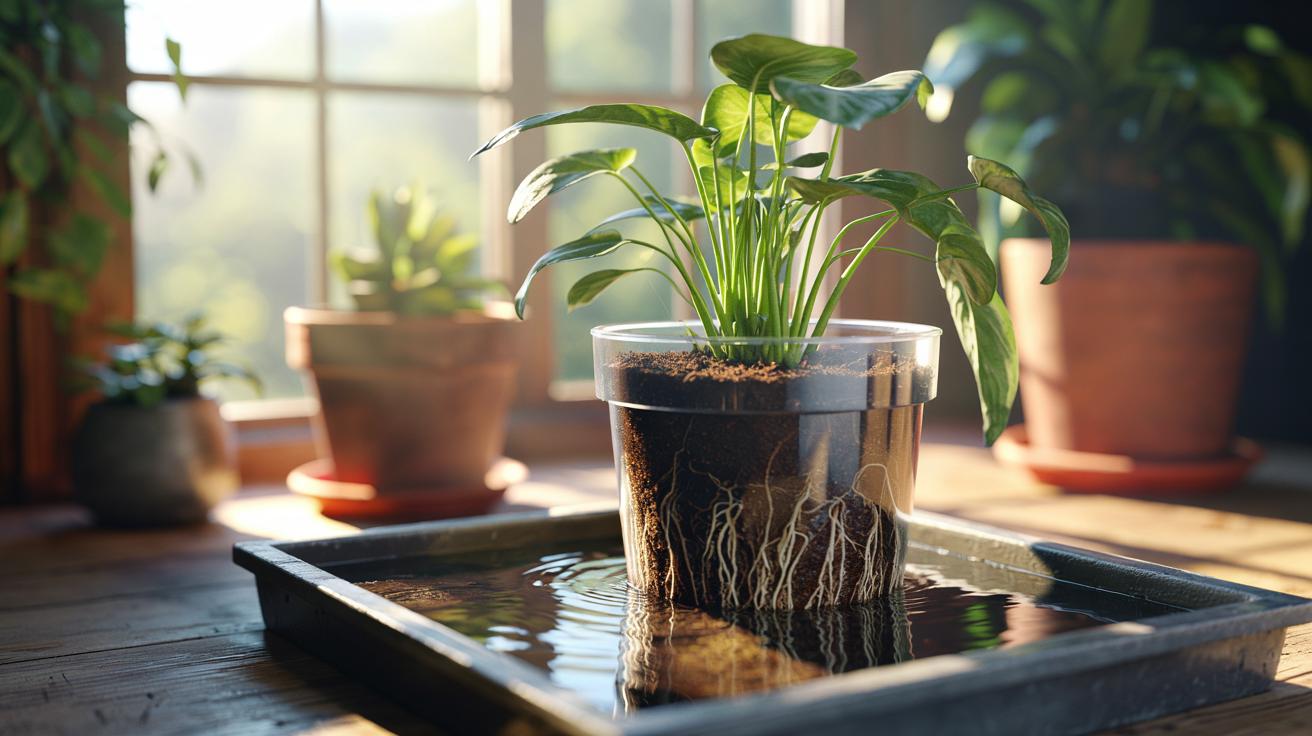
Many gardeners swear by bottom watering, the simple habit of letting pots drink from a tray rather than drenching from above. The technique is more than tidy; it is a quiet safeguard for delicate root systems. By drawing moisture upward through capillary action, compost becomes evenly moist without turning the surface into a swamp or forcing water through tender tissues. That uniformity reduces compaction, limits salt redistribution, and lowers the risk of rot and fungal diseases. Because water travels to where it is needed, roots develop deeper and stronger, rather than clustering anxiously at the surface. For houseplants, seedlings, and moisture-sensitive species, the approach offers more control over hydration, fewer pests drawn to wet tops, and less mess on shelves and windowsills.
Capillary Action and Even Moisture Distribution
When pots sit in a shallow tray, water climbs through pores in the compost via capillary action, saturating the profile from the bottom up. This draws moisture across fine channels and around root hairs with minimal disturbance. The result is a more stable moisture gradient that mirrors what plants experience in nature after rainfall drains away. Because the surface remains comparatively dry, you avoid crusting that repels water next time, and you keep fungal spores from finding the damp conditions they love. Crucially, even distribution reduces the risk of dry pockets that can stealthily stunt growth.
Top watering often sends a quick pulse through the pot, with water racing down the sides and out the drainage holes. That creates channeling and leaves cores parched. Bottom watering encourages roots to explore, building a resilient network that can mine nutrients. By supporting sustained contact between water and compost particles, it delivers reliable hydration without waterlogging, and it helps maintain a balanced supply of oxygen in the root zone.
Preventing Mechanical and Chemical Stress at the Root Zone
Fast pours from above can batter tender root hairs, collapse pore spaces, and grind fine particles into a dense layer. Every splash that scours the surface risks compaction and physical damage that limits both water flow and gas exchange. Bottom watering avoids that mechanical shock. It also keeps nutrients where they belong. Instead of flushing soluble fertiliser salts toward the crown, moisture rises gently, dissolving and redistributing ions throughout the profile so roots encounter consistent concentrations.
There is a chemical benefit too. Hard tap water can deposit carbonates and raise pH at the surface when repeatedly poured from above. Bottom watering leaves the top comparatively clean and reduces the crust that often forms on peat-free mixes. If you occasionally alternate with a careful top flush, you can leach any build-up safely without blasting the plant. The combined effect—less compaction, fewer salt spikes, and steadier chemistry—translates to fewer burnt tips and steadier growth.
Disease Control and Oxygen Balance
Many humidity-loving pathogens colonise damp foliage and crowns. By keeping the top layer and stems drier, bottom watering reduces damping-off in seedlings and limits outbreaks of fungus gnats that breed in wet surfaces. A dry top centimetre is a simple biological barrier that starves pests of habitat while roots below drink in peace. Equally important is aeration. Roots need oxygen as much as water; saturated pores exclude air and push plants towards anaerobic stress. Allowing the pot to wick what it requires helps prevent overfilling the pore space.
Timing matters. Letting pots soak for 15–30 minutes is typically enough, then drain the tray so oxygen can flow back into macropores as excess water moves off. This rhythm of soak-and-drain mimics a light rainfall followed by percolation, encouraging vigorous, white root tips instead of brown, suffocated ones. The method is especially helpful for sensitive varieties—African violets, herbs, and many houseplants—that resent constant surface wetness.
Top vs Bottom Watering: Root Health at a Glance
Choosing a method should hinge on how it treats roots. Bottom watering excels where gentle, even hydration is the goal, while occasional top watering still has a role in flushing salts. Match the technique to your compost, pot, and plant, and you’ll protect the living engine beneath the surface.
| Aspect | Top Watering | Bottom Watering |
|---|---|---|
| Mechanical stress | Can disturb compost and tear root hairs | Minimal disturbance; preserves pore structure |
| Salt accumulation | Drives salts to crown and surface | Distributes salts more evenly; less hotspot risk |
| Disease risk at crown | Wets stems and leaves; invites pathogens | Keeps crown drier; fewer damping-off cases |
| Oxygen access | Prone to short-term saturation | Controlled uptake; better aeration cycle |
Use pots with generous drainage holes and a free-draining mix so capillary rise works properly. Porous containers such as terracotta pull moisture evenly; plastic retains it longer. Succulents benefit from the surface staying dry between drinks, while thirsty tropicals appreciate the steady wick. Reserve a periodic gentle top watering—say, monthly—to leach residues, especially if you use hard water or strong fertiliser. This balanced approach preserves root integrity while preventing build-up in the medium.
Bottom watering is not a gimmick; it’s a plant-friendly routine that respects how roots function. By providing even moisture, reducing compaction, and keeping disease pressure low, it builds resilient plants with expansive, efficient root systems. Give roots a calm, oxygen-rich environment and they will repay you with steady, reliable growth. As your collection grows, which species in your care would benefit most from a switch to this gentler method, and how might you adapt your tray times and pot choices to suit each plant’s particular thirst?
Did you like it?4.6/5 (27)