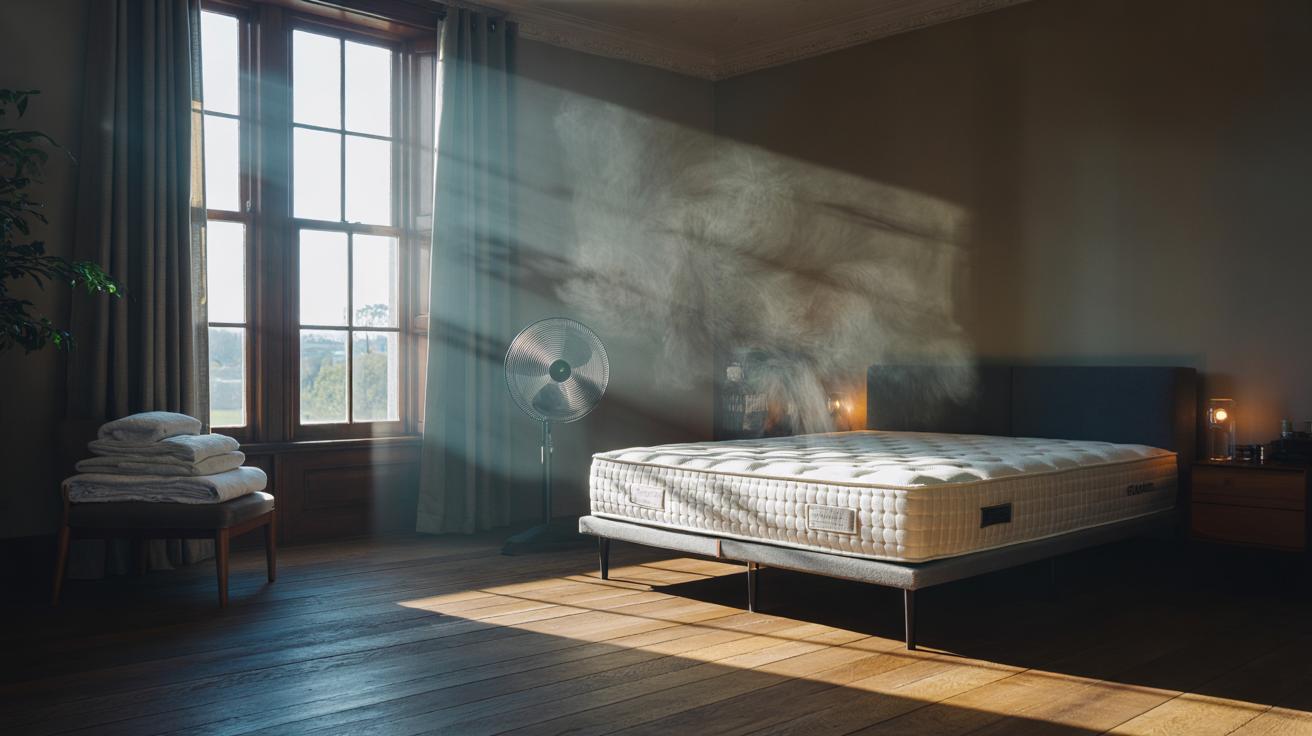
In a nutshell
- 🛏️ Monthly airing reduces moisture, deters dust mites and mould, and cuts allergen load for clearer breathing and fewer night-time awakenings.
- 🌬️ It restores support and temperature balance; drier foams and fibres keep their feel, improving sleep continuity and reducing tossing and turning.
- 🔬 Works via evaporation and diffusion: strip bedding, stand the mattress on its side for 30–60 minutes, and aim for 40–60% RH with windows or a fan.
- 🧰 Practical tips: vacuum the surface, create a cross‑draft, rotate head‑to‑toe, flip if double‑sided, and avoid prolonged direct UV or heat tools that can damage memory foam.
- ♻️ Hygiene and longevity benefits: fewer odours/VOCs, better spinal alignment, longer mattress life, and a small but meaningful eco and cost saving over time.
Your mattress is a hardworking sponge. Each night it absorbs perspiration, captures skin flakes, and traps heat. Left alone, that sealed microclimate invites odours and allergens—and quietly chips away at the restorative power of sleep. A simple intervention helps. Airing out your mattress once a month refreshes the materials, balances moisture, and restores surface comfort. It doesn’t require chemicals, gadgets, or hours of labour. Just time and airflow. Done regularly, it has a noticeable effect on how cool, clean, and supportive your bed feels at bedtime. Small, consistent care beats sporadic deep cleans. The payoff is immediate: a calmer nose, steadier temperature, and fewer midnight awakenings.
Moisture, Mites, and Microbes: The Hidden Sleep Disruptors
Every sleeper emits vapour—up to a cup or more across the night. Trapped in foam cells and between fibres, that moisture sets the stage for dust mites and mould. Mites thrive where humidity lingers and food (skin flakes) is abundant; their waste is a triggering allergen linked to congestion and wheeze. Mould spores, meanwhile, love dark, warm pockets. You may not see a bloom. You will notice the effects: stuffiness, tickly cough, itch. Air that can circulate is air that can dry. A drier mattress deters these biological freeloaders, reducing irritants that fragment sleep and force you into lighter stages.
Moisture also alters feel. Foams soften when damp, fibres clump, and heat accumulates. This changes pressure distribution at the hips and shoulders, nudging you to toss, turn, and micro-wake. A monthly airing resets the microclimate, restoring the designed firmness and allowing your body to thermoregulate—so you fall asleep faster and stay there.
How Monthly Airing Works, Scientifically Speaking
Airing harnesses simple physics: evaporation and diffusion. Strip the bedding, elevate the mattress, and expose it to moving air. Water vapour migrates from wetter foam cores to drier room air, equalising humidity. As moisture leaves, thermal conductivity drops, so the bed stops hoarding heat. You also get passive off‑gassing: volatile compounds and stale odours disperse into the room instead of your lungs. Thirty to sixty minutes of airflow can reverse days of trapped damp. For latex and pocket springs, airing helps fibres and steel regain shape; for memory foam, it supports cell recovery, which keeps contouring consistent night after night.
In the UK climate, aim for indoor relative humidity of 40–60%. On crisp, dry days, a window crack is enough. In winter, pair a dehumidifier or extractor fan with the airing to speed drying without chilling the room. The principle is the same: reduce water load, restore comfort, improve sleep continuity.
| What Airing Does | Result for Sleep | Quick Method |
|---|---|---|
| Dries trapped moisture | Fewer mites and mould; clearer breathing | Strip bed, stand mattress on edge for 45 minutes |
| Releases odours and VOCs | Fresher smell; less irritation | Open window or run fan across surface |
| Resets material responsiveness | Stable support; fewer awakenings | Rotate while airing to expose both sides |
Practical Steps to Air Your Mattress Safely
Pick a dry day each month. Morning is ideal. Remove sheets, toppers, and protectors. Vacuum the surface with an upholstery tool to lift dust and allergens. Then, stand the mattress on its side for 30–60 minutes with a cross‑draft; open two windows to create flow. No balcony? Lean it against a wall, rotate halfway through. Sunlight is helpful for natural deodorising, but be cautious: direct UV can degrade memory foam and some adhesives, so use bright shade or short exposures of 10–15 minutes.
For divan or solid bases, pull the mattress off to allow air underneath. Rotate head‑to‑toe monthly and flip if the model is double‑sided. In winter, use a fan plus a dehumidifier set to 50% RH; it’s gentle and effective. Households with pets or allergies can add a washable, breathable protector after airing. Avoid heat guns, radiators, or hairdryers—they can warp foams and void warranties.
Hygiene, Longevity, and Cost: The Quiet Savings
Sleep quality improves first. But monthly airing brings secondary wins. Materials kept dry and responsive resist permanent dips, preserving spinal alignment. Springs corrode less in humid homes; wool and cotton retain loft; foams avoid mustiness that sends people shopping early. Over a few years, that’s a tangible saving. There’s a health dividend, too. Less allergen load means calmer sinuses and fewer itchy eyes, which translates into fewer awakenings and better daytime focus. A clean, dry sleep surface is preventive care, not a luxury.
It’s also eco‑sensible. Extending a mattress’s life by even one year avoids a bulky, hard‑to‑recycle purchase and the energy it embodies. Combine airing with simple habits—bathing before bed, letting the duvet breathe each morning, washing protectors hot—and you’ll keep that “new bed” feel for longer, without fragrances or sprays that can aggravate sensitive noses.
Airing your mattress monthly is the kind of low‑effort ritual that quietly raises the baseline of your nights: fewer allergens, steadier temperature, truer support. It respects the materials you’ve paid for and the body you’re trying to rest. Simple. Cheap. Effective. The hardest part is remembering to do it—and making space for a brief pause in a busy home. What day each month could you claim for a quick airing ritual, and how might you tweak your bedroom routine to make it effortless?
Did you like it?4.4/5 (20)