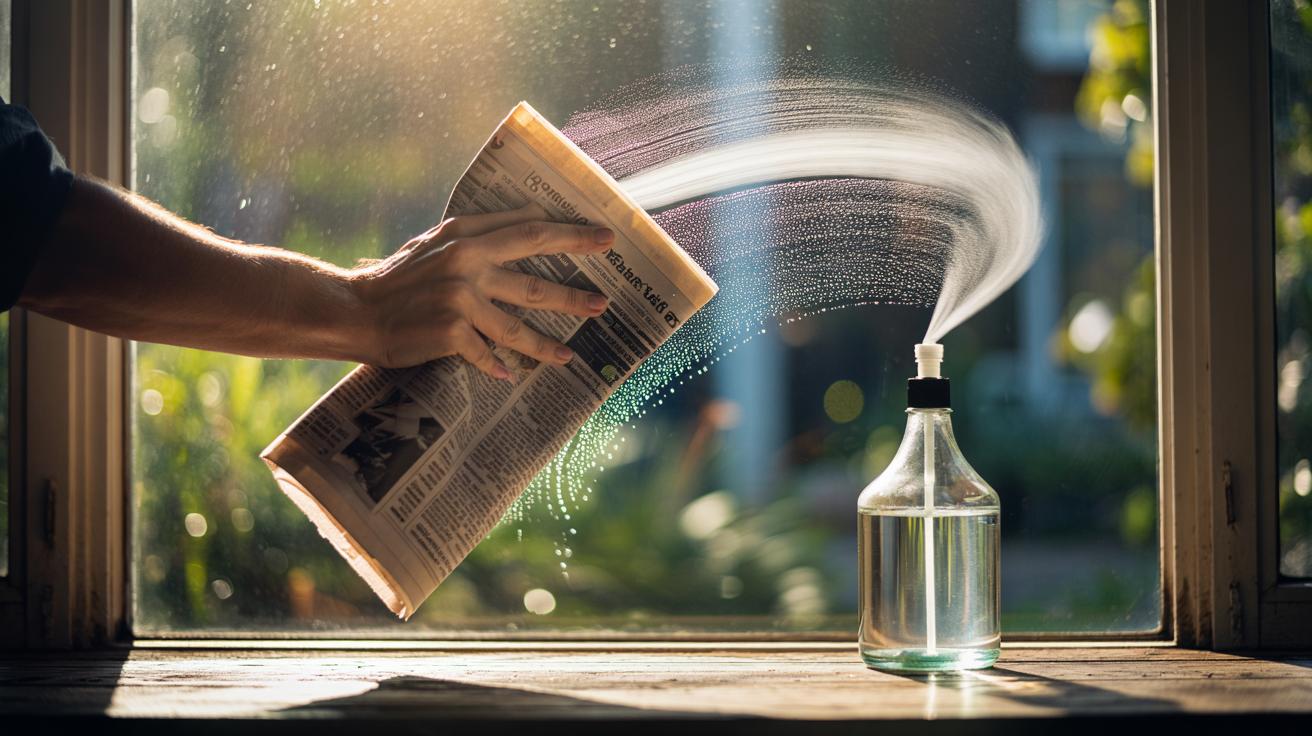
In a nutshell
- 📰 Why it works: cellulose fibres in newsprint offer gentle abrasion and low lint, while stable inks spread cleaner evenly to deliver a streak-free finish.
- ⚙️ Technique: Mix equal parts white vinegar and water (plus a drop of washing-up liquid if needed), wipe in overlapping S-shapes, then refold and buff dry for crystal clarity.
- 🧰 Materials and limits: Newspaper excels on glass and mirrors; choose matte stock and avoid glossy inserts, soft plastics, and tinted car glass where abrasion may dull coatings.
- 📝 Pro tips: Test a small area for ink transfer, chase drips along frames, crease paper for corners, and adjust for season—warm solution in winter, shade in summer to prevent flash-drying.
- ♻️ Sustainability edge: Reuse old newsprint to cut waste and skip pricey sprays; a simple vinegar-water mix cleans effectively with minimal environmental footprint.
For generations, households swore by yesterday’s headlines for today’s housekeeping: the humble newspaper on windowpanes and mirrors. It sounds quaint. It isn’t. When done correctly, the practice delivers streak-free, sparkling glass that defies the smears left by many modern cloths. There’s thrift, too, and a lash of nostalgia. Yet the method works for reasons rooted in material science, not myth. Old-fashioned newsprint is abrasive enough to cut grease, gentle enough to avoid scratches. Pair it with the right solution and technique, and the result is clarity that feels oddly luxurious. Here’s how the paper of record became the polish of choice.
Why Newspaper Works on Glass
Newsprint is made from cellulose fibres that are short, densely packed, and slightly abrasive. That micro-abrasion lifts oily films left by kitchen vapours, fingerprints, and city grime. Unlike soft paper towels, which shed lint that catches the light, newsprint’s tightly bound fibres minimise residue. The inky surface also helps distribute the cleaning fluid in a thin, even skim, discouraging the tide marks that dry into streaks. It’s this combination of gentle bite and low linting that turns old paper into a quiet overachiever.
The chemistry cooperates. Traditional news inks cure onto the paper and don’t readily re-dissolve into standard glass-cleaning solutions, so they’re unlikely to smear. The rougher paper grabs microscopic moisture beads and drags them across the pane, then away. In contrast, fluffy tissue can push water into channels that evaporate unevenly, creating those irksome zebra stripes. With newspaper, capillary action pulls liquid towards dry sections of the sheet, which you keep moving as you work, avoiding pools.
There’s also a sustainability kicker. Reusing old newsprint gives a second life to a material that’s already been printed, cutting the demand for single-use wipes. You don’t need fancy sprays, either. A simple mix of white vinegar and water is enough to unsettle grease bonds and evaporate cleanly. Science, thrift, and tradition align in a neat, inky handshake.
Step-By-Step: The Streak-Free Newspaper Technique
Mix your cleaner first: one part white vinegar to one part warm water in a spray bottle. For grimy panes, add a single drop of washing-up liquid to break surface tension. Shake gently. Open a window for ventilation; vinegar is safe but pungent. Fold a double sheet of newsprint into a tight pad—edges inward to stop flaking. Avoid glossy supplements: their coatings slide rather than scour, and can transfer shine onto glass. Preparation decides the finish.
Lightly mist the glass. Don’t soak it; excess liquid breeds tide marks. Using firm pressure, sweep the paper in overlapping S-shapes from top to bottom. Rotate or refold the pad frequently so you’re always presenting a dry, clean face to the glass. The first pass lifts grime. The second, drier pass polishes. On mirrors, work quickly to outrace condensation, which begets streaks. On window edges, chase drips immediately along the frame line to deny mineral spots.
For finishing, switch to a fresh, dry sheet and buff in quick, tight circles. Corners respond well to a sharp crease of paper used like a squeegee. If you spot a persistent smear, it’s usually silicone residue from past cleaners; a little extra vinegar and a slower buff resolves it. Avoid ammonia on tinted car glass or acrylic guards. The right motion, not brute force, is the secret to a crystalline sheen.
Comparing Materials and When to Avoid It
Newsprint is brilliant, but not universal. Modern soy-based inks are typically stable, yet some freshly printed pages can transfer. Test a small section first. Skip newspaper on soft plastics, lacquered frames, or smart-screen glass with oleophobic coatings—its mild abrasion can dull them. Heavy water stains? Use a pre-wipe with diluted vinegar, then the newspaper routine. For high, hard-to-reach panes, a squeegee remains king for speed and safety. Match the tool to the surface and the surprise is how rarely you’ll need anything else.
| Material | Pros | Cons | Best Use |
|---|---|---|---|
| Newspaper | Low lint, gentle abrasion, cheap | Not for glossy inserts or plastics | Windows, mirrors, shower glass |
| Microfibre Cloth | Reusable, highly absorbent | Can smear if fabric softener used | Daily maintenance, cars |
| Paper Towels | Convenient, disposable | Lint, uneven drying | Quick spill clean-up |
| Squeegee | Fast, consistent | Needs technique and good rubber | Large panes, showers |
If your newspaper feels waxy or leaves grey marks, it’s the wrong stock. Choose matte, standard newsprint; the cheaper the better. Store a small stack flat in a dry cupboard to keep it crisp. And think seasonally: in winter, warm the solution slightly to reduce fogging; in summer, work in the shade so the liquid doesn’t flash-dry into lines. Good glass work is a choreography of timing, touch, and the right paper in your hand.
Still, there are moments to pivot. Delicate antique mirrors with flaking silvering call for microfibre and distilled water only. Car windscreens smeared with traffic film sometimes need a dedicated alcohol-based cleaner before the newspaper polish. If in doubt, test, observe, adjust. The value of the newspaper method isn’t dogma; it’s reliability when kept simple. Start with vinegar, add paper, finish with patience. What pane or mirror in your home is begging for a trial run—and what will you read as you polish it to perfection?
Did you like it?4.5/5 (30)