In a nutshell
- ✂️ Use aluminium foil to revive dull scissors: cutting through folded layers gently hones the edge, adding subtle micro‑serrations for immediate everyday performance.
- 🧭 Step-by-step: clean blades, fold foil 4–8 times, make 10–20 full‑length cuts, wipe residue, then oil the pivot and adjust the screw for smooth action.
- 🚫 Know the limits: avoid using on serrated, pinking, hairdressing, or tailoring shears; chips, bends, and loose pivots need professional sharpening, not a foil tune‑up.
- 🛠️ Maintenance and alternatives: keep blades clean, store dry, and consider 600–1000‑grit sandpaper for a stronger hone; UK services cost about £6–£20 when a pro is required.
- 🌍 Eco-friendly savings: extend tool life, delay new purchases, and reuse clean foil before recycling—small habits that cut waste, time, and costs.
There’s a simple way to revive dull scissors without leaving the house, and it’s hiding in most kitchen drawers. By cutting through folded aluminium foil, you can refresh tired blades in minutes and get back to wrapping, crafting, or opening parcels. The method acts as a fast tune‑up rather than a full restoration, producing a noticeable improvement for everyday tasks. Think of it as a quick hone that offsets wear until you can book a professional service. With a little technique—and realistic expectations—you’ll save a trip to the shop, extend the life of your tools, and avoid unnecessary replacements that cost money and create waste.
How the Aluminium Foil Trick Works
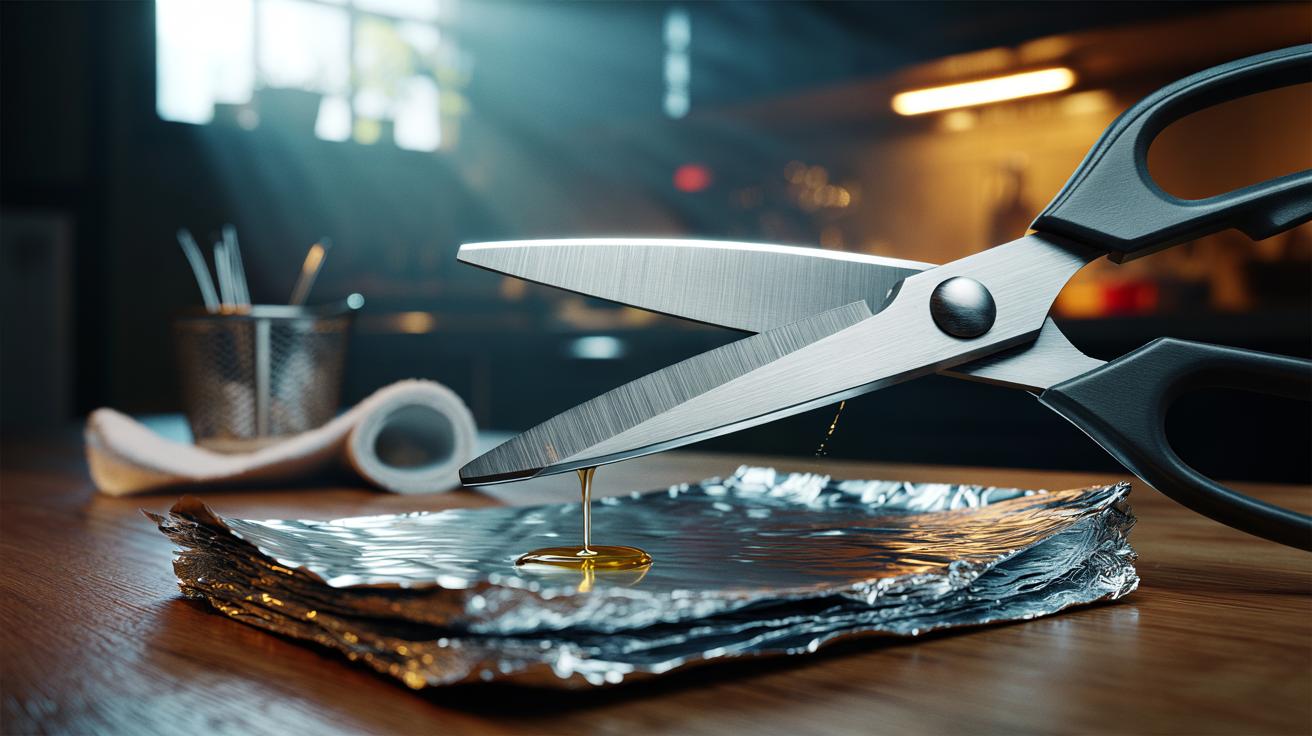
When scissors dull, the edges lose their crisp bevel and develop tiny burrs that snag fibres. Cutting several layers of aluminium foil works like a light honing pass. The foil’s hardness and thinness create gentle micro‑serrations along the cutting edge, helping the blades grip and slice rather than slide. The action also burnishes away some rough burrs. You’re not regrinding at a new angle; you’re refreshing the working edge that does the cutting, which is why the improvement feels immediate on paper, card, and packaging.
This is not a substitute for precision sharpening of premium shears. High‑end tailoring and hairdressing scissors rely on exact bevel geometry and ultra‑polished edges; they need a trained technician with proper stones or wheels. For household scissors used on paper, tape, and light plastic, the foil method delivers a quick, low‑risk boost that can keep a pair going for months between professional visits.
Step-by-Step: Sharpen Scissors With Foil
Start by cleaning the blades with mild washing‑up liquid to remove adhesive and debris, then dry thoroughly. Fold a strip of aluminium foil several times to create a multilayered piece about 20–30 cm long. Hold the scissors naturally, keeping your fingers clear of the cut line. Make steady, full‑length snips from heel to tip through the folded foil, repeating 10–20 times. The aim is consistent passes that contact the entire edge. Wipe away metallic dust, then test on scrap paper. Repeat in small sets until the cut feels smooth, avoiding overworking the edge.
Finish by opening the blades and applying a drop of light oil at the pivot, cycling the scissors to distribute it. Tighten a loose screw so the blades meet without binding. If the scissors still crush rather than slice, you may have chips, a bent blade, or worn pivots—issues that require professional correction. Keep expectations realistic: this is a quick rescue, not a factory reset.
| Item | Recommendation | Why It Matters |
|---|---|---|
| Foil layers | 4–8 folds | Creates enough resistance for effective honing |
| Number of cuts | 10–20 passes | Even contact across the entire blade |
| Test material | Printer paper | Reliable gauge of smooth slicing |
| Aftercare | Wipe and oil pivot | Removes dust, restores action |
When This Hack Helps—and When It Doesn’t
The foil trick shines on everyday household cutters: kitchen scissors that battle packaging, office scissors dulled by paper, and craft scissors tasked with gift wrap. It restores bite by introducing subtle micro‑teeth that excel on fibrous, thin materials. If your blades only feel a bit tired, expect a clear improvement in minutes. It’s also useful right before a busy period—think Christmas wrapping or a school project—when you need reliable performance without delay.
Some tools are poor candidates. Serrated blades, pinking shears, and hairdressing or tailoring shears require specialist care; the foil can disrupt their edge geometry. Deep nicks, rolled tips, or a loose pivot won’t be fixed by cutting foil. If fabric snags or the blades visibly splay, professional re‑alignment and grinding are in order. Never attempt this on expensive shears you reserve for fabric—one home remedy can cost more in lost performance than a proper service would.
Safety, Maintenance, and Alternatives
Work slowly, keep fingers well away from the cut path, and avoid excessive pressure. Wipe the blades after honing to remove fine metallic dust. A single drop of sewing machine oil at the pivot, applied monthly, keeps action smooth and mitigates wear. If a screw is adjustable, snug it so the blades meet cleanly but don’t bind. Store scissors dry, points covered, and reserve one pair for paper and packing to protect your best fabric shears.
For tougher jobs, a sheet of 600–1000‑grit wet‑and‑dry sandpaper, cut with the abrasive facing the blades, adds more bite than foil. You can also lightly draw the blade (original angle, away from the edge) across the paper for a truer hone, though this requires a steadier hand. When nothing helps, a mobile sharpener or local cobbler can restore edges; in the UK, expect from £6–£20 depending on size and type. Professional service preserves blade life and geometry.
Eco-Friendly Savings and Everyday Economics
Using aluminium foil to refresh scissors conserves resources and time. Instead of binning a serviceable pair or driving to the shop, you repurpose a material already at home. One minute of honing can defer a new purchase and reduce packaging waste. If you’re already using foil for cooking, clean sections can be folded for the task before recycling. Small household habits add up to meaningful reductions in cost and clutter.
Be mindful of recycling rules: foil must be clean and balled to about the size of your palm for most kerbside collections. Keep a small tub for offcuts, and only hone when performance drops; constant tinkering shortens blade life. The broader gain is practical: a well‑kept toolkit works harder and lasts longer, from kitchen drawers to craft boxes. If you manage your gear with simple routines, how much could you save—and how many needless errands could you eliminate—over a year?
Aluminium foil sharpening is the domestic equivalent of a pit‑stop: fast, effective, and just enough to get you confidently back on track. It won’t transform battered blades into couture‑ready shears, yet it restores everyday cutting power while you plan a proper service. Keep it for general‑purpose scissors, pair it with cleaning and a drop of oil, and you’ll stretch the lifespan of tools you already own. What other small, evidence‑based maintenance habits could you adopt this week to save time, money, and the environment?
Did you like it?4.7/5 (22)