In a nutshell
- 🧪 The science: Sweat odours arise from volatile fatty acids and ammonia; baking soda reduces smells via gentle acid–base neutralisation and surface adsorption, while wicking moisture.
- 🧰 Setup: Place an open box upright in a pocket or use a breathable sachet; ensure airflow, dry towels separately, and shake weekly to expose fresh crystals.
- 📅 Maintenance: Expect strong results days 1–4, tapering by day 5–7; replace when clumped or odours return—typically every 1–4 weeks depending on use and humidity.
- 👟 Beyond bags: Deodorise trainers, lockers, car boots, and drawers; pair with activated charcoal for stubborn smells, and keep the powder dry for best performance.
- 💷 Why it works: A low-cost, fragrance-free fix that neutralises the cause rather than masking it, keeping kit and shared spaces consistently odour‑free.
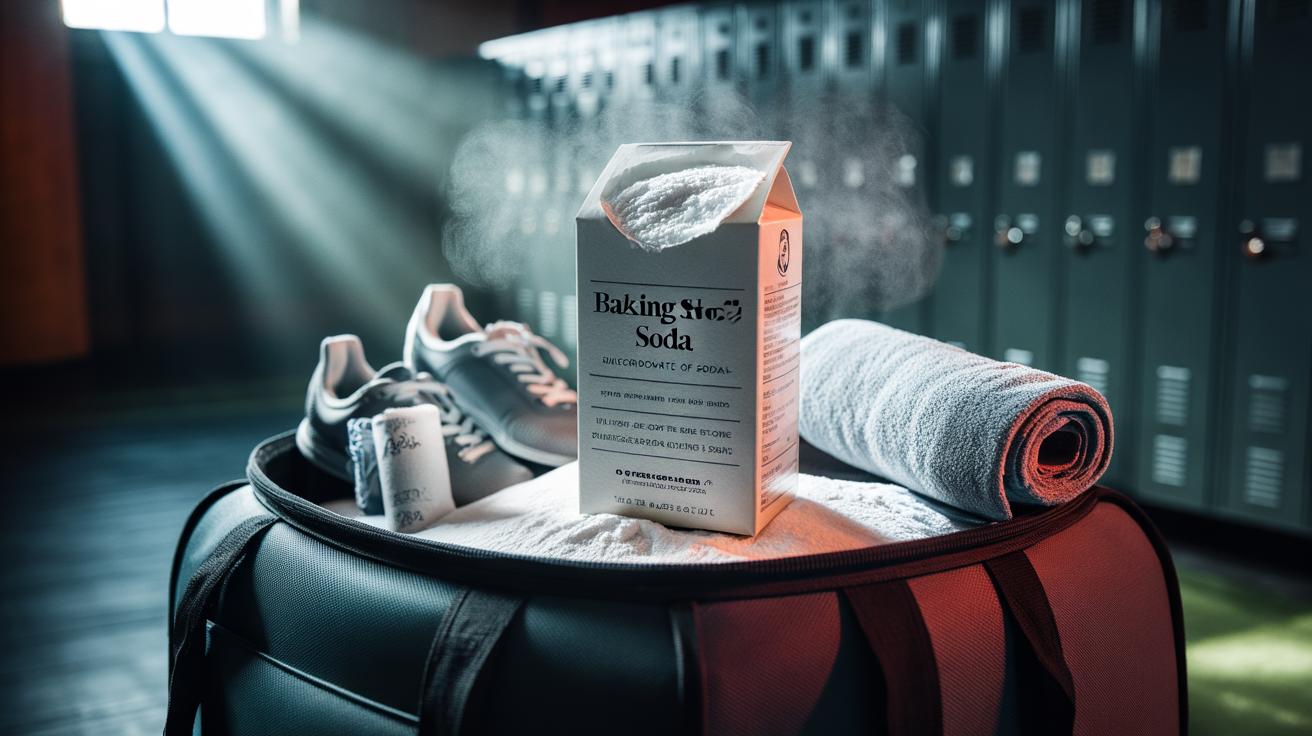
Every commuter who trains before work knows the truth: a clean kit can still leave a gym bag smelling like a locker room by Tuesday. The fix is disarmingly simple and wallet-friendly. Place an open box of baking soda—known in the UK as bicarbonate of soda—inside your bag and let chemistry do the heavy lifting. Rather than perfuming the problem, this everyday powder tackles the very compounds responsible for sweaty whiffs. Leave the box open, give it a stable corner or pocket, and it will quietly keep odours in check all week. Here’s how and why it works, and how to get the best from this humble household staple.
The Science Behind Odour Absorption
Sweat itself is mostly water and salt; the funk arises when skin bacteria break down residues into volatile fatty acids such as isovaleric and butyric acid, along with traces of ammonia. These small, smelly molecules travel easily through air and are readily trapped in fabrics. Bicarbonate of soda counters them on two fronts. Chemically, it performs gentle acid–base neutralisation, converting sharp-smelling acids into milder salts. It also buffers alkaline notes like ammonia, damping their bite and reducing their volatility.
Physically, bicarbonate’s porous crystalline structure offers abundant surface area that encourages adsorption—the clinging of odour molecules to particle surfaces—while the powder also wicks humidity that helps smells linger. Open surface area equals more capture, which is why an opened box works better than a sealed sachet. Because adsorption and neutralisation happen gradually, the effect persists across several days of use, steadily lowering the concentration of malodorous compounds in your gym bag’s microclimate without masking them with fragrance.
How to Use a Box of Baking Soda in Your Gym Bag
Pick a small cardboard box of bicarbonate of soda and open the top or punch several large holes. Place it upright in a side pocket or a stable corner so powder doesn’t spill onto damp kit. After each session, zip the bag but don’t cram in wet towels; let them dry separately. Airflow plus baking soda beats odours fastest. If your bag lacks a secure pocket, spoon the powder into a breathable muslin sachet or coffee filter sealed with an elastic band and tuck it into the lining. Give the box a gentle shake midweek to expose fresh crystals.
Replacement depends on use and moisture. For a single user training 3–5 times weekly, swap the box roughly every 3–4 weeks; for daily, sweat-heavy sessions, consider every 1–2 weeks. If the powder clumps or the odour returns quickly, it’s time. Bicarbonate of soda is fabric-safe, but avoid tipping it directly onto saturated leather. Remember, this is a deodoriser, not a detergent—keep laundering schedules for kit and shoes. Consistency is the secret to a truly odour-free bag.
| Setup | Amount of Baking Soda | Placement | Replace After | Notes |
|---|---|---|---|---|
| Standard gym bag | 200–250 g box | Side pocket, upright | 3–4 weeks | Shake weekly to refresh surface |
| Post-spin class damp bag | 250 g box + sachet | Corner + main compartment | 1–2 weeks | Dry towels separately |
| School locker | 150–200 g box | Rear shelf | 4 weeks | Pair with vent gap for airflow |
Week-Long Performance: What to Expect Day by Day
Day 1–2: the harsh, vinegary tang fades within hours as volatile fatty acids are neutralised and adsorbed. The bag smells “quieter,” not perfumed—an important distinction. Day 3–4: performance plateaus in the sweet spot; lingering odours from shoes and straps are kept in check, and the interior air feels drier thanks to moisture uptake. If you’ve added a fresh, dry T‑shirt, it will emerge without picking up that tell-tale stale note. Open the bag at home to give the powder and fabric a breather.
Day 5–7: still effective, though heavy users may notice faint returns after particularly sweaty sessions. Stir or tilt the box to expose new surfaces and check for clumping—signs of saturation. If odours spike after a rainy run or steam-heavy class, leave the bag unzipped overnight somewhere ventilated; the bicarbonate will recover in drier air. Persistent smells from soaked trainers indicate they need a separate treatment, not that the powder has “failed.” When freshness fades, replace rather than overfilling.
Beyond the Gym Bag: Small-Space Deodorising Tips
Trainers: tap 1–2 teaspoons of bicarbonate of soda inside each shoe, shake to distribute, and leave overnight; tap out before wearing. For leather or dark insoles, use a thin breathable sachet to avoid white dust. Lockers: park an open box on the top shelf and keep vents unobstructed for passive airflow. In the car boot, a low-profile box under the rear seat tames kit-day whiffs without adding fragrance. Keep the powder dry to keep it working.
Kit drawers and yoga mat bags also benefit from a small sachet tucked into a corner. Combine with routine drying: hang mats and gloves after use, then let the bicarbonate polish off the residual odour. For stubborn smells, pair with a small pouch of activated charcoal: charcoal grabs complex organics while baking soda handles acidic and basic notes. Replace each component on its own schedule and resist the urge to add scent—neutral beats masked every time.
For the price of a coffee, a simple baking soda box can keep your gym bag consistently odour-free, working quietly through commutes, office days, and evening sessions. It neutralises the cause, not the symptom, making sweaty gear easier to live with between washes and rescuing shared spaces from that lingering locker-room aura. Open the box, place it well, and refresh on a realistic schedule—that’s the whole playbook. Where could this low-tech, high-impact fix make the biggest difference in your routine: your main gym bag, your shoes, or the locker you dread opening on Monday morning?
Did you like it?4.5/5 (20)