In a nutshell
- 📰 Old newspaper quickly reduces new-shoe odours by trapping vapours in its porous cellulose fibres, acting as a fast, disposable deodorising filter.
- ⚗️ The science: a blend of adsorption and absorption targets VOCs; moisture films and diffusion across the paper’s high surface area speed up odour capture.
- 🛠️ How to use: loosely crumple sheets, create airflow channels, lightly fill toe to heel, and replace after 4–6 hours for stubborn smells; add silica gel in humid conditions.
- ⚖️ Alternatives: activated charcoal offers higher capacity over 24 hours; baking soda helps with acidic notes but can be messy—choose based on speed, reusability, and residue.
- 💡 Precautions: avoid glossy/coloured inserts to reduce ink transfer, buffer delicate leathers with tissue, and don’t seal shoes in plastic while deodorising.
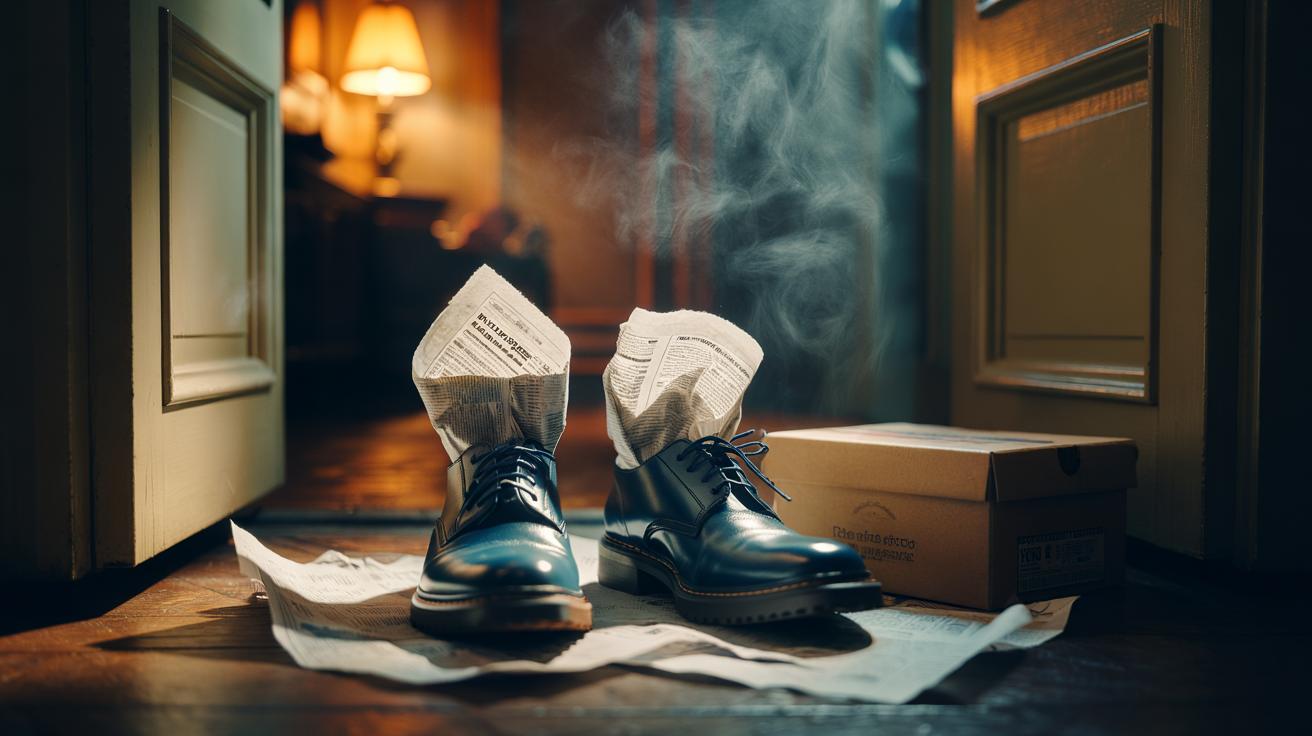
There’s an old-fashioned hack whispered on British doorsteps: tuck yesterday’s newspaper into new shoes and wake to a fresher pair. That comforting chemistry isn’t folklore. Newsprint’s fibrous matrix traps the sharp bouquet of factory glues, synthetic dyes and the plasticky tang from liners faster than many modern deodorisers. It works because paper is both thirsty and textured, pulling vapours and damp into its maze of pores, then locking them away. Overnight, a humble wad of paper can collapse the odour cloud that lingers around new footwear. Here’s how this budget trick works, why it’s quick, and how to use it safely without smudging ink across suede or drying out premium leather.
Why Newspapers Neutralise New Shoe Smell
New-shoe odour is a cocktail of volatile organic compounds (VOCs) from adhesives, plasticisers, foam cushions and synthetic uppers. Newsprint is made from uncoated cellulose fibres packed with microscopic voids and a dusting of mineral fillers. That rough, high-surface-area network grabs molecules through adsorption (binding to the surface) while its fibres also absorb moisture, which ferries odour molecules inward. The result is a fast-moving sink that drains vapours from the air trapped inside a closed shoe. Odour drops because the paper creates a steep concentration gradient and keeps pulling until the air equilibrates.
Newsprint’s softness matters. Loosely crumpled, it forms a lattice of pockets that air can circulate through, exposing more fibre to the vapours. This is why a handful of scrunched pages beats a tightly stuffed ball. The porous shoe box and breathable linings amplify the effect, venting the VOCs that the paper doesn’t catch. With laces opened and insoles slightly lifted, the internal volume becomes a mini scrubber, where paper works like a disposable filter—cheap, silent, and surprisingly swift.
The Science: Porous Fibres, Volatile Compounds, and Diffusion
Cellulose offers abundant hydroxyl groups, hotspots that physically attract polar odour molecules. Meanwhile, the sheer labyrinth of pores fosters diffusion: molecules bounce through air, collide with fibres, then stick. At modest humidity, a thin water film forms on paper, encouraging partitioning of soluble VOCs into that layer. Inside a shoe, warmth from your last wear accelerates motion, so molecules meet the paper sooner. The pairing of porous structure and gentle moisture is what makes newsprint exceptionally fast at pulling smells down.
Technically, we’re seeing both adsorption (surface binding) and absorption (bulk uptake). The former dominates early, delivering speed; the latter adds staying power. Capillary action wicks micro-droplets and sweat residues that can carry fragrances and plasticiser notes. If the paper becomes saturated, capacity falls—hence the advice to change the wad for stubborn odours. Compared with coated magazine pages, uncoated newsprint wins because it lacks a slick barrier, giving VOCs millions of places to land.
How to Use Paper Overnight
Crumple two to four sheets of newsprint per shoe, aiming for a springy handful rather than a tight plug. Loosen laces, pull the tongue forward, and lift the insole a few millimetres to create air channels. Pack the toe box lightly, then fill the midfoot and heel so paper touches all interior surfaces without compressing them. Contact plus airflow is the winning combination. For fresh-from-the-box intensity, replace the paper after 4–6 hours and repeat once more.
Mind the ink. Standard black newsprint is fine for dark linings, but avoid heavily coloured or glossy inserts that can transfer dye, especially on pale leather or knit uppers. If the shoes feel damp, pre-dry them at room temperature; waterlogged fibres slow adsorption. Add a sachet of silica gel if humidity is high, or pair the paper with a brief airing near (not on) a radiator.
Rule of thumb: 1–2 issues of paper will service a family’s weekly shoe rotation. For sensitive materials—veg-tan leather or raw suede—wrap a single layer of plain tissue around the newsprint as a buffer. And remember, don’t seal shoes in a plastic bag while deodorising; you’ll trap VOCs and stall the gradient that drives them into the paper.
Comparing Paper, Charcoal, and Baking Soda
Old newspaper is superb for speed and coverage, but it isn’t the only option. Activated charcoal bags beat everything for pure capacity, though they cost more and work best over 24 hours. Baking soda neutralises acidic notes but needs exposure and careful cleanup. The snapshot below helps you match method to the job.
| Method | Speed (Overnight) | Reusability | Mess Risk | Best For |
|---|---|---|---|---|
| Old newspaper | Fast | Single use | Low (ink on light linings) | New-shoe VOCs, general stale air |
| Activated charcoal | Moderate–fast | High (recharge in sun) | Very low | Persistent odours, repeated use |
| Baking soda | Moderate | Single use | Moderate (powder residue) | Acidic notes, fridge-like freshness |
If you need a quick rescue before a commute, go paper; for gym shoes that stew weekly, invest in charcoal inserts. For delicate fabrics, place soda in a breathable sachet to avoid dusting. The smartest routine pairs newspaper for rapid knockdown with a slower, reusable medium for maintenance. That way, you cut the sharp new-shoe tang overnight and keep it from creeping back.
From the fibres up, newsprint is a mini chemistry lab that trades pennies for performance. Its porosity, gentle moisture affinity and flexible structure make it a natural sink for the VOCs that shout “brand new”. Used thoughtfully—with loose crumpling, ink awareness and a timely refresh—it turns a box-fresh pair into a ready-to-wear companion by morning. The trick is simple: maximise contact, preserve airflow, and give the paper time to drink the scent away. What other low-tech household materials should we be testing for fast, fabric-safe odour control in busy British homes?
Did you like it?4.5/5 (30)