In a nutshell
- 🍋 A cut lemon quickly erases onion odour as its citric acid protonates smelly sulphur compounds, reducing volatility and rinsing away easily.
- 🧅 The smell clings because onions release thiols, sulphides and thiosulfinates that lodge in pores and micro-grooves; wood absorbs most, while plastic traps residue in knife scars.
- 🧂 For best results: wash off grease, scrub with lemon and coarse salt, keep contact time 60–90 seconds, rinse and thoroughly dry; oil wood boards afterwards.
- 🧪 Effective alternatives include 2–5% citric acid solution, vinegar, lime, or brief hydrogen peroxide use; stainless “soap” helps for hands.
- ⚠️ Avoid acid on marble/stone (etching risk) and never mix with bleach; rotate boards and maintain surfaces to curb future odours.
There’s a simple kitchen trick that feels like a tiny miracle: rub a cut lemon across your chopping board and the stubborn onion smell vanishes. The science is elegant and immediate. Acid protonates and tames sulphur-based odour molecules in seconds, while the fruit’s natural oils add a bright, clean aroma. This article explains what’s happening at a molecular level, why different boards trap smells differently, and how to get consistently fresh results with a single citrus half. You’ll also find lab-informed alternatives when you’re out of lemons, and a few pitfalls to avoid so your tools stay safe, sanitary, and sweet-smelling.
Why Onions Leave a Stubborn Smell
When you slice onions, cells rupture and the enzyme alliinase converts precursors into reactive sulfenic acids, which quickly form thiosulfinates. Some break down into potent thiols and sulphides. These sulphur compounds are superb at clinging to surfaces, especially where oils and microscopic scratches give them shelter. The odour persists not because it is strong alone, but because it is chemically “sticky”, nesting inside pores and binding to trace metals on the board.
Board material matters. Wood is naturally porous, absorbing aromatics into capillaries; it also contains tannins that can interact with odours. Plastic collects micro-grooves from knife work that trap residues like a record’s grooves hang onto dust. Bamboo, harder and denser, resists a bit better but still harbours smells along glued seams. Any residual fat from chopping cheese or meat can act like a sponge, prolonging onion notes.
Water alone struggles because these molecules are partly hydrophobic and anchored by weak bonds. Detergent helps lift grease, but the sulphur species often survive. To reset the surface quickly, you need a chemical nudge that changes the odour molecules themselves. That is where a lemon’s acidity excels.
How Lemon Acid Neutralises Sulphur Compounds
The juice of a lemon is rich in citric acid (plus a touch of ascorbic acid), clocking a pH near 2. On contact, protons from the acid protonate thiolates and related sulphur species that cause the onion stench. This protonation shifts their volatility and reactivity, making them less odoriferous and easier to rinse away. The effect feels instant because the acid-base reaction is instant, taking place as you rub the cut fruit across the board.
There’s more: the juice’s mild oxidising action promotes conversion of smelly thiols into less pungent disulphides, while citric acid chelates trace metals that can catalyse stubborn sulphur notes. Meanwhile, lemon peel releases d‑limonene, a fragrant terpene that adds a fresh top note. The combination of chemical neutralisation, light oxidation and pleasant masking is why a lemon half regularly outperforms soap alone.
Because the mechanism targets the sulphur chemistry, it works across materials—from wood to plastic—without heavy scrubbing. A minute of contact is usually enough to neutralise the smell at its source, provided the surface is physically clean of food residues.
Step-By-Step: Deodorise Your Board with a Lemon Half
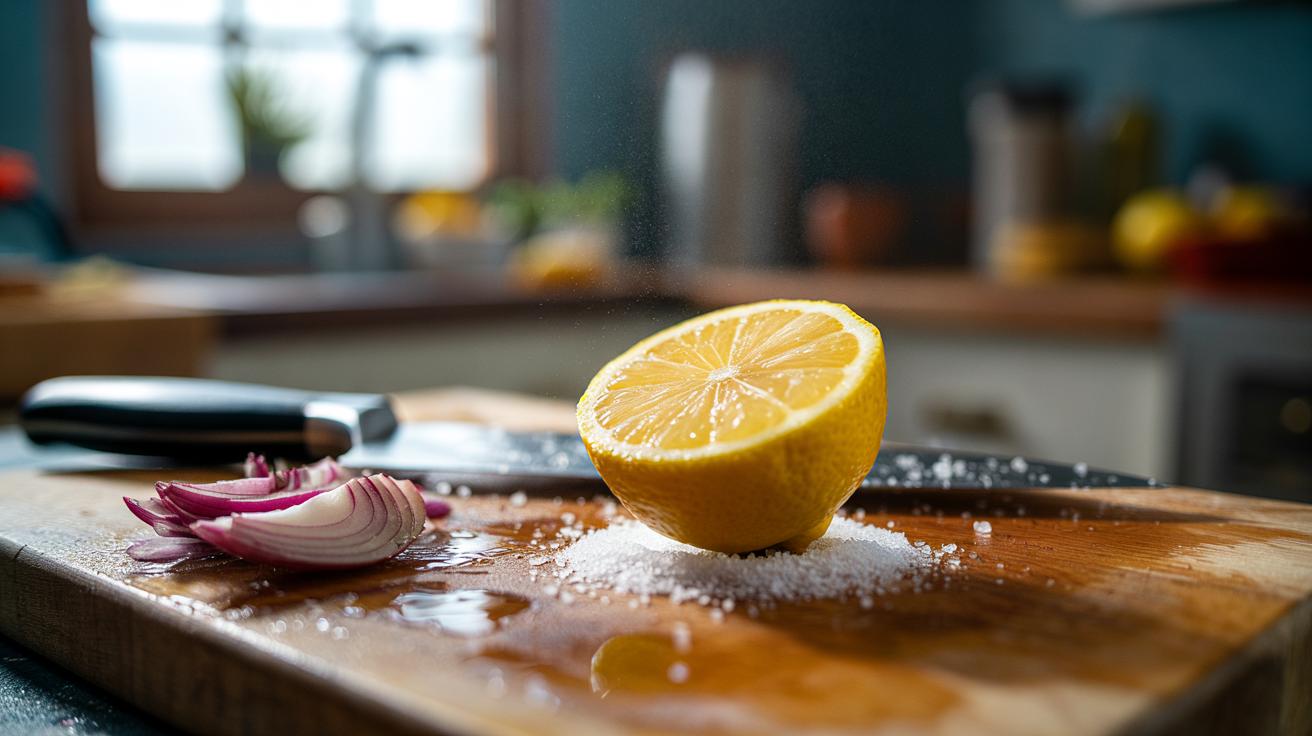
1) Rinse the board with hot water and a dab of detergent to remove grease. 2) Halve a fresh lemon. 3) Sprinkle coarse salt onto the damp surface. 4) Scrub with the cut lemon, letting the salt act as a gentle abrasive that pushes juice into micro-grooves. Keep the surface visibly wet with juice for 60–90 seconds to allow the acid to work.
For wood, wipe off the slurry, rinse quickly, then dry upright. Once fully dry, condition occasionally with food-safe mineral oil to seal pores and slow future odour uptake. For plastic, a hotter rinse is fine; the lemon step helps refresh boards that smell even after the dishwasher. Repeat if you cooked particularly pungent alliums or garlic.
Avoid leaving lemon on marble or natural stone, which acid can etch. Don’t pair lemon with bleach. If the board is heavily scarred, consider resurfacing or replacing: no deodoriser can fully overcome deep, grease-filled cuts. Store dry and well ventilated to keep odours from rebounding.
Evidence and Alternatives from the Kitchen Lab
Home tests and food-science literature point to consistent wins for acidic rinses. Citric acid solutions at 2–5% rival fresh lemon while being cheaper and consistent. Vinegar (acetic acid) works, though some detect a residual tang. Lime performs like lemon. A brief wipe with 3% hydrogen peroxide can oxidise odours, but rinse promptly and avoid repeated use on wood. Stainless-steel “soap” bars adsorb thiols at the surface, a useful stopgap when citrus is missing.
Choose based on your material, tolerance for scent, and availability. The table below summarises what works best and where. Whichever route you pick, start with clean, grease-free boards, give the chemistry a minute, and dry thoroughly. Drying is half the battle: odours reappear in damp, unventilated fibres. For frequent onion prep, rotate boards and condition wood to reduce porosity over time.
| Material | Onion Odour Retention | Best Treatment | Notes |
|---|---|---|---|
| Wood | High (porous) | Lemon + coarse salt; oil after drying | Quick rinse; avoid long acid soaks |
| Plastic | Medium–High (micro-grooves) | Lemon or 2–5% citric acid | Hot rinse; periodic resurfacing helps |
| Bamboo | Medium | Lemon; light oiling | Mind glued seams |
| Marble/Stone | Low | Vinegar/citric acid: avoid | Acid can etch; use mild detergent |
| Stainless Steel | Low | Rinse; steel “soap” for hands | Adsorbs thiols on the surface |
Next time onion fumes linger, reach for a lemon half. Its citric acid neutralises sulphur volatiles, the rind’s aroma brightens the board, and the whole process takes less than two minutes, no harsh chemicals required. Simple acid-base chemistry turns a nuisance into a quick fix, and a little care—clean, contact time, thorough drying—keeps results reliable. If you’ve tried alternatives like vinegar rinses, steel “soap,” or citric-acid solutions, which worked best on your boards, and how might you tweak the routine for your kitchen and its favourite ingredients?
Did you like it?4.5/5 (22)