In a nutshell
- 🧪 Activated carbon curbs damp via adsorption in micropores and capillary condensation, binding water vapour and odours; gentle heat releases moisture, making pouches reusable.
- 🧥 UK wardrobes trap moisture as warm air meets cool walls at the dew point; tight packing limits airflow, raising relative humidity—a charcoal bag smooths these peaks.
- 📦 Choose breathable pouches with bamboo/coconut activated carbon; size wisely (e.g., 200–300 g for a single wardrobe), place high/central, and avoid dead corners or wet garments.
- ☀️ Recharge in sunlight or an airing cupboard every few weeks; expect 1–2 years of service. Carbon is non-toxic; don’t wash—repurpose spent media as biochar or dispose.
- 📉 Treat it as a microclimate tool, not a fix for leaks: add spacing and ventilation, monitor with a hygrometer, and use a dehumidifier for persistent or structural damp.
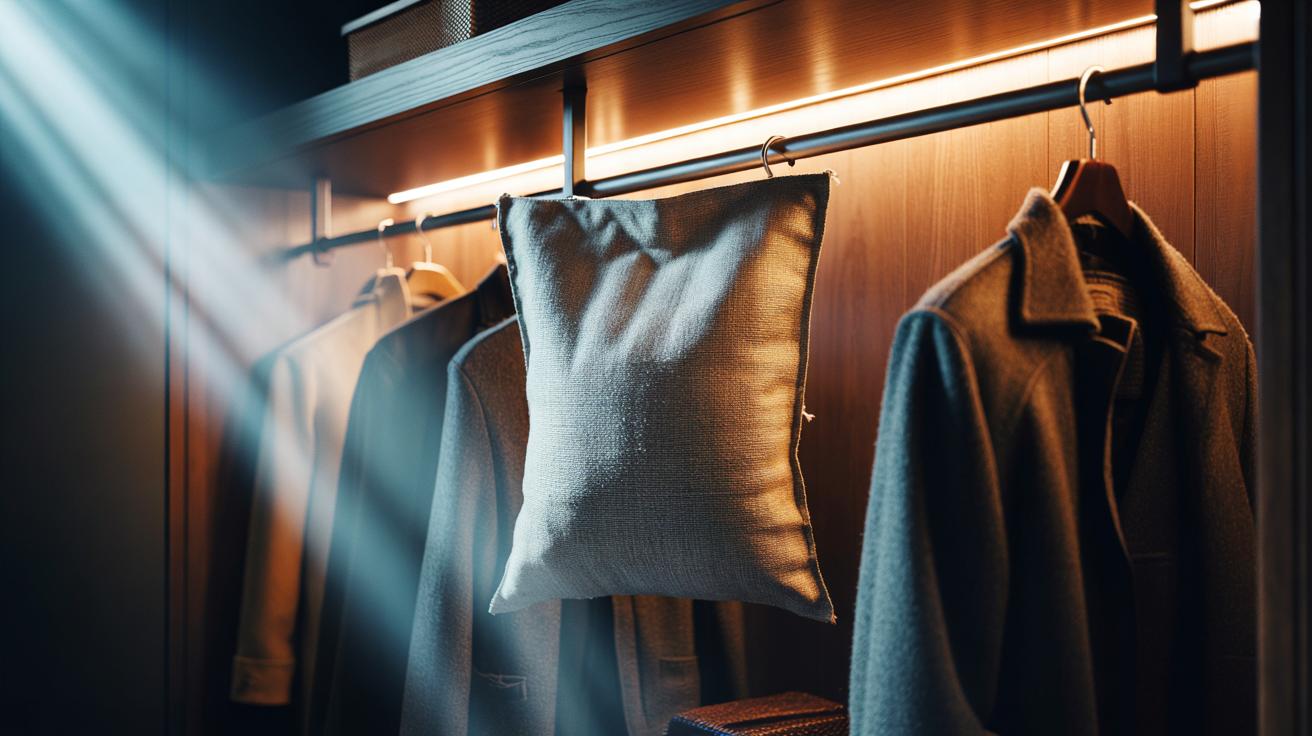
Condensation creeps into British wardrobes with the stealth of a sea mist: cool walls, packed rails, and little airflow quickly invite musty odours and sneaky damp. That’s why many households reach for a charcoal bag filled with activated carbon, a simple, reusable pouch that quietly scavenges moisture and smells. Unlike disposable crystals, it works by physics rather than chemicals, capturing water vapour and volatile compounds on its vast internal surface. Used correctly, a quality charcoal bag can nudge a stuffy wardrobe back below the mould-friendly humidity zone, buying precious breathing space for woollens, leather and linen while keeping energy bills in check.
How Activated Carbon Traps Moisture
Activated carbon is riddled with micropores, creating an immense internal surface area—often well over 1,000 m² per gram. Water molecules adhere to these surfaces through adsorption (not absorption), a process governed by weak van der Waals forces. As relative humidity rises inside a closed wardrobe, the pores host layers of water molecules and, in smaller pores, encourage capillary condensation. Put simply: activated carbon doesn’t “soak up” liquid; it binds vapour inside a labyrinth of pores, smoothing the spikes in humidity that let mould take hold.
Those same pores also cling to odour-causing VOCs from shoes, dry-cleaning solvents and fragrances, improving air freshness while tackling damp. Because adsorption is reversible, gentle heat and airflow can release the trapped vapour, readying the carbon to work again. That reusability is the secret to a charcoal bag’s value: reliable moisture moderation without consumables or mains power, ideal for small enclosed spaces where a powered dehumidifier is impractical.
Why Wardrobes Get Damp in the UK
In Britain’s temperate, often humid climate, wardrobes hug exterior walls that run cooler than indoor air. Open the door, and warm, moisture-laden air meets a cold interior, driving condensation as it crosses the dew point. Packed rails restrict circulation, so vapour lingers, and natural fibres—wool, silk, cotton—act like gentle sponges. In a small, unventilated wardrobe, even a 10% rise in humidity can push conditions into the mould-growth zone, especially after showers, cooking, or drying laundry indoors.
Simple behaviour multiplies risk: doors kept shut for days, garments stored before fully dry, and shoes placed in dark corners. Basements and north-facing rooms stay cooler, compounding the problem. A charcoal bag can help by moderating peaks, but it works best alongside basics: a little spacing between hangers, occasional airing, and swift removal of damp items. Treat the wardrobe like a tiny room—control humidity, add airflow, and damp becomes manageable.
Choosing and Using the Right Charcoal Bag
Look for activated bamboo charcoal or coconut-shell carbon in breathable linen. Size matters: the more grams of carbon, the more pore volume available for adsorption. For a single wardrobe, 200–300 g is a sensible minimum; larger spaces benefit from 500 g or more, or multiple pouches spaced apart. Place the bag high and central where air circulates—avoid cramming it into a dead corner or sealing it in plastic. Hangers or hooks work well; keep it away from direct wet contact and freshly laundered steam.
Recharge by warming in sunlight or a bright windowsill for a few hours each month; gentle heat drives off adsorbed moisture. In winter, use a dry, warm spot like an airing cupboard. Don’t expect a charcoal bag to cure structural damp or leaks—it’s a microclimate tool, not a building fix. Pair it with a door left ajar occasionally and sensible spacing, and it earns its keep.
| Wardrobe Volume | Typical Bag Size | Quantity/Coverage | Recharge Guide |
|---|---|---|---|
| 0.5–1 m³ (single) | 200–300 g | 1 bag | Every 3–4 weeks |
| 1–2 m³ (double) | 500 g | 1 large or 2 × 200 g | Every 2–3 weeks |
| 2–4 m³ (walk-in) | 1 kg | 1–2 bags | Every 2 weeks |
| Shoe cupboard | 75–150 g | 1 small pouch | Monthly |
Care, Regeneration, and Safety
A good pouch should last 1–2 years if recharged regularly. To regenerate, leave it in direct sun or a warm, dry spot for 2–4 hours per side; the heat releases adsorbed vapour and odours. Use a small hygrometer in the wardrobe to confirm humidity sits below 60%; if it creeps higher, add a second bag or recharge more often. Do not wash the pouch—water floods the pores. If saturated by a spill, dry thoroughly and assess performance.
Activated carbon is non-toxic and scent-free, a low-risk option around clothes, though the pouch should be kept away from pets or toddlers who might chew it. It can also polish the air by picking up odours and some VOCs, improving freshness without fragrance. When its performance fades, many brands suggest cutting it open and mixing the spent carbon into soil as a form of biocharFor persistent, visible damp, investigate ventilation and insulation, and consider a powered dehumidifier.
Used with a light touch—recharged monthly, sensibly placed, and teamed with modest ventilation—a charcoal bag offers a quiet, affordable defence against wardrobe damp. It stabilises humidity peaks, softens musty notes, and preserves fabrics without electricity or consumable salts. The trick is to treat it as part of a moisture strategy rather than a miracle cure, confirming progress with a pocket hygrometer and adjusting bag size to the space. Where in your home could a well-placed charcoal bag and a breath of airflow make the biggest difference this season?
Did you like it?4.6/5 (27)