In a nutshell
- 🧼 The baking soda paste works via gentle abrasion and mild alkalinity, loosening sweat, sebum, and odours without damaging fibres.
- 🧪 Follow the method: pre-wet collar, mix a 3:1 ratio (bicarb:water), add a drop of detergent for oils, massage lightly, dwell 10–20 minutes, rinse, then launder—avoid neutralising with vinegar.
- 👔 Fabric matters: cotton tolerates micro-scrub; silk and wool need dilution and no scrubbing—always do a colourfast test and shorten contact time on dark or delicate weaves.
- ✨ For stubborn/yellowed stains, combine with oxygen bleach (colour-safe) or a cautious dab of hydrogen peroxide (3%); enzymes help with sweat proteins.
- 🚫 Common pitfalls: over-scrubbing, letting paste dry to a crust, hot pre-treatments, chlorine bleach, and poor rinsing—light, consistent maintenance keeps collars crisp.
The stubborn ring-around-the-collar is a cocktail of sweat salts, body oil, dead skin, and deodorant residue that bonds to fibres and dulls once-crisp shirts. A quick, low-cost fix sits in most kitchen cupboards: a baking soda paste that relies on gentle abrasion and mild alkalinity to lift grime without damaging fabric. Damp the collar, smooth on a spreadable paste, and work it lightly; you’ll watch the greyness give way. Go softly and let the chemistry do the heavy lifting. Used correctly, this micro-scrub tackles odour and discolouration fast, rescuing workwear and preserving sharp collars between washes.
Why Baking Soda Paste Works
At the heart of the method is sodium bicarbonate’s modest pH and fine particle size. The powder’s grains act as a micro-abrasive, loosening films of sweat and sebum without the gouging effect of harsher scouring agents. Its mild alkalinity (around pH ~8.3) helps break down fatty acids that glue grime to fibres, especially when teamed with a drop of detergent that emulsifies oils. Because it’s a buffer, baking soda nudges soils off fabric while staying gentle enough for routine use. It also helps tame odour by neutralising acidic sweat components and absorbing volatile smells lingering at the collar edge.
This synergy—light abrasion plus chemistry—matters where collars crease and trap debris. As you massage the paste on a damp collar, those tiny particles wedge between fibres and residues, lifting the film so it can rinse away. That’s why a few minutes’ dwell can transform a tired shirt. For most cotton and cotton-blends, it’s safe, repeatable, and kinder than aggressive spot-bleaches that can roughen yarns and accelerate fraying. Think of it as controlled polishing for fabric: effective, quick, and low risk.
Step-by-Step Method for Fast Results
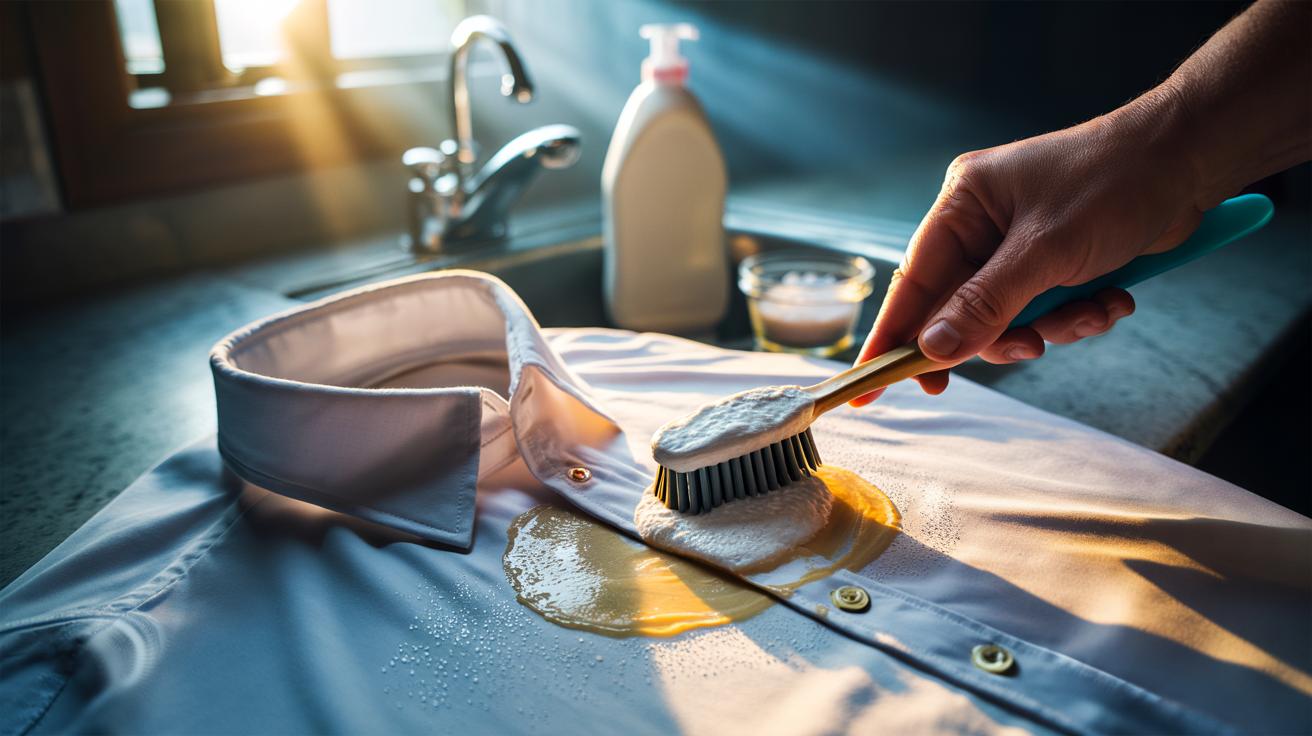
First, pre-wet the collar with cool water; this swells fibres and softens build-up. Mix a spreadable paste using 3 parts baking soda to 1 part water. For heavy body oil, add one small drop of washing-up liquid to the paste. Apply a thin, even layer along the inside edge where discolouration is most visible. Always test on an inconspicuous seam to check colourfastness before full application. Gently massage with your fingertips or a soft-bristled toothbrush, moving with the grain of the fabric to avoid fuzzing.
Let it sit for 10–20 minutes; don’t let it dry rock-hard, which can make rinsing harder. Rinse thoroughly, then launder as usual at 30–40°C with a quality detergent. For stubborn marks, repeat once more before washing. Yellow patches linked to antiperspirant aluminium salts may need a booster: try a brief pre-soak with an oxygen bleach product (colour-safe, non-chlorine) before the paste step. Do not mix baking soda directly with vinegar on the stain—neutralisation blunts cleaning power before it begins.
Fabric-Specific Advice and Timing
Not all collars are equal. Cotton poplin and oxford weaves welcome the micro-scrub; delicate fibres need more care. For mixed fibres with elastane, go lighter on pressure and shorten dwell time. Silk and wool respond poorly to abrasion and alkalinity; treat with diluted detergent only, blot, and consult specialist care if in doubt. When in doubt, shorten contact time and reduce paste grit by adding more water. Dark, reactive dyes can sometimes bloom or lift, so keep tests brief and rinse promptly.
Use contact time strategically: fresh marks lift quickly; older, oxidised grime may need two cycles. If you ironed the stain previously, it may be heat-set; add a colour-safe oxygen bleach soak before the paste. After treatment, a cool rinse and air-dry let you judge progress before committing to higher heat in a tumble dryer or under an iron. Patience plus light touch wins over brute force every time.
| Fabric | Pre-Test Advice | Paste Ratio | Dwell Time | Notes |
|---|---|---|---|---|
| Cotton / Cotton-Blend | Check seam for colour run | 3:1 (bicarb:water) | 10–20 mins | Light brush OK; repeat if needed |
| Polyester / Performance | Test for sheen change | 3:1, add drop of detergent | 8–12 mins | Avoid heat before stain is gone |
| Silk / Wool | Patch test essential | Very dilute or avoid | 2–5 mins max | Prefer specialist care; no scrubbing |
Mistakes to Avoid and Smarter Variations
Common errors start with enthusiasm: over-scrubbing fuzzes fibres, and letting paste dry to a crust can lock particles into the weave. Keep the surface slightly damp and use minimal pressure. Don’t jump straight to chlorine bleach; it weakens cellulose and wrecks protein fibres. Skip hot water at the pre-treatment stage, which can set proteinaceous stains. Avoid cocktail cleaning: vinegar neutralises bicarbonate; ammonia or chlorine are unsafe and unnecessary here. Rinse thoroughly so residual grit doesn’t abrade in the wash.
For yellowed collars tied to antiperspirant build-up, pair the paste with a short oxygen bleach soak or a 1:1 mix of baking soda and 3% hydrogen peroxide dotted directly on the mark, followed by a normal wash—test first on colours. A drop of enzyme detergent helps digest sweat proteins before the paste’s gentle abrasion lifts residues. Post-wash, press collars with steam rather than scorching heat. Consistent, light maintenance beats occasional heavy-handed rescues.
Used with a calm hand, a simple baking soda paste revives collars quickly, cheaply, and kindly, preserving fabric life while restoring crisp lines and a freshly laundered look. It’s the rare household fix that stands up to newsroom testing: repeatable, safe for most shirts, and effective against the classic grime line. Build a routine—brief pre-treat, short dwell, thorough rinse—and you’ll rarely face stubborn staining again. What small tweak could you add to your laundry ritual this week to keep every collar looking newsroom-ready?
Did you like it?4.3/5 (23)