In a nutshell
- 🔬 Even a “used” dryer sheet retains fragrance microcapsules and volatile compounds that fabrics repeatedly adsorb and release, maintaining a gentle scent for weeks.
- 🗄️ A closed drawer’s microclimate concentrates aroma; place the sheet in a breathable pouch at the back or bottom and avoid direct contact with silk, cashmere, or performance fabrics.
- 🧭 Practical setup: 1 used sheet for small drawers, 1–2 for larger; refresh every 4–8 weeks, pair with bicarbonate of soda for odour control, and scrunch sheets to revive scent.
- 🛡️ Safety first: pick hypoallergenic or unscented options if sensitive, keep away from infants’ clothes and flame-retardant garments, and ventilate if concerned about VOCs.
- 🌿 Greener choices include cedar, lavender sachets, soap slivers, and essential-oil tins; seek biodegradable sheets and use a barrier to prevent staining.
Open a drawer months after laundry day and the garments still whisper clean. The trick many swear by is hiding a dryer sheet—even one already used—among folded tees or knitwear. That leftover scent seems to work like magic. In truth, it’s a blend of chemistry, airflow, and fabric behaviour that extends freshness far beyond the tumble cycle. A sheet’s residual fragrance oils and softening agents slowly migrate into fibres, then gently off-gas in the still air of a closed drawer. A tiny amount of perfume, released very slowly, can scent an entire stack for weeks. Here’s how it works, how to place it smartly, and when to choose subtler alternatives.
The Chemistry Behind That Lingering Scent
Most dryer sheets carry quaternary ammonium compounds that soften and reduce static. Alongside them sit fragrance microcapsules or adsorbed oils that cling to the sheet and, later, to your garments. Heat and friction in the dryer burst some capsules, but not all. Even a “spent” sheet retains volatile compounds that evaporate slowly at room temperature. A single exhausted sheet can still perfume a drawer for weeks because trace volatiles keep diffusing. Those molecules settle into textile pores and onto fibre surfaces, then re-release as ambient conditions shift.
Textiles are superb reservoirs: cotton, modal, and viscose absorb fragrant molecules, while synthetics bind them to the surface. This creates a gentle cycle of adsorption and desorption, especially with minor temperature or humidity changes. Scrunching the sheet re-exposes trapped scent. Mixes often include base notes—musk, woods—that linger longest, giving the impression of lasting cleanliness even as lighter top notes fade.
Drawer Dynamics: Why Small Spaces Supercharge Freshness
Open air strips fragrance quickly; drawers do the opposite. In a closed space with limited ventilation, perfume concentrations rise until a soft equilibrium forms between the sheet, the fabrics, and the air. The confined microclimate is the unsung accelerator that keeps clothes smelling newly laundered. The low airflow slows diffusion to the outside world, so what leaves the sheet mostly stays in the drawer. Folded stacks also trap scent between layers, moderating release and protecting it from sunlight and heat that break down aromatics.
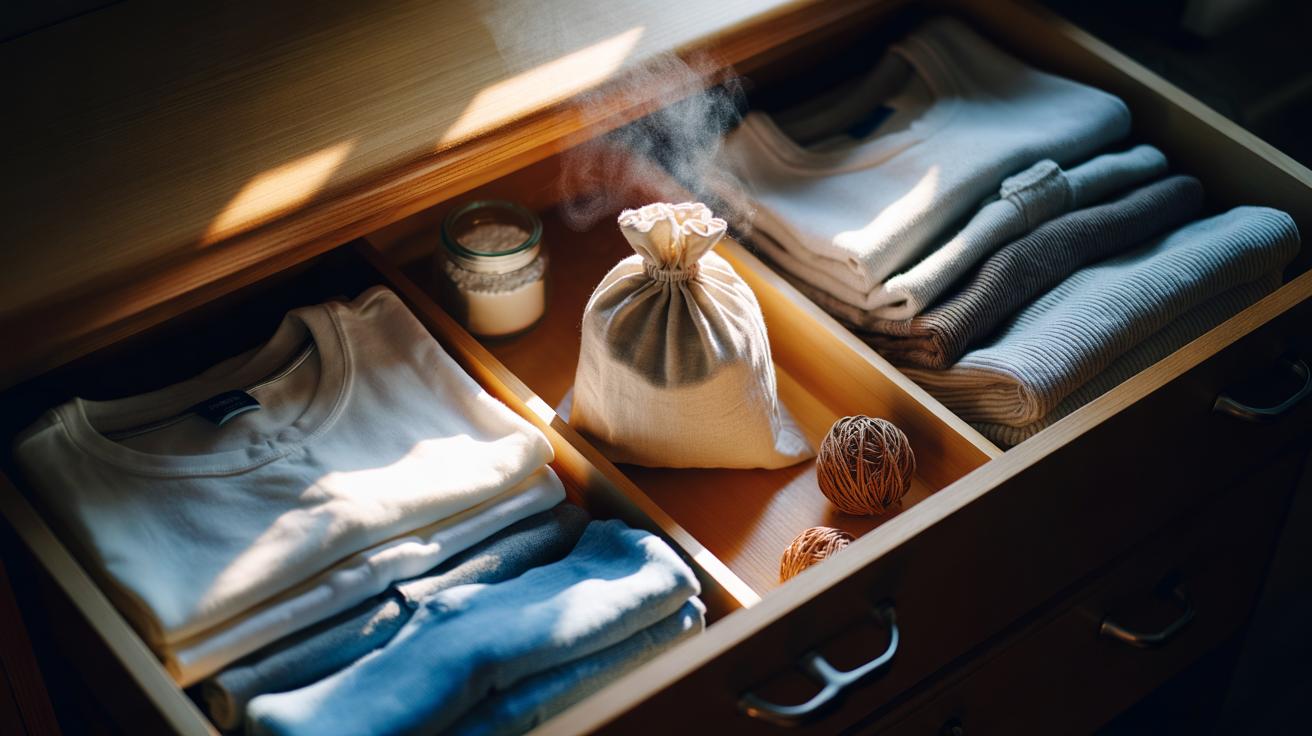
Placement matters. Slide the sheet in a breathable barrier—think a perforated envelope or a small cotton pouch—then tuck it at the back or bottom of the drawer. This prevents direct transfer of waxy softeners that can mark delicate weaves. Avoid nestling sheets against silk, cashmere, or technical sports fabrics; these can show residue or experience diminished moisture-wicking. If you can smell it when the drawer opens but not across the room, the balance is about right.
Practical Tips: Where, When, and How to Use Dryer Sheets in Drawers
Start with one used sheet per small drawer or two for deeper chests. If you prefer a gentle profile, cut the sheet into halves and place them in opposite corners. Slip each piece into a thin muslin bag or coffee filter to avoid direct contact. Refresh the setup every four to eight weeks, depending on climate, and give the sheet a quick scrunch before returning it. For odour-prone drawers, pair the sheet with a small open jar of bicarbonate of soda to neutralise mustiness while the fragrance adds the finishing touch.
Revive a fading sheet by leaving it in a sunny room (not on fabric) for an hour to warm the oils, then return it to the drawer. Keep a light hand: more sheets do not equal better results; they just raise the risk of residue. For children’s clothing or sensitive skin, choose hypoallergenic or fragrance-light sheets and always use a barrier pouch.
| Drawer Size | Sheets (Used) | Expected Freshness | Notes |
|---|---|---|---|
| Small (underwear/tees) | 1 | 3–6 weeks | Place in a pouch at the back |
| Medium (jumpers/jeans) | 1–2 | 4–8 weeks | Split sheet halves to opposite corners |
| Large (linen drawer) | 2 | 6–10 weeks | Add bicarbonate for musty cupboards |
Safety, Sustainability, and Sensible Alternatives
Not everyone tolerates synthetic perfumes. If you experience irritation, choose unscented or hypoallergenic sheets, or swap to natural aids. When in doubt, use a barrier pouch so the sheet never touches fabric. Keep away from infants’ clothing, and avoid use with flame-retardant-treated garments, where softeners may reduce performance. Ventilate rooms during first use if you’re sensitive to volatile organic compounds (VOCs). For a lighter footprint, note that many sheets use polyester substrates; seek biodegradable options or reusable scent sachets.
Elegant alternatives work surprisingly well: cedar balls repel moths and add a dry, woody note; dried lavender sachets bring calm; soap slivers wrapped in muslin yield a gentle, soapy aura; baking soda absorbs stale odours without fragrance. Oil-infused cotton pads (a few drops of essential oil) in a lidded tin with pinholes give customisable strength, though essential oils can stain, so maintain that barrier. Choose the mildest method that achieves the freshness you want.
That spare dryer sheet in the drawer isn’t sorcery; it’s a quiet collaboration between chemistry, fabric, and space. Handle placement with care, keep it away from delicate fibres, and refresh on a modest rotation to avoid buildup. For households with sensitivities, barrier pouches and low-VOC choices strike the right balance. If you prefer a natural route, cedar, lavender, and soda offer dependable freshness without the gloss of synthetic notes. What blend of method and scent profile would best reflect your wardrobe and the way you like your clothes to smell when the drawer slides open?
Did you like it?4.6/5 (21)