In a nutshell
- 🪵 Boiled linseed oil penetrates fibres and polymerises in situ, muting scratches and enriching grain for a warm, low-lustre glow without a plastic film.
- 🧰 Success hinges on prep: clean, de-wax, lightly sand 180–240 grit, remove dust, and test for colour shift on a hidden spot before committing.
- 🧪 For a rinse, thin oil ~1:1 with white spirit, apply sparingly, wait 10–15 minutes, then wipe all surplus; allow 12–24 hours to cure and favour two thin coats over one heavy coat.
- 🔄 Choose alternatives as needed: Tung oil for tougher water resistance, hardwax oil for balanced durability, and mineral oil for food-contact boards.
- 🔥 Prioritise safety and care: lay flat or soak oil rags to prevent self-heating, ventilate, consider low-VOC thinners, and refresh with a light coat when sheen fades.
From scuffed worktops to parched oak banisters, dull timber tells a story of hard use. A humble boiled flaxseed rinse—an old-world trick championed by cabinetmakers—can bring lifeless grain back to a warm glow without the plastic glare of varnish. Because boiled linseed oil penetrates and polymerises inside the fibres, it deepens colour, adds soft sheen, and resists everyday splashes. The method is straightforward and kind to most species, from pine to ash. When applied correctly, a thin oil rinse revives wood swiftly and safely. Below, we unpack the science, the preparation, the application, and when alternatives make better sense.
What Boiled Flaxseed Oil Actually Does
A boiled flaxseed oil rinse works by soaking into the timber’s capillaries before curing into a flexible network. Modern “boiled” linseed oil isn’t literally boiled; it’s heat-treated and includes trace metal driers so it sets far faster than raw flax oil. As oxygen links the oil’s fatty acids, they form a microscopic polymer within the wood. That polymer subtly hardens surface fibres, mutes scratches, and raises a mellow, amber tone. The effect is optical as well as physical: filling micro-voids reduces scatter, so grain appears richer and more continuous.
Because it cures within the wood rather than on top, a rinse preserves tactile authenticity. It is not a heavy armour; instead, think of it as restorative skincare for timber. Boiled linseed oil differs from raw linseed oil in speed and from polyurethane in feel: it dries in hours, not days, and avoids a plasticky film. Expect a hand-rubbed glow, improved water beading, and a revived patina—without disguising the wood’s character. For high-wear floors, it can act as a base before a harder topcoat.
Preparing Tired Timber for an Oil Rinse
Preparation determines the finish. Begin with a clean surface: dust thoroughly, then wash sticky areas with diluted soap or a dedicated wood cleaner. For old wax or silicone, wipe with low-odour mineral spirits and let it flash off. Once dry, abrade lightly with 180–240 grit following the grain to knock back raised fibres and blend minor scuffs. Remove all sanding dust with a vacuum and a tack cloth. Always test the oil on an inconspicuous spot to preview colour shift, especially on pale species like maple or contemporary ash where ambering is more visible.
Repair before finishing. Fill small dings with a compatible wood filler and level after curing. Mask adjacent materials—stone, paint, fabrics—to protect from oil smears. Ensure timber is dry to the touch and free of cold condensation; oil hates damp. Good lighting helps you catch swirl marks or residue that can show under a renewed sheen. The better the surface preparation, the more even the penetration and the longer the refresh will last. Keep the room ventilated and dust-free for the next steps.
How to Mix and Apply a Boiled Flaxseed Rinse
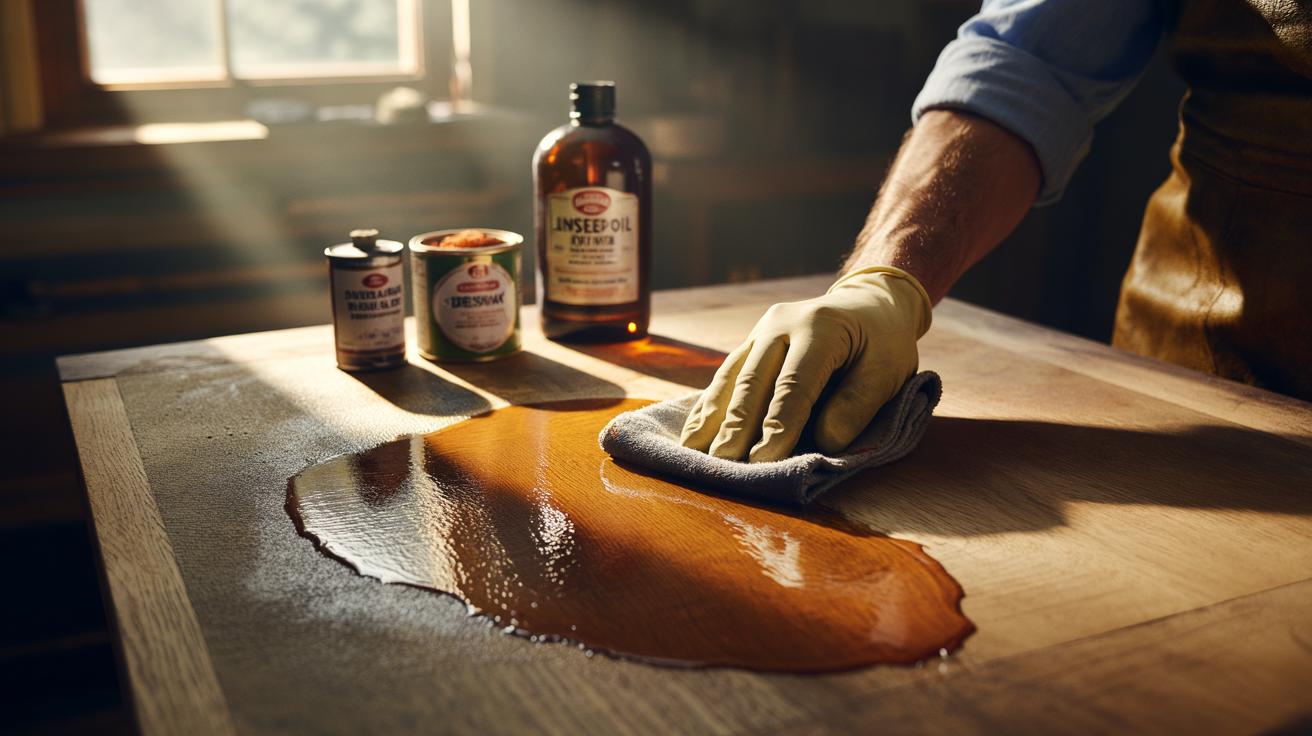
For a classic “rinse,” thin boiled linseed oil roughly 1:1 with low-odour white spirit or citrus-based solvent to improve penetration and wipe-off. On dense hardwoods, a 2:1 solvent-to-oil ratio can help the first coat reach deeper. Flood a lint-free cloth, then work the mix with the grain, keeping coverage even but lean. Wait 10–15 minutes for absorption, then wipe every trace of surplus until the surface feels merely damp. Thick puddles wrinkle or stay tacky. Allow 12–24 hours of cure, depending on temperature and airflow.
Most pieces respond beautifully to two light applications. After the first coat, buff with brown paper or a white non-scratch pad to align fibres. Apply the second coat more sparingly, again wiping thoroughly. For extra touch, burnish when dry with a soft cloth to raise that hand-rubbed glow. A whisper-thin beeswax or hardwax oil topcoat can add scuff resistance on tabletops. Thin coats, well wiped, always beat thick coats. Avoid water for several days while the oil fully polymerises.
When to Choose Other Natural Oils
While a boiled flaxseed rinse is wonderfully versatile, alternatives suit particular demands. Tung oil cures harder and more water-resistant, ideal for splash-prone kitchen worktops, albeit with longer drying. Hardwax oil blends natural oils with waxes and resins for balanced durability and repairability—often a pragmatic choice for busy households. Raw linseed oil remains traditional but cures slowly and can stay tacky in cool rooms. For chopping boards, food-safe mineral oil or pure tung is wiser than drier-added products. Match the oil to traffic, moisture, and the character you want.
Cost, curing time, maintenance, and sheen all differ. If you love a low-lustre, heritage look, boiled linseed oil excels. If you need robust water resistance, tung or hardwax might edge it. And if future refreshes must be simple, oil finishes outshine thick films, which demand sanding. Use the reference below to guide the choice for your project and timetable.
| Oil/Finish | Dry/Cure Time | Typical Sheen | Durability | Food-Safe | Best For |
|---|---|---|---|---|---|
| Boiled Linseed Oil | 6–24 hours per coat | Low, warm glow | Moderate | Not for prep surfaces | Furniture, trim, revival |
| Raw Linseed Oil | Days to weeks | Low | Low–moderate | Conditional | Traditional pieces |
| Tung Oil (Pure) | 24–72 hours per coat | Low–satin | High water resistance | Yes, when pure | Worktops, bathroom joinery |
| Hardwax Oil | 4–12 hours touch-dry | Satin–matt | High | Varies by brand | Floors, high-traffic tables |
| Mineral Oil | Hours (non-curing) | Matt | Low | Yes | Butcher blocks, boards |
Safety, Sustainability, and Long-Term Care
Respect the chemistry. Never leave oil-soaked rags bunched up; they can self-heat. Lay them flat to dry outdoors, submerge in water, or seal in a metal container before disposal under local guidance. Ventilate rooms until odour fades. Choose low-VOC thinners or citrus-based alternatives where possible. From a sustainability angle, flax is a fast-renewing European crop, often processed close to home markets, keeping freight footprints modest compared with exotic resins.
Aftercare is simple: dust regularly, wipe spills promptly, and clean with a damp cloth and mild soap. Refresh with a single light coat when the sheen dulls—often annually on tabletops and every few years on decorative pieces. Avoid standing water and hot pans; use coasters and trivets. Rotate sun-exposed items to prevent uneven tanning. A well-maintained oil finish ages gracefully, developing a lived-in patina rather than a brittle skin, and can be renewed without stripping.
A boiled flaxseed rinse proves that subtle craft can trump heavy coatings, restoring depth and touch while honouring the material beneath your hands. It is accessible, repairable, and visually generous, granting tired timber a second life with minimal kit. With correct prep, thin applications, and sensible care, the results stand up to daily living and still feel like wood. Where might a careful rinse revive something in your home—an heirloom chair, a stair rail, or a kitchen shelf waiting for warmth and sheen?
Did you like it?4.4/5 (28)